| Author | Message | ||
     Ivan |
IVAN'S 'GREAT' WORKS, FICTION ET AL - These are UNEDITED, UNCUT original manuscripts. I tried Googling my titles but they don't always come up, so bumped them up from the now archived "New PeoplesBook Forums" (2005). Here are the original works, six novels, one short story. Please click on titles to access original manuscripts. - Ivan Alexander, author: humancafe@aol.com Scriptorium©, they wrote the Book of Kells On the Isle of Iona was an early Christian monastery founded by Saint Columba where was penned the beautifully illuminated Book of Kells, as it is known today. The abbot Father Cellarch commissioned Aeden and fellow monks to illustrate this magnificent book for their sister abbey in Durrow, Ireland. During the time of the first Viking invasions in the 9th century there were also kings who valued Christianity and helped the abbeys survive. One such Viking king was Blachmach, whose beautiful daugher Osla was left at Iona for safekeeping from the raiding sea wolves. Osla and Aedan develop a fine friendship at the abbey, while work is being done on the Four Gospels. During these attacks the Book of John is completed in a setting of stress and love, and accusations of murder, to bring our two star crossed lovers closer together, to save the abbey and found a new kingdom.Scriptorium is now available at Barnes & Noble Books and Amazon.com. Giammai! Black Messiah©, at a Nazi labor camp, death and survival This is a short novel about a black man imprisoned in a Nazi labor camp and his little notebook, which he kept hidden under his grimy barracks mattress and in which he recorded assiduously the terrible trials of camp life. It is written in a post-modern style with the voice of Olgha, also a camp prisoner, and Giammai, who calls her Kostia, in their dual voices of pain and fleeting hopes, even love, of their knowing each other and the other prisoners. As they strive to survive hunger and punishments, and ever present death, we glimpse through their eyes this terrible travesty against innocent human beings, especially when they tried to save the children from death. (Note: illustration drawing was by JEAN-FRANCOIS MILLET) Dream of the Worlds©, Earth coming out of galactic quarantine, Book 1 of a trilogy Earth's first contact is soon to be realized with a sister world of Ka'andana, as their galactic destiny is intertwined. Paul (P'aan on his world) is the first 'scout' to experience life on our world in following the path of the Dream. On the planet Ka'andana there is an advanced technological civilization with a existential belief based on a system of universal 'mind and being' matrix, what they call the Dream. It was the Dreamers' work, a special class trained for this, to divine how this matrix unfolds. The Dreamers' vision was what brought him to North Africa to contact Sanaa, a beautiful Ethiopian woman, with whom he falls in love. But soon they must flee from those who would capture them, government agents suspecting them being aliens. Their flight takes them to a Himalayan monastery, where Sanaa is captured. Paul is deeply distressed but finds an inner strength of peace while in the presence of Mananam, a blind monk at the monastery, and he then sets out to save Sanaa, finds her in Paris, where he too is now in danger because they known he is from another world. The Dream unfolds in mysterious ways, a metaphor of how worlds merge together when one is advanced while the other is yet to awaken. These two worlds are foreseen as one in the Dream. The screen play adapted from this story can be viewed here: Dream of the Worlds© Power of Maya©, from a distant world Kandana, Book 2 Sanaa is taken to Ka'andana where she encounters a very advanced culture and technology. There she gives birth to her daughter, Maya, who is precocious in the ways of her new world, and together they become immersed in the subtle subterfuge of obstacles presented by Morz, a disgraced star ship commander. Maya and Sanaa escape to the renegade cave dwelling people of the Sanctuary who eschew modern technology, and the Dream, to right the wrongs of their world, and become entangled in an upcoming androids war. With the help of Seth, another star ship commander, who becomes Maya's adoptive father, they disentangle machinations by Morz, which involves also future Earth, to bring back peace to Ka'andana. A Promise in the Amazon©, search and rescue of fallen ship. Book 3 Maya's father, Paul, is lost and captured in the Amazon when his small scout ship goes down, so Maya who is now older, and her mother Sanaa set out to rescue him. With the help of another space traveling race, the Ebh'ans, and Earth adventurers Bates, an American, and Josie an Amazon Indian, and a small boy Carlos, they find Paul in a prison labor gang in Amazonia felling trees, with whom they all escape. But the return is complicated by sensitive equipment, and perhaps alien bodies, hidden at a government installation in northern New Mexico, where they must go to retrieve what they can. With the help of an Apache, Roy, they find what they are looking for under a mesa on the Apache reservation. Maya and Carlos become friends and make a promise in the Amazon before she returns to her world. Aegytpus and Queen Tiye©, a love story of 18th dynasty Egypt (Prelude to Dream of the Worlds Trilogy) The story of an architect, Agepytus, in Pharaoh Amenhotep III's court and his queen Tiye, who falls in love with him. They had known each other as friends since childhood, and later as lovers through their whole lives, though the High Priest Aye used their love and frustrated it for his own selfish reasons, in his schemes to ultimately become Pharaoh. The story takes us into that fabulous world of ancient Egypt c.3400 years ago, when in full glory Amenhotep III's reign of grand temple and empire building was the world then, still evident in Egypt's great wonders today. In the story the secret of the pyramids is unlocked. Ipi of the Desert, a Kumeyaay boy's journey into manhood (short story) Ipi is a young Kumeyaay Indian of the southern California desert, whose people summered in the Laguna mountains but wintered in the Anza-Borrego desert until about the time of the Spanish Missions, when their population was drastically reduced by disease. This is Ipi's story of coming into manhood, observing the traditions of his people and especially befriended by the shaman leader of the clan, Tapawaye. Their encounter with the Mission changed Ipi's life. More short stories: And Adam gave Eve the Apple Essays greatest hits - THE UNIVERSE IS SIMPLE Essay shorts Also see: On a Philosophical Evolution at Humancafe Forum Science shorts Also see: Some Questions on Cosmology and Modern Physics * * * * * * A philosophy work: Habeas Mentem©, now out of print, first publised by P.E. Randall publisher, 1986: "Man in All that Is". This is a three part philosophical development of the idea of 'interrelationship' and how this seminal idea of structure of the universe applies to our human identity, with ramifications for our future development as a fully conscious human species who 'have the mind'. The second and third parts of the book deal with spiritual values of a universe that is 'conscious' of itself. * * * * * * * Film script for Dream of the Worlds©
Film screenplay based on THE NOVEL ABOUT THE AUTHOR: | ||
| IVAN |
VARIABLE G? (Please note on some system the "lamda" as a greek letter will not show up, so will come out as "(l)" instead, to my regret.) A VARIABLE MASS PER VARIALBE G HYPOTHESIS, AS A MODEL FOR THE ANOMALOUS ACCELERATION OF PIONEERS 10 AND 11 -- per the Equivalence Principle and the Axiomatic Equation.© By Ivan D. Alexander, California, USA Author's note: Please see "Anisotropic kg/kg mass" (posted Mar. 2, 2008) for explanation why kg'/g must be adjusted on the right side to balance the Axiomatic Equation, which necessitates a 'variable' kilograms per variable-G, in order to conserve Equivalence. The Axiomatic Equation must read, to balance both sides:E' = hc/ (l)(proton m) = [1(kg'/kg) - (g')pi^2] c^2 Abstract: The Pioneers Anomaly as measured shows a constant rate of acceleration towards the Sun at –a = ~8E-8 cm/s^2. This can be interpreted, in reverse order, as a gravitational phenomenon, whereby Newton’s ‘constant’ G is shown to grow at a steady rate over distance to cause this anomalous acceleration; which shows ‘as if’ G is growing at approximately 1 G per AU. This same result can be achieved in a modified Quantum equation, here called the Axiomatic Equation©, where Newton’s G grows in inverse proportion to solar energy received at a distance from the Sun, at about 1 G per AU. The resulting inertial mass acceleration towards the solar system’s largest mass, the Sun, is likewise shown per the Equivalence Principle to approximate the Pioneers Anomaly. Introduction: The Pioneers Anomaly, measured to be at a constant acceleration of –a = ~8E-8 cm/s^2, as per Anderson et al. [1], can be worked in reverse order to show it can imply, via the Equivalence Principle [12], that the inertial mass of the Pioneer probes is gaining ‘gravitational mass’ in the same proportion as the change in G. This may be achieved by calculation for a hypothetical delta G (over distance) needed to satisfy this condition. The methodology assumed is that, per Equivalence, the mass of the probes in an increasing G would be adjusted proportionally, which (in reverse order) translates as the square of acceleration (over distance), delta –a = (~8E-6 m/s^2)^2, to yield numerically delta –a = ~6.4E-11 m^2/s^4 (meters per kilogram seconds squared) m kg^-1 s^2 - as a function of G, which is within range of the implied delta G for our solar system of 1 G per AU, vs. G = ~6.67E-11 m^3 kg^-1 s^-2 (Nm^2 kg^-2) at 1 AU. Separately calculations were made using the Quantum equation posited by Louis de Broglie, E = hf = mc^2, and modified to incorporate a proton gravitational constant, per the Axiomatic Equation (derived in Appendix) [10]. This equation works out as: E = hc/ (l)(proton m) = [(m) c^2] = ~(1-g) c^2 (where m = 1 kg/kg) in abridged form. When applied to solar energy per planetary orbit, and converted to Newton’s G, it will be shown to yield a result approximating the noted anomalous Pioneers acceleration. The resulting delta G per AU, as shown below, works out to be approximately = 7.239E-11 m^3 kg^-1 s^-2 per AU. Dividing this delta G by Earth’s known G = 6.67E-11 m^3 kg^-1 s^-2, we arrive at a ratio of 1.085, which divided by the distance of 1 AU (in meters, 1.5E+11 m), gives the rate of change per meter: delta G = 0.723E-11 per meter. This change further translates into delta G = 7.23E-12 per meter distance, or in centimeters, delta G = 7.23E-14 per centimeter. To convert this delta G into acceleration, one must take its square root, per Equivalence of mass to the gravitational ‘constant’, which taking the square root is: delta G = -a = 8.5E-7.5 cm/s^2. This is vs. -a = 8.5E-8 cm/s^2, what was measured for Pioneers. This delta G driven value, -a = 8.5E-7.5 cm/s^2, is slightly greater than the reported Pioneers Anomaly of –a = 8E-8 cm/s^2, yet within range. (Later measurements yielded Pioneer Anomaly -a = 8.6E-8 to 8.74E-8 cm/s^2, slightly above). Other Energy factors may account for why these two values are not exact, which may be due to onboard energy radiation sources. A natural implication results from this hypothesis also pertains to distant cosmic light redshift, and the implications to the Hubble constant (space expansion postulate), with implications for modern cosmology. 1.0: A Variable G cum Variable Mass Hypothesis, per Equivalence Principle. 1.1: Illustration of Hypothetical Variable Mass in a Variable G. Conceptually, if G were greater, then its mass equivalent per Equivalence would also be greater, which means if each molecule gravitationally draws a greater G, its gravitational-inertial-mass would be greater. This can be understood as requiring fewer molecules to achieve the same mass as in a lower G. As illustration, let us suppose that it takes x number of molecules to compose 1 kilogram of mass on Earth. But, by assuming G and mass equivalence, in taking these same molecules in a greater G’ region, it would take G/G’ times x to arrive at the same 1 kilogram mass. This would mean that in a higher G region, 1 kilogram is still the same kilogram as in Earth’s 1 AU gravitational G, but per greater G there are fewer molecules composing this same mass in situ. Because the molecular mass is now greater, per greater G per molecule, its interactive gravitational mass will be acted upon gravitationally as if its inertial-mass were ‘heavier’, or conversely its gravitational force interaction were greater gravitationally; it would be as if it were the square root of G. This can be translated into the Pioneers Anomaly that, given a hypothetically higher G in the regions of outer solar system and beyond, the spacecraft acts ‘as if’ its mass were growing in square proportion to the local G; or conversely, because it is the same mass as having left from Earth, the gravitational attraction from the Sun acts ‘as if’ the greater mass in greater G is an acceleration that is the square root of its delta G. The mass of the Pioneers crafts never changed, it is still the same number of molecules as it had at the gantry, but now as it travels outward from the Sun, the mass translates into its hypothetically greater gravitational-inertial-mass. Consequently, in a greater G region, its gravitational-inertial-mass is drawn back by the Sun’s gravity as if it were gravitationally ‘heavier’ than when it left. 1.2: Translating this Variable Mass cum Variable G Equivalence into the Pioneers Anomaly. Prince Louis de Broglie took the liberty to match Planck’s E = hf with Einstein’s E = mc^2, also called the de Broglie equation. Planck’s can be further broken out as E = hc/(l) (proton m), which matched with de Broglies’s becomes E = hc/(l)(proton m) = mc^2. A hybridization of this equation can also be expressed, per the Axiomatic Equation (see Appendix below, as how derived) to become: E = hc/(l)(proton m) = (m-g)c^2, where m = 1 kg/kg (always), and g= proton-to-proton gravitational ‘constant’, here known as g = ~5.9E-39 (dimensionless, though this value per the Axiomatic becomes Volts, to balance the SI units; see Appendix). As will be shown, this proton gravitational constant is in fact a variable, per the radiant electromagnetic energy received, as a function of E. 1.3: The Axiomatic Equation Defined as Energy Received from the Sun: The term "Energy" here is understood as a dual component of both radiant electromagnetic energy and planetary orbital kinetic energy, as they relate to our Sun, for the planets of our solar system. This is defined as: E = solar irradiance x 1/2 Rv^2, where E = total energy received from the Sun (Solar irradiation is in ‘Watts per meter squared’)# 1/2 Rv^2 is KE = 1/2 mv^2, where m = 1 (kg/kg)** This E is then matched against the Axiomatic Equations (per Appendix) which is: E' = hc/ (l)(proton m) = f(E'/E) [1 - f(g')pi^2] c^2 (Please note the f(E’/E) is a function to balance both sides of the equation E. To see a short hand version, where (f)E' = 1/AU^2 (E), go to: Total Planetary Energy short hand ) The exercise will be to show, using the Newton G arrived, how E translates into G for the orbital regions of each planet. Calculations are approximate only, to illustrate the principle. Source of data is the NASA Planetary Fact Sheet [9]) 2.0: Calculations showing the Energy to proton mass and Newton’s G relationships: 2.1: Earth as sample, to arrive at E = 90 petajoules: We know per Einstein’s famous equation: E = mc^2 = 9E+16 Joules, or 90 petajoules (vs. E=mc2, or speed of light c 2.99792458E+8 m/s squared, times 1 kg = 8.987551787E+16 Joules, to be exact; but shorthand E=9E+16 J serves brevity) This same value can be arrived at as a ‘template’ for Earth’s solar Energy: Solar irradiance: 1367.6 W/m^2 # Mean distance from Sun: 149.6E+9 meters Mean orbital velocity: v = 29.78 km/s (1367.6) (149.6E+9) = 204592.96E+9 = 2.046E+14 W/m = solar radiance energy, and KE = (1/2) (1) (29.78)^2 = (1/2)(1)(886.85) = 443.4 m^2.kg.s^-2 (Joules) = gravitationally induced kinetic energy: KE * W/m = ( 443.4 J) (2.046E+14 W/m) = 9.07e16 Joules = Earth's total orbital Energy. (Please note m = 1 kg/kg is a net function of planet mass R already in orbital motion.) Therefore, Earth’s solar Energy resulting value is: E = ~9.07E+16 J (Please note Earth’s Energy reads slightly higher by ~0.07E+16 J, in the same way Earth’s Newton G reads ~0.67 G lower than per values derived from the Energy equation; this may be a function of Earth’s interior generated Energy. Though beyond the scope of this paper, were Earth energy ‘neutral’ these values would be affected, see Addendum [b] below) #[It may be more accurate for ‘solar irradiance’ to be measured on a derivative point of ‘millimeter squared’ rather than per meter squared, viz., Solar irradiance=1367.6 W/m^2 would be 1.3676 W/mm^2 if so (?) since it is point solar energy measured.] 2.2: Energy calculated for all the planets of our solar system: Now, let us use this same methodology for calculating Energy for all the other planets, using NASA data: MERCURY: 60.55E+16 J VENUS: 17.33E+16 J EARTH: 9.0E+16 J MARS: 3.66E+16 J JUPITER: 0.335E+16 J SATURN: 0.1004E+16J URANUS: 0.0247E+16J NEPTUNE: 0.01E+16 J PLUTO: 0.006E+16 J (Note, similar results can be derived with E = 1/AU^2 x 9e+16 J as per Total Planetary Energy short hand ) The resulting Energy E' values if plotted on a chart show a parabolic upward steeply curved for the inner planets, and progressively lower and flatter for the outer planets (natural logarithm), with an elbow for this curve about the level of Mars and the asteroid belt. It is immediately obvious that the inner planets receive a much greater level of solar irradiance than the distant planets, per this methodology, that this total Energy for each orbital has a parabolic relationship, where the energy levels for the outer planets declines on a curve [10]. 2.3: Using the Axiomatic Equation to solve for proton mass for each orbital region: We can calculate an intermediary function resulting from this Energy variance through the DeBroglie-Planck-Einstein equation: E = hc/ (l)(proton mass) = 90 petajoules, on Earth. In computing the proton mass for each Energy level, we get a variable that can be used to estimate Newton's G at each Energy E’. Assuming that Planck's constant h = 6.626E-34 m^2.kg.s^-2, and electromagnetic energy lambda, 1.322E-15 m (assuming no redshift within our solar system), with light constant c, 3E+8 m/s, we get: E = hc/ (l)(proton mass) E = 9.0E+16 J = (19.878E-26) / (1.322E-15)(proton mass), so that proton mass is: Proton m = 1.67E-27 kg Using the same methodology, we can compute proton mass equivalents for each of the planets Energy levels, where E' is on the left, and equivalent proton mass is on right: MERCURY: 60.55E+16 J, 2.48E-28 kg VENUS: 17.33E+16 J, 8.67E-28 kg EARTH: 9.0E+16 J, 1.67E-27 kg MARS: 3.66E+16 J, 3.86E-27 kg JUPITER: 0.335E+16 J, 4.49E-26 kg SATURN: 0.1004E+16J, 1.498E-25kg URANUS: 0.0247E+16J, 6.1E-25 kg NEPTUNE: 0.01E+16 J, 1.5E-24 kg PLUTO: 0.006eE+16 J, 2.58E-24 kg 2.4: Calculating for the Proton Gravitational Variable g': The above values for proton mass will now lend themselves to finding the proton gravitational constants equivalents: Again, taking our Axiomatic Equation: E' = hc/ l)(proton m) = f(E'/E) [1 - f(g')pi^2] c^2 We can now compute the f(g) proton-to-proton gravitational coupling constant for each E' of the planets. Using Earth's g = 5.9E-39 as a basis, we can find f(g') by applying F(g') = (proton m)' * g / (proton m), as per above. Using this equation as a direct proportional value for g relative to proton mass, the ratio of the planet's proton mass (proton m)' = g' to Earth's (proton m) = 5.9E-39, we get =f(g'). For example: Mars proton mass = 3.86E-27 kg, which times Earth's g = 5.9E-39 equals 22.78E-66, divided by Earth's proton mass =1.67E-27 equals f(g')= 1.36E-38 (greater than Earth's g). This methodology yields the following proton gravity g' constants: PLANET: total orbital Energy, Proton mass, Proton gravity constant g: MERCURY: 60.55E+16 J, 2.48E-28 kg, 8.76E-40 VENUS: 17.33E+16 J, 8.67E-28 kg, 3.06E-39 EARTH: 9.0E+16 J, 1.67E-27 kg, 5.9E-39 MARS: 3.66E+16 J, 3.86E-27 kg, 1.36E-38 JUPITER: 0.335E+16 J, 4.49E-26 kg, 1.586E-37 SATURN: 0.1004E+16J, 1.498E-25 kg, 5.29E-37 URANUS: 0.0247E+16J, 6.1E-25 kg, 2.153E-36 NEPTUNE: 0.01E+16 J, 1.5E-24 kg, 5.3E-36 PLUTO: 0.006E+16 J, 2.58E-24 kg, 9.11E-36 As can be seen from the above, the proton-to-proton gravitational coupling constant g' increases with distance from the Sun, and decrease towards the Sun, so the inverse relationship of Energy to proton gravitational constant is preserved. This can be further converted into Newton's G values via an equation, as per the conversion equation mentioned above. 2.5: Converting Proton Gravitational g' into Newton's G' constant: Using the conversion equation described in Appendix: G^2 * m = g c^2 pi^2, where g is the proton gravitational constant, and m =1, G^2 * 1 = (5.9E-39)(9E+16)(9.87) = 524.1E-23 = 52.41E-22, of which square root is: G = ~7.239E-11 Nm^2kg^-2 for Earth. (Note this is 0.57E-11 more than Newton's G = 6.67E-11 N, which may be a result of Earth generating it’s own Energy.) - see Boltzmann conversion 'coincidence' for Earth's interior heat vis-a-vis G constant. 2.6: PLANET: total orbital Energy, Proton mass, Proton gravity g', local Newton's G': MERCURY (0.39 AU): 60.55E+16 J, 2.48E-28 kg, 8.76E-40, ~02.79E-11 N VENUS (0.72 AU): 17.33E+16 J, 8.67E-28 kg, 3.06E-39, ~ 5.20E-11 N EARTH (1 AU): 9.0E+16 J, 1.67E-27 kg, 5.9E-39, ~7.24E-11 N (vs. 6.67E-11 N) MARS (1.52 AU): 3.66E+16 J, 3.86E-27 kg, 1.36E-38, ~10.96E-11 N JUPITER (5.2 AU): 0.335E+16 J, 4.49E-26 kg, 1.586E-37, ~ 38.6E-11 N SATURN (9.5 AU): 0.1004E+16J, 1.498E-25 kg, 5.29E-37, ~68.5E-11 N URANUS (19.2 AU): 0.0247E+16J, 6.1E-25 kg, 2.153E-36, ~138E-11 N NEPTUNE (30 AU): 0.01E+16 J, 1.5E-24 kg, 5.3E-36, ~217E-11 N PLUTO (39.5 AU): 0.006E+16 J, 2.58E-24 kg, 9.11E-36, ~284E-11 N When these Newton's G values are plotted on a chart on the X axis, with planetary distance from the Sun in AUs on the Y axis, it shows a linear growth at the rate of approximately: delta G = ~7.24E-11 per AU. 3.0: A Variable Newton's G 'constant' affecting Pioneers 10 and 11 Acceleration. 3.1: Acceleration of the Pioneers towards the Sun: The acceleration towards the Sun may therefore be calculated from the G variable, using the methodology described above. Taking the delta G divided by Earth's known G, and then divided by one AU in meters yields the expected acceleration pointed towards the Sun: Delta G = 7.239E-11 Nm^2kg^-2 (m^/s^2) Earth G = 6.67E-11 Nm^2kg^-2 One AU in meters = 150E+9 meters (7.239E-11 Nm^2kg^-2) / (6.67E-11) / (150E+9) = Pioneers acceleration anomaly hypothetical ‘mock’ acceleration = 1.085 / 150E+9 = 0.7235E-11 m/s^2, or in centimeters: ~delta-a = ~72.35E-15 cm/s^2 This is the value satisfying the calculations per the Axiomatic Equation and proton mass gravitational constant converted into Newton’s G, which here works out to be a variable, growing at a constant rate of approximately 1 G per AU. To convert this into the effective acceleration effect on any mass traveling on an escape trajectory out of he solar system will require this value be adjusted for the Equivalence Principle. This is achieved by hypothesizing that for each increase in G, there is a commensurate increase in mass, so that the gravitational-inertial-mass of the spaceprobe is increasing per increased G. The effect of this interaction between inertial mass in a greater G is equivalent to the square root of the above "delta-a" result, so we are left with the actual acceleration, whereby: -a = ~8.5E-7.5 cm/s^2 (vs. ~8E-8 cm/s^2 as measured) This is the value of acceleration towards the Sun the Pioneers should be experiencing, as calculated from the steady linear growth of G at a distance from the Sun, where it grows at 1 G per AU. The fact that this computed variable G acceleration is higher than the measured value leads one to consider the possibility that other energy is coming into play, to moderate the pure gravitational effect. For example, the Pioneer probes carry their own onboard energy source, and this energy may act as a moderating influence on the local G gravitational influence, if so. This would mean the onboard heat, acting as Energy shown per the Axiomatic Equation, renders the craft less ‘heavy’ in its region of space. Hence, though beyond the scope of this paper, the probes are accelerating towards the Sun at a slightly lower rate than a pure variable G physics would conclude. 3.2: Additional Confirmations sought for a Variable Newton's G: Physics cannot explain the acceleration cum gravitational anomaly revealed by the Pioneers. Upon first calculating the Axiomatic Equation’s variable mass and G results, as shown for delta G growing at a constant rate 7.24E-11 G’/G per AU (before learning of the Pioneers Anomaly), it was hoped to find this anomaly in distant comet trajectories in the outer solar system. Though there was no effective way to measure this at their aphelion distances from the Sun without attaching a probe to them, it was thought to lead to a better understanding what comets do once they leave the vicinity of near Earth, where they can be readily observed. The Pioneers anomalous behavior led to a more immediate test of this variable mass cum G hypothesis, though not a conclusive test. We know what comets do here in our region of G, but do we truly know how they behave far out at the Kuiper, where G may be substantially higher? It should be noted that though G' is multiples of Earth's G for the outer planets, it is still a very small value of 10x-11, so that it remains a very weak force, though measurable. It is not until we get to the Oort Cloud where G may be a much higher value ( viz. G' = ~3.5E-6 N), that we would see a markedly different trajectory behavior, where the spaceprobe’s original momentum may be insufficient to break out of the Sun’s gravitational pull. The author thinks that the Oort Cloud is a 'graveyard' depository for all cosmic objects with insufficient momentum to leave the solar system, which may ultimately be the fate of our Pioneers as they settle into a very large elliptical orbit around the Sun. To achieve an escape velocity from the Sun requires more than a constant momentum, if an increasing delta G is a factor, so that it would need constant acceleration to go beyond the Oort Cloud. Studies proposed to measure greater inertial mass for the outer solar system [2] [3], such as by the European Space Agency, are a necessary first step to confirm a variable gravity. As computed per the Axiomatic Equation, the variable G works out to be approximately delta G = ~7.23E-11 per AU, whereas the Pioneers Anomaly works out to be in the rate of delta G = ~6.4E-11 per AU; both contrasted with the known Newton’s G of 6.67E-11. This observation, that ‘pure’ gravitational change per AU is higher than Earth’s G at 1 AU, and that the Pioneers are responding to a delta G lower than Earth’s, may be the subject of future studies. It appears the Newton’s G is radiant heat dependent. Some concluding observations: If Newton’s G is not a universal constant but radiant heat energy dependent, then it should be something to search for. This test is difficult on Earth because, as one body, the Earth’s gravitational influence is uniform for the planet. The only exception to this may be the Allais Effect [13], where on the planet’s surface in total solar eclipse, the Sun’s rays are temporarily blocked by the Moon, and thus creates a slight gravitational aberration; where G should be slightly greater. However, it is the author’s opinion that if the Pioneers Anomaly leads to the hypothesized variable G, then there should be dedicated tests of this phenomenon away from Earth’s 1 G. It is further theorized, beyond the scope of this paper, there is a ‘cut-off’ level of G where it ceases to grow and flattens out in the dark cold regions of very great intergalactic space. This level ‘universal’ G, per author’s independent calculations, seems to flatten out at a value of about five orders of magnitude greater than Earth’s G. Coincidentally, per the Axiomatic Equation and gravity conversion formula, this also coincides with wavelength for Einstein’s Photoelectric Effect, in the range of 400-700 nanometers. Separately, this same value for G also works out for the Oort Cloud, at >50,000 AU, where this cut-off is at about G’ = >3.5E-6 . Coincidentally, it is also how distant cosmic light redshifts at approximately the Hubble constant, if all the hydrogen atoms of ‘empty’ space (and dust) were added together as a linear mass for the distance of 1z, d = ~129 million light years, per higher proton mass-cum- G in the cosmic reaches of intergalactic space. It should also be noted that per the Equivalence Principle, proton mass in Earth kilograms varies, as shown, but it remains the same mass in its own G, so the mass itself never changes, only how it becomes redefined per the variable G cum Energy region where it is measured. For example, at ~10 G of Saturn’s orbit, the proton mass is tenfold in its local region, per Equivalence, but is one hundred fold in terms of Earth kilograms. This further underscores the importance of m = 1 kg/kg when considering variable mass in a variable G universe. Though no systemic reasons had been found for the Pioneers Anomaly [4], there had been earlier attempts to understand anomalous gravitational factors for the rotational curves of galaxies by MOND [5] or Toivo Jaakkola [6], as well as ‘dark matter’[11]; they may prove as ‘ad hoc’ explanations, however. Also see: Galileo got it (almost) right Addendum: The Pioneer Anomaly may have a simple explanation: conservation of momentum. So even if the mass increases, per Equivalence, of a space probe traveling away from the Sun (away from low G to higher G), then the equivalent mass increase should be same as if two different masses being acted upon by Sun’s gravity, e.g., they should both be acted upon equally. However, if conservation of momentum is factored in, as it must, then the increasing Equivalence mass per higher G should be accounted for. And the only way this conservation can be expressed, as G related mass increases, is to show as a slowing acceleration (increased acceleration towards the Sun), which becomes slowing velocity of the (per higher G) increased mass of the space probe. So this momentum conservation works out in numbers as (1/AU)^1/2 in centimeters**. APPENDIX: HOW AXIOMATIC EQUATION WAS DERIVED. A.1: Hypothesis for a new definition of Mass: Conceptually any value of one can be derived from an integer multiplied by its inverse, from zero to infinity, where the product is always = 1. This principle can be applied to mass as having a value that is the product of Energy and its inverse 1/c^2, to equal one. In our region of space, this will always work out to be E =~ 9E+16 Joules, or 90 petajoules, when m = 1. Because we measure gravitational mass on Earth in kilograms, this m = 1 kg is assumed. But it need not be limited to Earth's gravity, if gravity is not a universal constant, since this value of m = 1 kg may be different elsewhere. By this above reasoning, mass is retained as m = 1, but the kilograms is held aside for now and (m) will be treated as kg/kg instead, so that the value of one, as a product of inverse numbers, is preserved. This means that when there is a total interaction between E and 1/c^2, mass as m =1 is assured. But if this interaction is less perfect, meaning the numerator E is less than the denominator 1/c^2, mass becomes less than one. The evident assumption that follows is that if mass is less than exactly one, there is a remainder that must be accounted for. Given the Planck quantum equation E = hc/ (l)(proton m), we can see immediately that for E = 90 petajoules, given h = 6.626E-34 m^2 kg s^-1, c = 3E+8 m s^-1, and (l) = 1.322E-15 m, the resulting proton mass = 1.67E-27 kg [7], which thus matches Einstein's E = mc^2. However, now if the real mass is less than one, to satisfy DeBroglie's equation, leaving all things equal, we must find another value on the right side to satisfy the equation. One way to do this is to say that mass, always equal to one, is modified by a gravitic value related to the left side, its proton mass, to account for a real value less than one. This can be met with subtracting from m = 1 a proton-to-proton gravitational constant value, let's call it 'g', which on Earth is computed as g = ~5.9E-39, dimensionless. The resulting value for mass becomes m = (1-g) approximately, as will be explained. Though this value is so small as to appear negligible, it will be shown to be very important when values for E are calculated for different planetary orbital Energies. A.2 : Calculating Mass as a function of Energy: Thus far, what results from the above is an equation that looks like this: E = hc/ (l)(proton m) = ~(m)c^2 = ~(1-g)c^2 This is only an approximation, as will be shown later, but it serves to illustrate a principle. It also illustrates that (1-g)c^2 is a value of Energy that must translate into: (1-g)c^2 = c^2 - gc^2, whereby E' = E - gc^2, where E' is a true Energy value, and E is the inverse of 1/c^2. This ideal inverse relationship can only exist in its pure form if there is no gravity, otherwise, E' must be less than E, per this equation, which means E is an ideal number and mathematically correct, though E' represents a real value. If m =1, which means g becomes zero, it drops out, then the equation no longer works, except as a pure expression of E = mc^2. But no matter how small the g value, as long as g holds above zero, this equation may be usable as an expression of the interaction of Energy and its inverse, with a g remainder. The result is that E' is slightly less than E, of necessity, and that this Energy E' is the value sought after to calculate the proton gravitational constant g. Once found, then it can be converted into Newton's G, as will be shown. For now, the operable equation is an approximation for E': E' = hc/ (l)(proton m) = ~(1-g)c^2, where g is the proton gravitational constant, as it is subtracted from a mathematical ideal m = 1. This leaves us with two mathematical ideals: E/c^2 = m, and m = 1, which may not represent what happens in the real world. If we take one hydrogen atom as m = < 1, what we have is a proton nucleus surrounded by electron energy shell. This total atom is a unity of one minus its gravitational constant, as measured here on Earth, per this equation, which is less than the mathematical ideal, but closer to what is observed. Proton mass is a gravity effect, where on the left side the quantum E = hf is an energy effect. On the right, we have an ideal mass unit minus its gravitational coupling constant, times energy c^2, which should result in the Energy that defines E = hf. Thus, greater or lesser values for Energy E' will result in lesser or greater values for proton mass on the left, since they are inversely proportional, while at the same time on the right we should get the same proportional values for g. What we had hitherto assumed to be ideally equal, E = hf = mc^2, is in fact not, since there is a small remainder force of proton g to be accounted for. Though extremely small, this g is a sought after value, because it will enable us to calculate the like Newton's G value from it. A.3 : Computing Newton's G 'constant' from the Proton gravitational coupling 'constant': Multiplying out the above equation, we can see that mass is defined as (1-g) times the energy value of c^2, so that of necessity the proton gravitational constant, as a function of energy, becomes gc^2. However, this will be found as incomplete without pi^2. So the gravitational function G should now become: f(G)m = gc^2 (m) pi^2, to yield an approximation of G = 6.67E-11 m^3 kg^-1 s^-2, which is: f(G)m = (5.9E-39)(9E+16 m^2 s^-2) (pi)^2, which equals = 53.1E-23 (9.87) = 52.41E-22, in taking the square root is: function of G = ~7.239E-11 , which is in SI Base: G^2 (1) = g (1) m^2 s^-2 pi^2, where kg/kg is implied for m =1, and g is expressed in "Volts meters squared/second", viz. W/A m^2/s, where for A = Nm^-1, then (m^2 kg s^-3) (m^2 s^1)/ (m kg s^-2) (m^-1) = m^3 m kg/kg s^-2, making it V*m^2/s =V^2= (m^4 s^-2)(kg/kg) and therefore: G^2 = [(m^4 s^-2)(kg/kg)(m^2 s^-2) pi^2], (SI base units for f(g) may also be either as (kg s^-1) when E is in Watts; or kg when E is in Joules), still unresolved)** so taking the square root: G = (52.41E-22 m^6 s^-4 kg/kg)^1/2 = ~7.239 E-11 m^3 kg/kg s^-2 (which is ~0.57E-11 more than Newton's G = ~6.67E-11 Nm^2 kg^-2), as only an approximation of Earth's G. (see Addendum [b] below) Although this is only an approximation of Earth's G, and g estimated in SI units of Volts remains unresolved, it is a workable equation for converting proton gravitational constant into Newton's G, with a relatively close result. Though it is not exact, there may be other reasons why Earth's gravity is slightly less. Earth may generate its own energy, which may effect planetary spin or interior heat, and its magnetic field, though for now these will not be pursued. There may also exist a relationship between Earth's energy received from the Sun and its total orbital Energy, modified by its internally generated energy, but not covered here. A.4 : Comments on the preceding development: At this stage, the equations are still disconnected from their applications, which will follow, where the Newton's G 'constant' will be shown to grow linearly from the Sun at a constant rate of delta G = 7.239E-11 Nm^2 kg^-2 per AU. The purpose of the development thus far is to show how the DeBroglie-Einstein equation [7] can be modified to accommodate a gravitational value g, which can convert into Newton's G, and prove a useful variable. The goal will be ultimately to show how this new value of G applies to the Pioneers Anomaly. For now, we still need to finalize the above listed equations into what will be a workable model. Why was this not addressed a hundred years earlier by physics in Einstein's famous E = mc^2? My guess is that the value difference between ideal mass and real mass was so small, viz. 10x^-39, that it seemed irrelevant, so was basically ignored, or perhaps simply not yet understood. A.5 : Writing the Axiomatic Equation: If we postulate that solar Energy may be different for planetary orbits, we must accommodate this with the two values of Energy, as E' computed for the planets, and E for Earth, (where here E equals 90 petajoule), we need a qualifier function of f(E'/E) to satisfy the computed values of E'. It is obvious that for Earth, where E' = E, this additional function f(E'/E) is irrelevant, since it equals one, but for other planets this will become instrumental in computing their relative proton mass and gravitational constants. So the equation, factoring in this postulate, should be: E' = hc/ (l)(proton m) = f(E'/E)~(1-g)c^2 = planetary total orbital Energy An additional qualifier, to make g exact , which will become more meaningful later is a function: Proton gravitational constant f(g' ) = (proton m)' * g / (proton m), where (proton m)' = proton mass for E', and (proton m) = proton mass for E. So the full Axiomatic Equation, factoring in pi in conversion to G, should read as: E' = hc/ (l)(proton m) = f(E'/E) [1 - f(g')pi^2] c^2 _Where: f(E'/E) [1 - f(g') pi^2] is the modified version of Mass on the right side of the DeBroglie-Einstein equation, for m = 1, as a postulated Axiom [8]. * *(E' = 1/2 Rv^2 x solar irradiance. This was derived in the following manner: GM = Rv^2 , per Newton's orbital equation GMm/ R = mv^2 , per above with m included 1/2 GMm/R = 1/2 mv^2 , per above with 1/2 included, where: 1/2 mv^2 = KE , kinetic energy removing the m, putting R back on right 1/2 GM = 1/2 Rv^2 as a variation of Newton's orbital, including 'solar irradiance' in Watts/m^2, the equation becomes as used in Atomic Mass paper above: E' = solar irradiance x 1/2 R(1)v^2 = J/s (or Joules, if m=1=kg/kg) where R is planet distance from Sun, v^2 is planet's velocity squared (both in kilometers), times solar irradiance.) [Please note the above paper is derived from an earlier (2005) paper titled "HYPOTHETICAL ATOMIC MASS AS A GRAVITY AND ENERGY FUNCTION, PER THE AXIOMATIC EQUATION: With Implications for the Pioneers 10 & 11 Acceleration Anomalies", which first attempted to explain this 'variable G' phenomenon, though faulty.] _________________________________________________________ References: [1] "Study of the anomalous acceleration of Pioneer 10 and 11" by John D. Anderson, Philip A. Laing, Eunice L. Lau, Anthony S. Liu, Michael Martin Nieto, Slava G. Turyshev (2002). http://arxiv.org/abs/gr-qc/0104064 [2] "Pioneer anomaly put to the test", Sept. 2004, PhysicsWeb.com news, authors: Slava Turyshev, John Anderson, Michael Martin Nieto. http://physicsweb.org/articles/world/17/9/3 [3] "Lessons Learned from the Pioneer 10/11 for a Mission to Test the Pioneer Anomaly", by S.G. Turyshev, M.M. Nieto, and J.D. Anderson. http://arxiv.org/abs/gr-qc/0409117 [4] "Conventional Forces can Explain the Anomalous Acceleration of Pioneer 10" by Louis K. Scheffer: http://arxiv.org/abs/gr-qc/0107092 [5] "Modified Newtonian dynamics (MOND)", Wikipedia encyclopedia: http://en.wikipedia.org/wiki/Modified_Newtonian_dynamics [6] "Action-at-a-Distance and Local Action in Gravitation", by Toivo Jaakkola: http://redshift.vif.com/JournalFiles/Pre2001/V03NO3PDF/V03N3JAA.PDF [7] DeBroglie-Einstein wavelength equation, per Hyperphysics.com: http://hyperphysics.phy-astr.gsu.edu/hbase/debrog.html#c1 [8] Axiomatic Equation, further reading: http://www.humancafe.com/cgi-bin/discus/show.cgi?70/108.html and "Does Gravity Zero-point Energy Explain Spin" http://www.humancafe.com/cgi-bin/discus/show.cgi?70/145.html by I.D. Alexander et al, for how these ideas were derived. [9] "Nasa Planetary Fact Sheet": http://nssdc.gsfc.nasa.gov/planetary/planetfact.html [10] "Atomic Mass as a Gravity and Energy Function, per the Axiomatic Equation: with implications for the Pioneer 10 and 11 Distant Probes Acceleration Anomalies"© by I.D. Alexander (Nov. 27, 2004, not published). http://www.humancafe.com/cgi-bin/discus/show.cgi?70/166.html [11] Galactic Halo Gravitational Lensing paper: "Weak Lensing Constraints on Galaxy Halos" by H. Hockstra, Oct. 19, 2005 at: http://arxiv.org/PS_cache/astro-ph/pdf/0510/0510546,pdf [12] Equivalence Principle: http://en.wikipedia.org/wiki/Equivalence_principle [13] Allais Effect: http://en.wikipedia.org/wiki/Allais_effect Addendum: [a] There may be a lower, gentler MOND for our solar system, as described per this post: http://www.humancafe.com/cgi-bin/discus/show.cgi?tpc=88&post=3497#POST3497 Ivan D. Alexander humancafe@aol.com www.humancafe.com November 12, 2005 See related: "Investigation of the Gravitational Potential Dependence of the Fine-Structure Constant Using Atomic Dysprosium" (2007), Ferrel, Congoz, Lapierre, Mguyen, et al. http://adsabs.harvard.edu/abs/2007arXiv0708.0569F See related: Countdown to Strangeness on the Humancafe forum, for how this thesis translates into other astronomical phenomena regarding a variable Newton's G. Also see: Mass of the Universe Planck's constant may be variable **RE (1/AU)^1/2 | ||
| Ed Chesky |
Hi Ivan, Great work In terms of your posting, much about the universe remains to be discovered and until science advances to the point where data is obtained to contradict it the established view of the nature of the universe will not change. Scientists are for the most part very conservative. This is evident from the nature of the system they built with regards to the scientific method. Great minds that intuitively make great leaps are often overlooked and pushed off to the side lines until their, "radical" views are proven by scientific evidence to be true. The great thing about the itnernet is that people can view what they like and have the ability to view and consider all view points on a subject. In ancient days for proposing a radical view of the universe that goes against established thought you would have been burned at the stake. We have made some progress and in this day and age you can with the click of the mouse post your premise in a place that is viewed by millions of people. What I have tried to do with geometry is show how the great minds of geometry have developed a parallel understanding of the nature of the universe. A view on the nature of creation that that has evolved over the course of 3000 years. This view was built upon the basics established by the ancient Greeks and Egyptions long ago. These basics form the bedrock of our science and math. by saying something is impossible in the field of geomotry limited minds in their arrogence have closed doors leading to paths of understanding that bring us closer to understanding the true nature of creation. This is why in ancient days the greats of geometry math and science encrypted their works and hid it out of fear of persecution. In time others will build upon our work and take us places we have yet to dream of. On this sight we have stired the imagination of millions, Islamic, Hindu, Asian Chinese, and a host of others. With logic and geometry, some lines on a piece of paper, and few clicks of a mouse we have built a network that spans the globe. What more can you ask. My Best and be well Ed Chesky | ||
| IVAN |
‘BREAD CRUMBS’ TRAIL – a Chronological Anthology. This follows with short excerpts the trail from the original seminal ideas to what later became the Axiomatic Equation, with links to pages showing related arguments. 1. Oct. 23, 2001: http://www.humancafe.com/discus/messages/1/30.html If 1 x 1 = 1 2. March 29, 2002: http://www.humancafe.com/discus/messages/1/49.html On reading Quantum physics, on a possible Theory of Everything; i.e., Paul Davies "The New Physics" (Cambridge Univ. 1989), and John Gribbin "The Search for Superstrings, Symmetry, and the Theory of Everything" (Little Brown 1998); I am struck by a common problem to which there seems to be no solution. Though best minds have studied this for over a century, from Faraday and Planck to Einstein and Fermi to Salam and Weinberg to Gell-Mann and Nambu and Wu and scores others, there is a lack of conceptual coordination, as expressed by the mathematics, of being able to relate the strong and weak forces, electromagnetic forces, and the weakest force of gravity, into a general theory. I suspect that it may be possible to re-coordinate the mathematical expressions where there is a ‘basic common denominator’ into which all functions have to fall, and from which all Quantum interactions of the higher levels would then find expression. 3. April 6, 2002: http://www.humancafe.com/discus/messages/1/49.html ALGORITHMS (Note, this was an important conceptual step in the formation of what follows; more on same page: April 25, 2002, very early thinking on the matter.) 4. May 2, 2002: http://www.humancafe.com/discus/messages/1/49.html And I posit the algorithm to express the interaction between photonic light and super gravity with: 5. June 23, 2002: http://www.humancafe.com/discus/messages/1/59.html Remember that G, in my TOE, is only a left over force, what's left from the EM and SuperGrav interaction, which creates mass. In our corner of the universe, G appears to be constant, because the level of EM here is constant, but go beyond the solar system where there is less photon light, and gravity intensifies, which means any object beyond Pluto starts to weigh more, the further it goes, the more mass it gets. This will be so until it reaches another sun system, then its mass will lighten again, as more photons are present. Well, that's my intuitive bet, supported by my rather odd math, which adds up to having an infinite like force, the photon (zero mass), interact with another infinite like force, super gravity (infinite mass). Whether or not the photon has mass is irrelevant in this case. It's in their ability to modify each other that matters. 6. June 23, 2002: http://www.humancafe.com/discus/messages/1/59.html "Mystery force tugs distant probes."(This was first time I heard of Pioneer Anomaly.) 7. August 14, 2002: http://www.humancafe.com/discus/messages/1/60.html LIGHT PHOTON WAVELENGTH FOR TOE (This was an incomplete idea, but on its way. Also see August 15, 2002, same page.) 8. August 25, 2002: http://www.humancafe.com/discus/messages/1/60.html ELECTRON "HARMONICS" FOR HYDROGEN © 9. August 29, 2002: http://www.humancafe.com/discus/messages/1/60.html WHY THE MATH WORKS: for (h/cw) + g = mass =1. 10. September 13, 2002: http://www.humancafe.com/discus/messages/1/60.html "BLACK HOLE" KITCHEN EXPERIMENT: 11. September 15, 2002: http://www.humancafe.com/discus/messages/1/65.html ATOMUS SUMMUS ET UNIVERSUS: 12. February 6, 2003: http://www.humancafe.com/discus/messages/1/79.html GRAVITY IS ? 13. February 28, 2003: http://www.humancafe.com/discus/messages/1/79.html GRAVITY IS STRANGER THAN FICTION?(This was first time I conceived of how to convert proton-proton gravitation relationship into Newton’s G.) 14. March 15, 2003: http://www.humancafe.com/discus/messages/1/97.html AXIOMATIC EQUATIONS OF THE NEW PHYSICS: (This was when the Axiomatic Equation was first formulated, still subject to revisions.) ____________________________________________________________________________ 15. March 20, 2003: http://www.humancafe.com/discus/messages/1/79.html Random Notes on Spin, as it applies to a neutron star. 16. June 26, 2003: http://www.humancafe.com/discus/messages/70/108.html AXIOMATIC EQUATIONS (FOR THE NEW PHYSICS) (Also see posts June 30 – August 27, 2003, same page) 17. August 18, 2003: http://www.humancafe.com/discus/messages/1/79.html SOME MEMORABLE CONCEPTS FROM TOE OF THE NEW PHYSICS 18. September 16, 2003: http://www.humancafe.com/discus/messages/70/108.html A UNIFIED THEORY of Gravity and Energy: The Axiomatic Equation ©(Also see posts October 25 – December 27, 2003, same page) 19. January 31, 2004: http://www.humancafe.com/discus/messages/70/108.html MOMENTUM, and gravitational mass. 20. March 21, 2004: http://www.humancafe.com/discus/messages/70/108.html MASS FUNCTIONS, per the Axiomatic New Physics. 21. May 26, 2004: http://www.humancafe.com/discus/messages/70/108.html THINKING ON GRAVITY G, a possible interpretation in Volts?{Also see June 1-3, 2004, same page.) 22. June 3, 2004: http://www.humancafe.com/discus/messages/70/122.html AXIOMATIC CUT-OFF FREQUENCY FOR GRAVITY? 23. October 4, 2004: http://www.humancafe.com/discus/messages/70/108.html ENERGY AND GRAVITY SLOPES, as computed using the Axiomatic Equation. (This was first time I saw the Energy to Newton’s G relationship as a graph.) 24. October 23, 2004: http://www.humancafe.com/discus/messages/70/108.html THE G 'CONSTANT' PER AU DISTANCES, and the Pioneers Anomaly. (First faltering steps matching up variable G with Pioneer Anomaly. Also see November 16 & 19, 2004, where "function of Energy" is introduced.) 25. October 24, 2004: http://www.humancafe.com/discus/messages/70/145.html ENERGY AND GRAVITY SLOPES, as computed using the Axiomatic Equation. 26. March 1, 2005: http://www.humancafe.com/discus/messages/70/166.html HYPOTHETICAL ATOMIC MASS AS A GRAVITY AND ENERGY FUNCTION, PER THE AXIOMATIC EQUATION: With Implications for the Pioneers 10 & 11 Acceleration Anomalies.(Though it had been formulated earlier, November 27, 2004, this paper was the first formal presentation of variable mass per variable G as cause of Pioneer Anomaly.) 27. March 2, 2005: http://www.humancafe.com/discus/messages/70/145.html SPIN RATIOS CURVE SOLVED:(Exploring idea of planetary spin as function of planet energy and planet heat, inconclusive.) 28. March 30, 2005: http://www.humancafe.com/discus/messages/70/166.html GENERAL RELATIVITY IN A VARIABLE G UNIVERSE?(Commentary on the needed revision to Einstein’s GR, if G is variable.) 29. March 30, 2005: http://www.humancafe.com/discus/messages/70/108.html DEEP SPACE GRAVITY?(Started to look into gravitational redshift for cosmic light, as function of high G. See also June 19, 2005, same page.) 30. June 19, 2005: http://www.humancafe.com/discus/messages/70/108.html Energy equation per the Axiomatic: (First attempt to factor in solar energy with Axiomatic Equation.) 31. June 28, 2005: http://www.humancafe.com/discus/messages/70/166.html VARIABLE MASS IN VARIABLE G, PER EQUIVALENCE PRINCIPLE 32. July 10, 2005: http://www.humancafe.com/discus/messages/70/108.html LIGHT REDSHIFT DISTANCE TRAVELED AT 1 Z (in intergalactic medium), with implications for deep space gravity.(To show how cosmic light redshift is a natural deep space gravity phenomenon.) 33. April 2, 2006: http://www.humancafe.com/discus/messages/6/23.html?1146006989 (This is the last definitive paper written on the application of the Axiomatic Equation to possible cause for Pioneer Anomaly. Judgment is reserved until we find evidence that Newton’s G is not a universal constant, as believed.) A VARIABLE MASS PER VARIALBE G HYPOTHESIS, AS A MODEL FOR THE ANOMALOUS ACCELERATION OF PIONEERS 10 AND 11 -- per the Equivalence Principle and the Axiomatic Equation. Postscripts: May 4, 2006: http://www.humancafe.com/discus/messages/6/17.html?1147019968 Some Postcripts on M-Theory and Gravity, and Super Massive Black Holes (SMBH). 34. June 17, 2007: http://www.humancafe.com/cgi-bin/discus/show.cgi?tpc=88&post=3944#POST3944 (Notes, work in progress) Earth may have a micro-black hole at its central core, with an 'inner core' boundary defined by it. The same may be true of the Sun's mini-BH, with its 'core boundary' defined by the Asteroid belt. Looking for collaborative evidence from geoneutrinos and other factors, such as the inner core anisotropy and geomagnetic drift. 35. Jue 25, 2007: http://www.humancafe.com/cgi-bin/discus/show.cgi?tpc=88&post=3950#POST3950 On Gravity: connecting the dots... (a list of where we are) 36, Oct. 28, 2007: Black Hole co-evolution theory. So, putting it all together, the idea that a total elimination of hot radiant energy (which is counter intuitive for a galaxy center) would lead to increased gravity to its maximum becomes possible. Hence, if 'g' rises to a value of =1, per the Axiomatic when E=0, then G^2=gc^2 pi^2 is same as G^2= 1*c^2 pi^2 which taking square root give us G=c*pi. (I assumed pi drops out on a point, but not necessarily so.) So now if all radiant energy is nixed out, G becomes as high if not higher than its radiant light-energy equivalent, and thus light cannot escape it. And therefore, it now makes sense that the surround radiant energy around a galactic black hole would coincide with the size of this black hole, since they are relative to each other. 37. Nov. 4, 2007: What is space? [Ps: I slept on this, and the answer to 'space is gravity' seems to be 'the atom is the messenger'. Weird answer, but thinking about it, what Axiomatic seems to be saying is in low e.m. hot energy the atom 'picks up' more of space-vacuum energy, which is gravitational, so exhibits higher G; conversely, in hight e.m. energy, the atom picks up more light energy to suppress the space-vacuum, hence lower G. So 'space' is merely a state-of-being which is all gravity, and when all e.m. energy is suppressed (like in galaxy black hole where all e.m. lambda cancels out) then ALL gravity takes over, and that's immense. The reason this is impossible anywhere else in space is because there is always background 'noise' of e.m. energy flying around, so even if G is very great, it never goes to max except in black hole conditions (which may also be true inside all massive hot bodies). But in this intepretation, space has no waves, gravity has no waves, since it is merely a state of being; what has waves is its duality opposite, hot radiant energy, which then modifies how the atom messengers perform to exhibit either more or less gravity. Neutron stars are an important clue to how much gravity exists in free space away from hot stars... Keeping thinking, but the real evidence is out there. The brass ring goes to the first one who finds real evidence of a variable G, away from Earth's known 1G. Once that happens, everything changes, even the energy used in our future engines, whch will tap into the space-vacuum gravity potentials.] 38. Nov. 22, 2007: E=mc^3 E = 1/2 Rc^2 = GM, for solar mass and radius Schwartzchild relationship, where G is 'deep space' universal constant: viz. ~G = ~15.8114E-6 39. Please see subsequent post: "The Universe is Simple" (2008) for more: http://www.humancafe.com/discus/messages/1177/1872.html 40. and then also: "Countdown to Strangeness", to see how it all falls together: http://www.humancafe.com/discus/messages/1177/1872.html#POST5262 * * * * * * This is the work to date on how the Axiomatic Equation was derived, and its consequence on how Newton’s G may not be a ‘universal constant’ as now believed. I leave it here merely as a record of what mental processes went into its formulation, though not all inputs were covered, as no doubt many relevant pages and references were missed. They’re just a trail of ‘bread crumbs’ for anyone who wishes to follow.  -IDA -IDA * * * * * * * My special thanks to all participants on these threads who helped in generating ideas, many of which stand on their own, as an evolutionary process of a new understanding of gravity. The search continues, looking for space observational confirmations of variable G, or 'free vortex' confirmations in the laboratory of 'space-vacuum' energy. Either end will do. Ivan D. Alexander California, USA | ||
| Ivan/Kumeyaay-Ipi |
Ipi of the Desert – a Kumeyaay boy’s journey into manhood. by Ivan Alexander 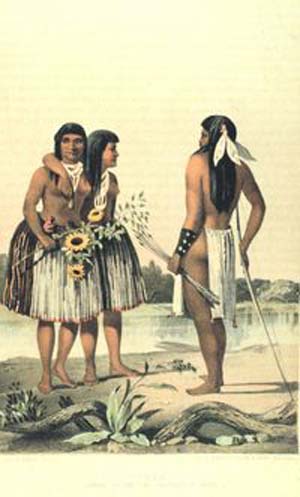 1. The Trek Down the Mountain. The moon shone bright and I could hardly sleep. It was almost morning, I was so excited. Today was the day we would begin our journey down. My name is Ipi, and every season I can remember, when the clouds gathered over the mountains and it became cool, we would gather up our clan to make the long trek down into the big desert valley below. My mother, Matiye, and two sisters, Tipa and Nicu, would march with my uncle’s clan, the Kwayu clan. My older sister Tipa was already a woman, and Nicu was almost of age. I was the next youngest. There will be twenty of us only, because of the great death some time ago, when my father died. His name was Tukapa, and I remember him only a little, same as I remember almost a little of two baby sisters and one older brother. That was a sad time, the old people still talk about it, in whispers. It is not polite to speak of the dead. My uncle will help guide our family down the long trails to our camp in the desert, and for this I was very excited to go. On the edge of the clearing under the tall trees the darkness was broken in places, where the people were up already, making small fires under the moonlight. My uncle was up also, I could see him with the other men. He took my father’s name, Tukapai, and was now a clan leader. So I call him father. We had gathered our things yesterday for the trek, but were waiting for the shaman to lead us. His name is Tapawaye, and he is the wisest of men. He knows where are the trails, where to find water, and when it is time to go. My sisters liked the forest better, because they can run and hide behind the trees when boys chase them. But I like the big desert better, because I can see game far away. I want to be a hunter, like my father. I could hear the men talking in low voices, while women were gathering up the last bundles of dried meal and meats to carry down with us. We had two mules and a horse to help carry the loads, but most things will be on our backs. My bedroll and satchels of food would be tied to my back. I also had two water gourds, and a knife. In my mind I could see where I hid my wooden bow amid the rocks of our desert camp, from last time. It would need new sinew stretched over it. There are two new arrowheads in my satchel, but I will make more when we arrive. I also fashioned some long shafts from straight branches, which are in my bedroll. Attaching points will be my first task when we arrive. I could not wait to go, but we would not until Tapawaye was here. "Ipi, come help your sisters load the animals," my mother called to me when she saw I was awake. "Yes mother," I answered, but I really wanted to join the men by the fires. "Then go and pick some berries for the trip," she added. I really wanted to hear what the men were saying about the soldiers from the Mission seen on horseback a few days ago. They were spotted on the side of the mountain towards the setting sun, the west. I had never seen it, but men talked of a vast sea beyond the mountains that stretched as far as anyone could see, and that Spanish men from far away, they had very pale skin, used the sea to travel in large wooden boats. Even our shaman had seen this when he was a boy, because he lived at the Spanish Mission then. But I find this hard to believe. All I could think of is the large open spaces of the desert, where I could see as far as my eyes will take me, all the way to the other mountains where the sun rises. There it was not foggy like here, but clear and beautiful. But that must wait, so I packed my things on the mule, as my sisters were packing things too. "Ipi, help us gather some berries," they asked me. That is girls work, but I must do it too. So as the sun was just rising over the distant mountains, I joined Tipa and Nicu at the berry patch. We picked enough for the whole clan in a short while, the bushes were thick with berries, and these were gathered in a cloth sack. My sisters ate some for breakfast, I took a handful in my mouth too. But I was not hungry, more thirsty, so walked over to the spring. As I gazed into the clear water, I was suddenly aware of a presence near me. When I looked up, it was Tapawaye, who smiled at my surprise. "Are you ready Ipi?" He looked at me with wisdom filled eyes. "Yes, I very much am ready to journey, your kindness." It made me feel good when he looked at me, though many held him in fear. They feared his magic. But I liked him. He made me feel strong inside. He knew the way few others did. My uncle was wise, but not like this. Tapawaye’s wisdom was special. "Do we leave this morning?" "I believe all are ready, so when your are, we lift our burdens and go." I watched him as he turned his back to leave, not a tall man, slim of build not like a warrior, older man, but he walked with a quiet confidence I admired. Everyone was ready. The sun was now shining, but still cool in the morning mist of the forest. I could tell from how everyone stopped what they were doing that it was time. Our last camp was in preparation for this annual trek, now that leaves had begun turning, so we camped close to the forest’s edge. Without a word, everyone picked up their bundles, the animals shifted with a snort, Tapawaye was already walking, the others fell in behind. My family was in the front of the file, my uncle holding the reigns of the mule, my mother walking by his side. The old people and youngest children were at the rear, where they kept each other company. They were slower, but would catch up at the stops. Everyone had their own pace, and mine was quickest, like our dogs that followed chasing here and there, because I could not wait to get there. I wanted to see the forest end, at the edge of the mountain so I can see the great valley below. And in a short time of walking, we were there. As we walked the ridge the trail began its long descent. There it was, the desert I dreamed off all the warm season. The forest is cool then with rain and clouds flowing into small streams. It has good pasture for the horses and mules, and it smells soft and green. But the desert smells hard of rocks, even after a rain. Yet, looking down into that vast valley below, it was magic there. The color of stone and sand stretches forever, the air dry and pure. The sun always shines, and when storms come, they are spectacular to watch. Tall clouds of black and white flashing with lightening and thunder, and then they burst into torrents of water from the sky in a big blue sky, even hail from the spirit gods. My uncle and father worship those gods of sky and earth, and I do too. What stretched before my eyes was a world of gods, of spirits who are both giving and cruel, with life or death. It is easy to get lost in the desert and die of thirst. But it does not make me afraid. It makes me strong. The desert to me is the power of life and death. I was born there, my mother said. I noticed a change in the people as we walked the crest. Some fell silent, looking, while others became excited. My older sister Tipa was now walking behind us with a man, Pawa. He is a tall and strong man, good teeth and easy smile, strong arms like a warrior. He is also a good hunter. She and Pawa talked quietly as they walked, but at times she would laugh, or his voice would rise, and they both laughed. I think she likes him very much. And he likes her too. Up ahead Tapawaye walked with a firm step down the slopes, his long wooden staff in hand, and now that we began our descent he too was silent. Our stop tonight will be at the palm oasis. I remember it from before. It has a small clear pool of water and many palms all around it. There is game there, but also mountain lions, so we must be careful, especially at night. As we walked, the animals clumsily tripped over rocks on the trail, they were not used to the desert, or had forgotten. I watched clouds gather over the mountains beyond. But it would not rain here. "What do you think of, Ipi," asked my uncle who came up beside me. All the others were trailing behind, with only the shaman ahead of us. I wanted to go ahead of him too, but that would be impolite. Tukupai asked me again. "What do you see down there?" "Water," I answered him. "I was thinking of where we hid the earthen pots at the camp." "You’ll remember, once we arrive. But that is tomorrow, today we make camp half way." "Yes, I remember." He stroked the thick hair on my head, and then went back to walk by Matiye. I think they like each other too, because many nights they sleep together. But my mind was elsewhere, not here on the trail. I was already at the caves of the camp far below. When my uncle asked me, I was trying to remember where I hid my arrowheads. Tapawaye came to a sudden stop and raised his hand. We all stopped too. I could hear the faint rattle of the desert snake. He reached into his satchel and pulled out a large rattle. He started shaking it furiously while chanting magical words, which I could not understand, as they were magic. In time the snake stopped, and we all saw it move away. The magic worked, and we were safe to continue. Further down the path the trail began to twist back and forth, because here it was very steep. Pawa took hold of the reigns of our mule and guided it down carefully, Tipa still by his side. As we climbed lower I felt the air grow warm, and it made my heart glad, because now we had left the forest and really entered the desert. I looked back to see the old people far behind us, so it was time for a stop. Once again, when we got to a flat place, Tapawaye raised his hand. The clouds I saw far away had disappeared, and now the sun was really hot. My water gourd felt good hanging from my shoulder, so I too a small drink. Others were doing the same. My bed roll hung over my back was getting heavy, and the sun was almost at its highest point in the sky. It was cool in the mountains, but it will be hot below. As my father once explained to me, when I was still very little, the sun rises in the eastern mountains, but sets in the western mountains, where it goes to sleep until the next day. But at midday, it hovers right over our heads. This was almost that time now, and we had been walking a long time. It was again time to stop, which we did. The animals were glad, and it was time for some food. Mostly, dried meal and a strip of dried meat was all we had, except for the berries my sisters passed down the line all the way back to the old people. As the sun dropped down in the sky, and by then we had been walking a long time, I noticed my sandals were beginning to hurt. They were made of hard grasses woven together into strands. My mother made them for me, and for this trek she sewed leather soles to make them sturdy. But now they hurt. The old people had fallen far behind, while Tapawaye was far ahead, but I could see the palms in the distance. We were almost at our stop for the night. My friend Dakui who had traveled with his grandfather at the rear now caught up with us. It was good to see how happy he was. "Ipi! We can hunt for nuts." "Why yes, pinon should be ready." I was glad to see my friend. "But are you not frightened of the lions who live here?" "No! They are more afraid of us them we of them!" "You speak like a hunter," I laughed. "If there is danger, we bring spears." When we arrived at the oasis, everyone sat down, they were so tired of the walk. Fresh water felt good to drink and splash on our faces. My sisters opened the satchel tied to the mule, and took out a clay pot. This one was a gift from Tukupai when he came to live with us. It had beautiful black and red lines on it. Nicu filled it with fresh water for the evening meal. Mother was already starting a small fire. She prepared meal in the metate stone, which then mixed with water and flattened into breads was placed on a hot stone in the fire. The smell reminded me how hungry I was. So Dakui and I set out to find pinon nuts, because we wanted to share this with our families. It is only polite. In the growing darkness, we spotted pinon bushes, so took our small satchels to gather some. They were very ripe, easy to pick off the trees, and we quickly filled the bags. By the time we finished it had fallen dark, and we realized we better get back to camp. We did not bring spears, so we were unarmed for the lions. Quickly we walked, because now it was dark, back towards the fires we could see not far off. But then, just as we started, Dakui tripped and fell. "What happened, are your hurt?" "No, I was not careful…" And then we both heard the same thing. It was a rock slipping off and falling, then a twig snap. "The lion!…" we both whispered to each other. Our eyes were growing wide in the darkness. "Where is he?" "I don’t know. The moon is not up yet. Can you see?" he asked in whispers. "No…" I whispered back. Then I reached for my stone pointed knife. If I did not have a spear, at least I can cut him, hit his eyes. "Can you smell him?" "Yes, I think so… over there." He pointed off into the darkness. I immediately reached for some stones and threw them as hard as I could in the direction he pointed. We both listened, silent. "There he goes!" cried Dakui, "he’s running!" I threw more stones, and now we both stood up and shouted into the dark. Stones fell, and the sound of running soft paws could be heard up the hill. "I think we scared him," I said first, but my friend was already running back to camp. No reason to tempt the spirits of the lion again, so I ran too. "We have pinon nuts," we both announced when we returned to the others, as if nothing had happened. We stopped running just before we got to the circle of fires at the oasis, though we still were out of breath. My uncle looked at me with a puzzled expression, but I moved over to my mother quickly. Dakui was with his family too. We could not tell them we were afraid. The bread tasted delicious. Shortly after we got back Pawa came to camp carrying a desert sheep on his shoulders he had killed, much to Tipa’s delight. Dakui and I never mentioned that mountain lion again. He came from the same direction we came from, but Pawa never mentioned it either. 2. First Camp. When I rose the next morning, the bright moon was still shining over us, it bathed the whole canyon with light. As dawn showed first faint light over the mountains, the sky was still dark with may stars. By this light I could see clearly outlined palms, and the valley stretched below. Cacti stood out in the dark, as reminders to be careful where we walked. Birds had awoken too, so they filled the canyon with their songs. A coyote who wanted to drink dared not come closer, so he called his howl to us, and as warning to his friends. Another answered, and then another, and then the dogs barked and howled, so the hills echoed. I slept well, my blanket tight around me, but it was not cold. The morning air felt good, and it still smelled faintly of fire. The sun would rise shortly, as the eastern sky was turning blue, so I rolled up my bedding. Our shaman Tapawaye was also up, so I walked over to him. "Good morning, your kindness." "Good morning Ipi. Sleep well? Any dreams?" He was rekindling the hot ash by blowing on them. "I don’t remember any," I said, though I thought I dreamt something. "Dreams are important." He continued blowing until the dry grasses flared up. "I did dream." He pointed to the western sky still dark. "See those clouds over the mountains?" I said I did. "They will bring rain today." He then added small branches to the fire, and then placed three stones in between the flames. "Do you remember the painted rock?" "I remember it. You asked me if I can read what it said." "Yes," he smiled. "We walked past it then, but this time we may need to stop there." "But you said the writing was magic, and that I did not read the magic right." "Yes, you remember. But I also said when you are older, you will try." "I’m older now, so I try again?" We talked like this until the stones were hot. "Fetch me some water from the spring, if you like." I jumped up and took a small travel basket, the kind with waterproof weave lined with pitch, and brought it back full. He poured this into a small wood bowl and quickly dropped the hot stones into it, and in a short time the water was hot. "Would like some morning tea?" "Yes, I would. " He poured some herbs into the water and we waited. "But did you dream it will rain?" I asked him after some time. "You see those tall ocotillo? They are green, which means it had already rained here. And the pool here is full. So the season had started." I nodded that I understood. "In the desert you must always follow the rains. Water is life here." "Like the coyote calls this morning, he was telling everyone in his clan that people had arrived to the water." "Yes, the coyote follows the same patterns of life we do. But they also follow us, because we may leave behind some kill, which they clean up. And we follow them too, because they tell us where there is game. You see, it is all a circle." "So we wait to come here until the rains come?" I was now sipping some tea from his bowl, it tasted sweet and warm. "And then we go back to the mountains when they stop." "Yes, that is how it is. The circle then completes." "But I did dream something," I just remembered. "I dreamt I was singing… but I can’t remember what." "There are many songs, some sacred to call on spirits, some to tell stories. And some to call the rains." He looked at me as he took another sip of tea. "Your dream may have called the rain." He smiled at me when he said this. "Maybe?" By now as the sun sent its first rays over the mountain, everyone had awakened and were busy. Mother and sisters had packed up the bedrolls, tightly tied to the mule. The animals drank again, as did dogs and people. It will be a long hot trek today. Though we pass another spring not far away, the water there is not so sweet as here, it tastes a little of salt, but still drinkable. When we were ready, I hoisted my bedroll across my back, and filled my water gourds. Again Tapawaye led the procession, and without a word we all started down the canyon. Soon the palms were behind us and desert opened up into a large valley. We walked like this across flat land with occasional stops for the old people and little children to catch up. Dogs chased desert rabbits, and some of the older children picked cactus fruit. These must be peeled carefully with a sharp edge to remove the spines, and the fruit inside is juicy and sweet. All the berries were eaten, so these fruits now made our walk pleasant. Some cactus flowers are edible, so the children, both boys and girls, gathered them also. They will use them in ceremonies, for drinks. We also gathered feathers, especially when colorful, also for ceremonies. "Will we reach camp by nightfall?" I asked Tukupai, who was walking with mother. The day was already past its mid point and I knew camp was still far. "We may stop at your mother’s cousins tonight, it is on the way," he answered. "I had not seen my cousins for many months," my mother answered him. "It would be good to talk with them, and see them." "It depends on the storm over there." I saw the tall storm clouds too. "We may go for temporary shelter if it breaks." I watched them walk together, like my father walked with mother long ago. I was happy they shared the same walk, because I like my uncle. He is a kind man. My sisters were walking together now, Pawa was walking with his family. I could see my friend Dakui walking with his grandparents. His family died in the great death, when my father and little sisters died. But my thoughts were turning sad, so I looked out over the desert beauty again, and it made my heart glad. We arrived at the painted rock when the sky was very dark, but it had not rained. I ran up to Tapawaye, to seek his council. "Should we stop at the shelters here?" I asked him. "How do you know there are shelters here?" he asked me in turn. "Because I remember, from last time." He then pointed to the rock with red and yellow lines on it. "What do they say, Ipi, these drawings?" I studied them again. It was the same as last time, a lizard, ten markings, clouds and lightening, the sun… I wondered about them as the clouds grew thicker. "It is now!" I finally answered him as the others were arriving. "The drawings is for us to know that weather may change." "And then?" He pointed to the ten markings. I puzzled over them. Then I remembered something about markings for counting, so said so. "Which way do they slope?" "To the right… with the line underneath." He nodded, and asked me again. "That means ten, but for each mark is ten again, I think." "Yes. It means ten steps, but for each ten there are ten steps again. And because it is to the right, we must walk that way." He pointed down the trail. "Shall we try it while the others arrive?" As the weary travelers came together and stopped to rest, Tapawaye and I walked down the trail, counting. At each ten steps, he made me hold up a finger, and then count ten steps again. When all fingers were up, we stopped. On the right was a large flat stone with a hollow in it, it had water. Tapawaye pointed to it. "This is the magic rock of water. Remember it, because it will tell you something important. Then he turned to the hillside. "What do you see now?" I looked up the rocks of the hillside. "A trail… a small trail up the rocks." "Now remember the drawings. What was at the bottom of the lizard?" "A cave with three markings in it." "Yes, now climb up the trail." We quickly climbed until we came to a small cave. When I looked in, there were three rocks in it. "That’s the cave!" I was very excited to see this. "But what does it mean?" "That we are in the right place?" Tapawaye looked up the hill. "Up there is water, if we need it. And because it will rain today, there will be water flowing. When water is present, crops can be planted here. Remember that." He then led me back down, and while we walked back he explained all the markings painted to me. But I cannot tell what they all mean, because some of it is magic, and some only for shamans to know. But I did learn that water flows there in the small valley above us. And the lizard was a rock ladder. We then joined all the others. By now all had gathered to consult where next we would go. "Up that valley is the way to our camp," Tapawaye explained. "But rain is coming, and it is still a very long way. We do not have daylight if we stop for shelter." All agreed that this would be unwise. "This valley here leads to shelter, and only a short distance beyond is the Tipai clan. We can stop there for the night." It was agreed, that we should overnight at the Tipai camp. That is where my mother is from, and this made her very happy. My uncle was happy too. Tipa and Nicu were also pleased, because they have friends there. So we set off towards the valley of our cousins. It now had started to rain, a light rain, but we quickened our step. At the end of the small valley where it opens, everyone hurried to find shelter in the rocks, because now it was raining hard. Tapawaye held back and when I arrived he asked to stop too. "Wait here Ipi, while the others reach shelter." It was raining, so we both waited aside of the trail while the others passed, even the old people. My bare skin was getting cold from the rain. The oilcloth covering my bedroll was also my poncho against the rain, so I thought of taking it off to cover myself, but I waited. Tapawaye was also wet. The air was cold and blowing. When all had passed us by, he asked me to look down the trail. "What do you see, Ipi?.. this is important." I looked, and all I could see was wet stone. We were alone with only stone for company. It smelled wet now. Then I saw it, the stone that was red. It stood out in the rain. "That stone is marked," I said. "It had been made red." Tapawaye was pleased with my answer. "Do you know why?" I answered I did not, but said it was done on purpose by someone long ago. "You are right, it was cut this way." We walked closer to see it better. "When our clan long ago passed through here, they peeled off the top to show the red inside the stone." The rain stopped in a moment, and the sun again came through the clouds. "They wanted us to know there is shelter here. Remember this, because when you see red marker that are shaped like this," he made a square with his hands, "that means shelter." I understood, and then we hurried back to the others who were already hidden under the large rocks, safe and dry. The rain returned, but inside the caves small fires were started to warm us. Animals stayed outside, but they like the rain. We do too, but not to stand in. Inside the shelter I could stand, but tall people had to sit. I warmed quickly by my mother’s side. When the sky cleared, and the sun was getting low, we all set off for the Tipai camp. Just before dark we arrived. The first to see us coming were children, and they quickly ran to tell the others, who ran up to greet us with loud shouts of welcome. "Ayyeee!" they shouted. "Come here, we have food! And drink!" Everyone was very happy at our arrival. They brought clay pots with water, which had been gathered from the wet morteros. We drank, as we were thirsty. Boys showed us their spears, very proud of their sharp points. They also had shiny golden stones, for magic. The girls proudly showed off their collection of flowers, small lizard skins. But most of all they were proud of their grass weavings, which could be made into skirts of sleeping mats. When we admire these, their smiles were wide, because they were very happy. My mother’s brothers lifted her off the ground when they hugged her. Her mother and father, my grandparents, also died in the great death, but it is not spoken. We who are alive are thankful to the spirits who saved us. I could smell squash soup being made. And Pawa skinned the desert goat he killed, and made it a gift to their shaman, who is called Kiwaye. We all ate meat that night along with meal flat bread and soup. Together we all were ten times five, so many shared the shelters that night. The clouds had gone and now the stars filled the sky, with the great way down the middle. The Tipai clan made small shelters of branches and palm leaves, which they gathered at the stream at the end of the valley, where the canyon has water flowing. They also had wet morteros here, where water gathered in them overnight. They were magic, like the singing stones. In the small huts four or five could sleep close together, this kept us warm. I slept with Nicu and Tipa in one, with two cousins, while mother and my uncle slept in another, with her brothers. Kiwaye and Tapawaye talked and sang songs together by the fire until the moon rose. We were all very happy with full bellies that night. I fell asleep listening to the shaman songs, as they sang of the great Chinigchinich in the sky. Everyone knew this song. 3. Our Camp Revived. We rose early to a beautiful sunny day. Water rocks were dripping from the day before, and baskets were placed to collect it beneath the large stones. A small stream gathered near the camp, but this would soon return to sand, except where a hole was dug, where water would be available for one more day or two. After tea and flat breads, our clan prepared for the last part of our journey. We would be at our old camp by afternoon, long before sunset, which is good. It will give us time to find our things in daylight. Tapawaye bid Kiwaye many thanks for his kind hospitality, and exchanged feathers as is customary. So we packed the animals, picked up our burdens, and set off on the path once more. The morning moon was faint in the sky now, almost gone back into the blue. I found Dakui who walked in the rear. "Are you excited? We will soon be there! Do you remember the stone knives we made together? Do you have spear shafts with you? We can cut new ones." We talked with excitement at finding our arrow points hidden in the caves, and the hunting we will do together. "I want to kill many rabbits," he exclaimed. "They are good eating for us." "Meat makes you strong, my uncle told me. I want to be a great hunter too." We talked like this until the distance shrank, as we were almost there. I could now recognize the mountains around us, and the valley with trees further down where water always runs in the small stream. There I will find more straight branches for my arrows, down by the creek where they grow in straight tall bushes with thin leaves. It felt good to be home again in the desert, after a long trek. I could tell from how people talked they were happy too. In the desert the spirit runs free and wild. Far in the sky I could see a hawk circling, also free. A band of coyotes were surprised by us, and the hare they were chasing ran off, so they yelped in protest at us. Fast running birds crossed our path twice, and more desert hares too. We were entering a rich hunting area. Up in the canyons lived desert goats, the males with large curved horns, very good eating too. I wanted to hunt those this time, because I was too little before. Pawa can teach me. He was walking with Tipa again, leaving Nicu with my mother. They talked with excitement also, of how they would find their pots hidden in the sand, and plant squash up the canyons where water gathered in a field. The sun was now hot on our backs, but we kept walking, only sparingly taking water when we needed to. In the desert it is important to learn how to suffer thirst without thinking about it, because sometimes the water may be far away, or not where expected, so we must survive without it longer. I had almost full gourds, because I wanted to drink as little as I could without fainting. It felt good to feel the heat, the hot sun, the dry air on my skin. But already I could see clouds gathering over the mountains, and wondered if Tapawaye saw them too. The forest was now a distant memory, and though I like it there, there is no home like the desert. It is magical for me. Two vultures circled high above us. We will arrive safely, so they will be disappointed. All the people quickened their step when we could see the hill where our camp was. I ran up to Tapawaye at the front of the party. "We are almost there!" I exclaimed. "Almost, Ipi, we have arrived." Then he pointed at the hill of loose boulders over our camp. "Tell, what do you see?" I looked hard, because they were still far away, but now I could see why he was asking. "The square red markers! I see them now." "Yes, that marks our camp, and shelter for anyone stranded in a storm." This made me very proud, now that I understood. But I still wondered of the painted rock, so asked him. "Why were there little dots in a row at painted rock?" I asked. "Why do you think? Think of what your mother will do up at the canyon when we arrive…" "Of course! She will plant squash." "And how does she plant them?" "In a row where the water comes." I thought about it. "So those dots are squash fields?" "Now you can read more. Do you remember the rattle snake pattern on the rock?" "Yes, it is next to the lizard ladder up the canyon." "That is right. There were three lines, one broken. Do you understand why?" "No, I do not." "Think what happens when it is wet and when it is dry…" "Ah, I see. Water flows sometimes, but not other times?" "Sometimes the water is there, but you cannot see it because you have to dig for it." I understood then. But he asked me another question. "Do your remember the shelter picture on the far left? Why do you think it is there?" "Because there are shelters up the canyon?" "No, not right. You see, if you were standing on top of the hill and looking down, and there was a shelter sweat lodge to your left, where would you draw it on painted rock?" "On the left… Oh, now I understand." He smiled at me approvingly. "You are a smart boy." And now we were here. Everyone made it for their former campsites in the rocks. Stones had been placed to make for easy climbing in between the boulders, and we children were first to reach the caves up the canyon. They were dirty inside, coyotes and hares had used them while we were away, so cleaning them was first thing to do. Spiders also had to be cleaned out, and watch out for snakes that took shelter here from the sun. I found our cave very quickly, and brushed out dust from inside the rock niche where I kept my knife, and arrowheads, next to the fire. With my hands I dug down in the soft sand to uncover the tops of clay pots hidden there. They were unbroken, and when I raised them up, their colors of red and black looked perfect in the faint light. This made me happy to see them, since now we can collect water. I immediately took one to the cave with the big crack across, where water always trickled all the time, and placed it below to catch the drops. Father and mother will be happy for this. While it was dripping, I climbed up to the red marker Tapawaye pointed out, and it was as he said. The stone cover taken off to show the red rock beneath was still there. It could be replaced quickly if we wanted to hide it. I thought about that, but only shamans are allowed to do this, in times of danger. Then I took the filled pot back to our cave. "Ipi, your brought us water, thank you." My mother was pleased. My sisters were busy cleaning the cave of dust, but they made more dust by sweeping it. I helped move some soil out, so it will be taller, even tall enough for my uncle to stand. My sleeping corner was next to be cleaned, which I did. There I placed my bedroll. It had begun to rain again, a light rain, but our cave was dry. Sometimes after a big rain some water would come in, but it dried quickly. When dark fell, everyone was assembled at the great kiva cave, the one with the large flat stone in the center. Tapawaye had made a fire, and was smoking a long pipe with tobacco inside. He then addressed everyone present, the whole clan, even smallest children. "Welcome my people. We have arrived one more time to our ancestral home in the desert. None remember now, but very long ago this was a green land, and we lived here in harmony with all living things, the buffalo, the lions, the desert hare and coyote, the snakes and birds, all were brothers and sisters then." He took another breath in his pipe. "We must always remember the legends of our creation handed down over the ages, when all the people were one family who came from the north, and lived as brothers and sisters through the land. We are one people again." Then he passed the pipe to all the men who drew from it smoke, and passed it to the next man. Then Tapawaye told this tale of the great spirit Uuyot from the north. ""Then with a voice full of tremulous sadness and loving yearning for his people Uuyot said: 'My children, my own sons and daughters, something is wanted of us by Those Above. What it is I know not. Let us gather together and bring "pivat," and with it make the big smoke and then dance and dance until we are told what is wanted." So the people brought pivat--a native tobacco that grows in Southern lands--and Uuyot brought the big ceremonial pipe which he had made out of rock, and he soon made the big smoke and blew the smoke up into the heavens while he urged the people to dance. They danced hour after hour until they grew tired, and Uuyot smoked all the time, but still he urged them to dance. "Then he called out again to Those Above, 'Wit-i-a-ko!' but still could obtain no response. This made him sad and disconsolate, and when the people saw Uuyot despondent and downhearted they became panic-stricken, and ceased to dance, and began to cling around him for comfort and protection. But poor Uuyot had none to give. He himself was saddest and most forsaken. of all, and he got up and bade the people leave him alone, as he wished to walk to and fro by himself. Then he made the people smoke and dance, and when they rested they knelt in a circle and prayed. But he walked away by himself, feeling keenly the refusal of Those Above to speak to him. His heart was deeply wounded. "But as the people prayed and danced and sang, a gentle light came stealing into the sky from the far, far east. Little by little the darkness was driven away. First the light was gray, then yellow, then white, and at last the glistening brilliancy of the sun filled all the land and covered the sky with glory. The sun had arisen for the first time, and in its light and warmth my people knew they had the favor of Those Above, and they were contented. "But when Siwash, the God of Earth looked round, and saw every thing revealed by the sun, he was discontented, for the earth was bare and level and monotonous, and there was nothing to cheer the sight. So he took some of the people and of them he made high mountains, and of some, smaller mountains. Of some he made rivers and creeks, and lakes and waterfalls, and of others, coyotes, foxes, deer, antelopes, bears, squirrels, porcupines, and all the other animals. Then he made out of the other people all the different kinds of snakes and reptiles and insects and birds and fishes. Then he wanted trees and plants and flowers and he turned some of the people into these things. Of every man or woman that he seized he made something according to its value." When Tapawaye finished, he put down his pipe. We sat in silence by the firelight, while he meditated deeply. Then his voice began a soft chant, and it grew louder until everyone had to chant with him. We all did, and it felt very good, like the beginning of the world again, we were all one people together. And it all felt good to hear the stories again. Then when we finished singing, Tapawaye got up and stepped outside, looking up at the sky. He raised his arms to the sky and began a long mournful chant that made us all sitting inside very silent. He was calling to the spirits to protect our camp from harm. We were now safe here. 4. Soldiers on Horses. Dakui and I, and other boys, would go hunting together. Sometimes it was more play, especially when little children came with us, but only boys. Little girls had to stay at the camp. But we would climb up the rocks all the way to the top and then watch for game. We became very silent then, just watching and listening. Most of the time we would come back with at least a lizard or two, maybe a bird, but most times with nothing but stories. Sometimes we brought a snake, which we killed with rocks. We all shared in this meat, when possible. I had found my wooden bow and it was still strong, so I put a sinew string on it. My arrows had new points, which Tukupai helped me make, and these were now strong arrows, points well tied to the ends. We even attached cut crow feathers glued on the ends, so they would fly straight. I became very good with them, and could hit a desert hare at ten paces times two with ease. So could Dakui, but we never hit a fox, because they are too fast and smart for us. My sisters were getting ready for a very special ceremony, for Nicu, who was younger than me but already showed signs of becoming a woman. Tipa was already of age, now a woman, but Nicu was still a girl. Now that she had begun showing breasts, which she covered from the burning sun, it was her time to become a woman. Life had settled with ease at the camp, everyone had their tasks to perform, and we lived happy. Tapawaye held ceremonies to which we danced and sang in the kiva, or sometimes outside by the fire. Rain was plentiful, and mother’s squash fields, along with those belonging to other families, were growing well. We had good game, and Pawa and other men always came back with fresh meat. The skins were used for capes when it was cold, especially at night, or when the rains were windy and cold. Like most men, because I was older now, I covered my front with a skin flap, which was tied around my hips and down my rear, so to protect what some men called their manhood. Women covered the same area with grass matted skirts, though if not hot they showed their breasts and rears. But the front must be covered, or it is impolite to others. I cannot explain why this is impolite, but it is our way. Now it was time for Nicu to join the women in the same dress, because being naked for a woman is impolite. The preparations for Nicu’s initiation into womanhood was made well in advance of her special day. Some of the older women had noticed how she flirted with older boys, so they were eager to get her initiated quickly. This is how babies are made, when girls flirt with boys, but it is better for her to be a woman, so then she can have a man in a proper way. Tipa and Pawa had already spoken of this, that they will be husband and wife, but Nicu is still too young. Whether or not too young to marry, she is not too young to be called a woman. So they prepared the pit for her. First it was dug shallow pit and then filled with heated stones. That evening, everyone was invited to attend, and to see a girl turned into a woman. Nicu was very excited by this ceremony which made her the center of attention. She was dressed in beautiful feathers, a long grass skirt as women wear, and drawings with paint were made all over her body. These were special symbols to bring her health and many children, and to make her happy in her life. Nicu looked beautiful, so young and colorful. Then while she was being readied, Tapawaye made a large circle in the sand, and with colored sands drew another figure, that of a woman, with her legs apart. Then he placed a fine line of sand from her private part between the legs to touch the outer circle. As he did this, we all watching him, especially young girls, he explained that all of life is like a circle, and that the life from inside a woman connects to all of that life circle. While he did this, he quietly chanted sacred songs to himself. The women were busy putting warm rocks inside the long pit, then covered it with sand so the stones will warm it inside. After a time, when the hot stones had heated the pit, they dug out the sands and stones, which were still warm. Now it was Nicu’s turn to participate in the ceremony. As the sun set at the same time the moon rose, and fires were lit, all the women began a chant. The men held rattles with which to keep the chant on time, very softly, and Nicu was brought forward. She was stripped of her beautiful coverings, and when naked, except for her front cover, was laid down into the shallow pit, which was still warm. Then the women, my mother first, carefully pushed sand all over her body until only her face was showing. The Tapawaye began a long chant to heat her body with the earth, so they became as one, the Earth Mother was now Nicu’s mother too, and together they will bring life into the world. This lasted a long time, with everyone singing, until I could tell Nicu was getting too warm. Again my mother was first woman to remove the warm sand, and when Nicu was free of the earth, she was dressed again and taken to a cave where she would stay for three days. Once she emerges from this cave, she is now a woman. While Nicu was in her seclusion, a cloth was brought forward and on it was her blood. This gave the clan a great joy, and everyone yelled "Aayyeeee!" in celebration, which meant more food and drink to celebrate it. The Earth Mother had accepted our Nicu as one of her own now, which gave all of us much joy. When Nicu emerged from her cave three days later, it was again time for a feast, and more dancing. She was at the center of the dance. Tapawaye had mixed a drink from herbs and fermented fruit which was a stimulate to the senses, and he gave some to Nicu, who giggled when she drank it. We all tasted a small amount, because it had to go around to ten times two so everyone had some. Some fell down giggling immediately, others fell down later, but we all giggled like little children together, which was very funny. But in a dream I had the night before, something was not funny. And now this was about to become true. Children up on the rocks came rushing down that they saw strange men on horses riding this way. This immediately set up an alarm for everyone present, especially the men who gathered to consult on it. We all met in the large kiva. "These are Spaniards coming," Tapawaye said with a grave voice. We must be very careful, because they kill to take what they want. The men went to get their spears and bows, and I did too. Under the hot sun we saw the men coming around from the canyon where no one ever goes. Down there is nothing of importance, no good game to hunt, except for the shiny yellow metal sometimes found in the soil after a heavy rain. We used these stones to trade all the far away with the Spanish Mission near the sea, because they value such things. Often in return we get corn grains, which we make into flat breads. But there was no trading mission here for a long time, and these men were a surprise. As they came around to our camp, Tapawaye was there to greet them. "Vaya con dios" he said to them. When Tapawaye was a boy he had lived at the Mission, so he knew their language. The men answered something, and then they dismounted from their horses. These were large men, three of them, with beards, something we do not have in our people. They also had heavy costumes made of metal, which looked odd to me. How could they carry so much weight? By their sides they had long dark metal tubes with fine wooden handles, and long knives made of shiny metal, like their costumes. I was fascinated to see them, but I could tell from Tapawaye’s voice that he was cautious. They spoke while we men and women, and children, all waited together. Then the men stepped towards us and without asking took two of our young women and pushed them aside. Tapawaye protested, saying these were our unmarried women, but they seemed not to listen to him. Now they spoke our language, so all could understand. Instead they stripped the women of their skirts so they all stood naked before us. We were all shocked by such impolite behavior, but said nothing. Our shaman talked with them some more, saying such behavior was not right for men of a kind "jesus of god". But they only laughed, saying the men had traveled a long way and needed food and drink, and women. Tapawaye told them something, and then explained we could share what little food we had, and water, and that we had some dried meat, to no avail. They only really wanted the women. Then our men grabbed their spears and bows. Pawa and Tukupai was among them. This led to a suddenly evil turn of events, when one of the men grabbed one more woman, this time my sister Nicu. I saw red with fury, because she just became a woman and could not be treated with such humiliation. I too went for my bow, and then put an arrow into the string. When the men saw this, they raised their long metal tubes at me. My fingers were trembling, but my sister was not to go with them. Then the man who grabbed Nicu took off his helmet, and to my shock his hair was the color of sunlight. How could a man with such beautiful hair do something so evil? It put tears in my eyes, I was so disturbed. Tapawaye raised his hand to stop me, but I was firm. I wanted to kill him like a desert goat, he angered me so. I have good aim, and my arrow was pointed right at his eyes, then through my tears I lowered it down to his neck. He would die for this terrible insult to my sister who stood naked before him. By now all the other men also raised their bows, with aim to kill. The men with golden hair raise his long tube right at me, so we both stared at each other a long moment, before the loud noise and flash sent something buzzing past my head. The other men loosed their arrows, but they only struck one man in the arm, some arrows bounced off their metal costumes. The naked women fell to the ground, from fear, and so did everyone behind us. But I stood my ground and fixed another arrow to fire, just when another horse came by. He was a man, a young man, dressed in dark clothing, and he shouted to stop what we were doing. When he approached us, still mounted, Tapawaye fell to one knee. I understood this man was important. So I too lowered my bow. Everyone put down their weapons, even the Spanish men. Our naked women quickly got up and returned to their families, some crying for fear. This man began talking in both Spanish and our language to Tapawaye, at first quietly, but then both raised their voices. Tapawaye said no women are to leave our camp, they are family to us. But then the man, whom I heard called Fray Luis, an important man of the Mission, said that two of our men must come with them, because they must be punished for firing arrows. Tapawaye protested the Spanish soldier fired his weapon first, but Luis would not understand, so he pointed to me and one other man, Pawa. I stood frozen. Then my uncle said no, he would go in my place to the Mission. I jumped down to where they were gathered and said I will go, because they live near the sea, and I must see this. This brought a smile to the face of the man Luis, but he agreed with Tapawaye that I was too young to work for the Mission, and that two strong men were needed there. The women were forgotten now, but two men important to me, and to my mother and Tipa, would not be prisoners of the Spanish. I could not live with this, but that was the decision made, to my deep sorrow. How could we avenge it, I wondered? Two strong hunters taken away was wrong. I cried that night in the cave, but my sisters and mother were safe. Tapawaye gave council, but I did not go. My insides still hurt from the shame brought on our women, and men too. I could not believe anything good of their "jesus of god" could ever come our way, except death and shame. It took a long time fore me to find the strength to speak with our shaman again, but I did. When we talked, he explained the power of the Spanish weapons, and that I was lucky to be alive. He said there will soon come a time when I must go with him to the sea. And then we spoke no more of it. We missed my uncle, especially my mother missed him. And Tipa was always sad, because Pawa was taken away. But the rains were good, and there was plenty of game. 5. I become a Man. The days grew short and the cold had set in. On some mornings the water in the jars froze if left outside, which created an ice pattern. Tapawaye showed me how to draw ice, which was a cross pattern with a line above it. That means many days of cold to freeze water. I was the main hunter now, me some older men, and we went out on hunting parties in the canyons and valleys where desert goats were found. We would lay in ambush, sometimes leaving a little water in a large hollowed rock until they came to drink, then shoot them with arrows. When I needed more straight shafts for my arrows, I would hop on the horse and we rode down to the valley with trees, so I could cut straight branches, which I brought back many to share with other hunters. I always had a couple for Dakui as well, since he was afraid to ride with me. At times, when everyone was asleep, I would sit on top of a large boulder above the camp and look at the sky. It was black with ten times many-many stars in it, which filled the whole sky. Sometimes a star would fall. I wondered what they were, or why they were there. The did not give enough light, but when the moon rose over the mountains, I could see in the night almost as well as day. I had hunted at night too, by myself, untroubled by lions or coyotes. I was now master of the night as well as day. Matiye was heavy with child, and I heard the elder women say she would bear a baby anyday now. Tipa was also with child, but hers was not due for a long time, when we return to the mountains. The shortest day had passed, and on it a great feast was held with a large fire. Tapawaye sang the most beautiful songs, but my heart was heavy. I missed our clan’s men hunters, Pawa and Tukupai, who were like brother and father to me, and I could not stop feeling the pain of humiliation that they were taken from us. But I could not help them, and this made me ever more determined that I must. One day, when the sun was rising warmer again and we were already talking of the mountains, Tapawaye came to talk to me. I was sitting alone on a large rock overlooking the valley, where the Spanish soldiers took our men, in that directions towards the setting sun. "Death is in that direction," Tapawaye said then. "I know, and life rises the other direction, to the rising sun. Soon my mother will bring life again." "Like your were born here, so will her baby, a child of the desert." I looked into his eyes and I saw the wisdom again. I had stopped being angry. But I did not speak, so he spoke again. "There is hope that you will be a strong man, and wise. Perhaps one day you will take my place, because you have shown much intelligence and skill." "I want to be a hunter." "You can always be a hunter, but only a few have the dream to be shaman." We sat quiet for a long time, neither of us talking. Then I spoke. "I have to be a man first." "Yes. It is time for you to be a man. If you are ready, so am I." That was the beginning, and my training began in earnest. Every night I learned new songs. The necessary rituals came easy to me, and the stories of creation and the great spirits were told, and retold by me until I remembered them. When I was ready, my mother gave birth. It was a baby boy, so now I have a brother again. My older brother is back as my youngest. It made me very glad, and she was happy the boy was healthy. But my father was away, a prisoner of the Mission, so I had to become a man. The day was announced, and my ritual day was coming soon. But first I had to be prepared. This was a private time, so everything I reveal here is private, but without shame. Tapawaye asked me if I like girls. I said I like them as much or little as any person, nothing really catching about them. This made him think about it for a day. The next day he said he had asked the great spirit and the answer came to him in a dream. He said some boys are ready in the body sooner, but their minds are not. But with me it is the opposite, that I have a strong mind, and courage, but the body is slow. So there was an ancient remedy he would use to speed up the body. It is called the choke string, and he explained to me. "I will show you how to tie a small piece of sinew, very thin and well cleaned around your private part." He drew a picture in the sand for me to explain it and show where I must tie this string of sinew. Then he gave it to me, so I could do it in private. He said the kiva is a good place, since it now was empty. I did as he described, and tied the string around the head, just at the neck when the skin is pulled back. It hurt to do this, but in a short time the pain was gone. But something new happened, and it became hard, and painful. So I found Tapawaye and asked him about it, since my ceremony was only days away. "That is how it should be, Ipi," that the string stirs you. In a day or so, you will see girls differently, with desire, more than childhood friends." I waited, and dreamt of girls, or women, even full breasted women, and it began to stir in me. I liked them like I never like anyone before. It was a powerful feeling I would have, sometimes all night, thinking of girls, how they walked, how they smiled, how they moved their hips. They were wonderful to me, beauty to behold, to love in ways I never imagined. Now I wanted a woman, which was most strange. I could understand why Tipa and Pawa liked spending time together, or why mother and father slept together. It all made sense now. So I found Tapawaye, and told him. "I understand being a man!" when we met again. "Yes, now you know." He smiled a very broad smile at me. "Then you may take that string off, because you do not need it. You already are a man." There is more, and the ceremony to my manhood, attended by Tapawaye and grown men, but not boys or little girls, only women of age, to see me change into manhood. I was shown the ways of how to treat a woman, what she needs for her happiness, as well as mine. But with each new initiation, and this lasted days, when I was painted with animal spirits, or sent off into the night with only a knife, each day made me stronger, and braver. I understood more of manhood. I thought I was like a man when I hunted, but that was only a part. The real manhood was to care and be aware of the other person, completely, so they never felt rejected as your special human being to be with. This was the most important thing to learn. And now I wanted a woman. But she would have to wait. As Tapawaye explained, if I am to be shaman, I must take a woman from a very distant clan, maybe as far as the sea. "Then can we go there?" "Are you ready? Maybe you should grow a little taller," he teased me. I understood. But the burning passion in me was not just for a woman, but also to avenge my father and brother. The Spanish were unjust with us. I was no longer thinking like a boy, but as a man now. I had to find a way to right the wrong. Mother was happy with Paiye, my new brother. Tipa was awaiting her child, and her belly was getting bigger. I found this very attractive, she smiled more and her cheeks were full and flush. My sister’s womanhood was coming out in full. We talked of Pawa, and I confided that I had a plan to bring him back to us, though I told no one else. It was our secret. When I spoke to Tapawaye, I was vague, but asked him about our trip back to the mountains, now that the rains were failing. "When is it time to return to the mountains?" I asked him casually. "I watch the clouds, the sun, the stars, and soon they will tell me. Water is becoming more scarce, and we even had to travel all the way down to the stream with mules already, to carry water back. So it will be soon." "What do you plan to do when we are back at our mountain camp?" "I have no special plans." Then he looked at me, because he understood I had something in mind. "What are your plans?" "How many shiny yellow stones do the Spanish need to free a man from servitude at the Mission?" "Oh yes, I understand." He thought about it. "I think we need to bring many such stones, for both Pawa and Tukupai to be free." "We know where those stones are." "Yes, we can get some, before it is too late, and the desert dries out." "Then tomorrow, I will take Dakui and some others for the stones." "That is a wise plan. But do not trust the Spanish. They may take the stones and not give back our men." "I have a plan for that too, because I have seen they should not be trusted." The next day at dawn, we set out. There were four of us men, and boys, to seek the shiny stones. We traveled far up the dry arroyo until we came to the base of a large mountain, and then we set our eyes to the ground to search. In a short time, I found on stone, and then others reported also they found some. They were small, the size of pinon nut, but before dark we had ten of them. "But what do you want with these stones?" Dakui asked. "I cannot say yet, but tell no one we have them. This is very important." We rushed back to the camp to show to Tapawaye. "That is enough only for one man," he advised us. "You must go back for more, but tomorrow, or the next day, we must leave here, because the rains have stopped." "Send the women to the creek, and with mules to bring back water," I advised. "We will search again tomorrow." This time we only found five shiny stones, all too small for even a pinon nut. This distressed us, because we had spent a whole day looking. When we returned, Tapawaye said he will wait another day. So we set off again a third time. But now I found a very large shiny stone, bigger than my thumbnail, and I called to the others to stop. They had found another two small ones. "I think we have enough," I counseled. This time, Tapawaye said we have enough for two men, but we must keep it secret we have these, or the Soldiers will come to take them away. Thus he counseled the whole clan, to make sure they understood, because the boys already talked, and all knew of our finding the stones, though no one knew why we wanted them. I told the boys I wanted the stones for a good luck charm. "You see, the moon is my spirit god, and these are like the moon." This explanation they understood, and asked no further, because it may be bad luck to question the future shaman. The plan was set in motion, and Tapawaye hid the stones in a special satchel packed on one of the mules. We had begun our trek back, and it was painful to rise up the mountains, looking back at my desert below. But the days had grown very hot, and without water, it became difficult. On my suggestion, we had replaced the cap stones over the red markers at the camp, so no one will be looking there. Tapawaye thought it a good idea, incase the Spanish came back with Kumeyaay guides, even if not of our clan. They would know. I had again reburied my arrowheads and spear points, but I took the bow. We lived in more dangerous times now. 6. The Mission Parlay. I started dreaming of the sea. I did not know what it meant, but I could smell it, same as I could smell a woman. It was a pleasing smell, and that made me think of finding a wife someday. When we got to our camp in the mountains, everything was as before. The mules and horse were released to find their natural pastures, and they seemed very happy, jumping once their loads were gone. My sisters took turns caring for Paiye, fawning over him, while mother could sleep, because the trip tired her. In a few days, Tapawaye and I made preparations for our trek to the sea. We decided to leave the horse and mules here, because they needed to rebuilt their strength. It took nearly four days to return, because the climb was hard. We stopped at the oasis again, where lion tracks were clearly visible, but neither Dakui nor I talked about it. When we reached the mountains, a steady rain fell, and that felt good again. When all was arranged, Tapawaye and I set off for the sea. It took us five days travel, at times we met people, but mostly it was empty trails over the mountains until we got to one hill where far in the distance, I could see it. And it did smell like in the dream. It smelled green, not forest green, but a salty smell, which I liked instantly. There was no end to it, it went on until the edge of the Earth. I knew what it was even before I got there. We reached the shore, and then connected with a trail traveling south towards the Mission. When I stepped into the sea, I was amazed how cold it was, and the waves which I had only seen on a small lake when the wind was up, were furious like a big storm. The sea tasted vile, but I love the smell of the water. We traveled another day, and the Mission, all white and large, came into view. I had never seen anything like it in my life. Tapawaye said not to be impressed, because it is also an evil place. I felt a darkness from those white walls. We camped by the sea and waited for morning before coming closer. The weather was hot, and when we got closer to the Mission, we could see large planting fields with corn and crops in them, which when we got closer showed they were still young. In the fields were men working, and women, bent over to tend the small shoots in the ground. Some were carrying baskets, others holding sticks with which they pulled at the ground. There were also soldiers on horses patrolling the fields, so these people were not free to go or come, but had to work as they were told. All this was explained to me before, because Tapawaye had also worked these fields. Before we got to the great gate, we stopped. "Remember, Ipi, we must not let them know we have the shiny stones. So we must hide them. I had seen in a dream a tree, and this large one here is like the one I saw. There should be a hole in it, very deep." We walked over to the tree, looking to see if anyone else was near. We were alone, except for the workers in the far fields, and the soldiers with them. So we looked on the tree for an opening. One was exactly as Tapawaye saw, so this was where the spirit guided us to place the stones. As we leaned against the tree, like we were resting, we quietly hid the stones. "Could we not trust some of our cousins?" I asked. "No. They are corrupted and would steal the gold, as they call these stones." When this was done, we approached the great gate of the Mission. Though I learned a few words and phrases on the trek here, I let Tapawaye talk to the guards. He explained we are a mission from the Kumeyaay to parlay with Fray Luis. At first they said to go away, but he persisted we had something of value to him. They made us wait in a small dark room, but then we were called. "What business do you have with our abbot?" the young priest asked of us. "We represent the Kumeyaay east of the mountains," he answered them, from what I could understand. This took more time, but finally by the midday we were allowed to enter the large hall with thick timbers holding up the roof over us. This room had large metal candle holders, thick wooden furniture to sit at, with large drawings of Spanish men on the walls, in full costume, including swords. It was very impressive, like nothing I had ever seen before. It took all my concentration to be focussed on what our purpose was here. We did not come to admire their grand place, to be set men free. Then the young priest returned. "If they offer us a dark red liquid, do not accept it," counseled Tapawaye. "They call it vino, and it is poison, though they drink it all the time." I understood. "Please follow me, Fray Luis will see you now. There had been trouble with Indians of late, maybe a rebellion, so we hope you bring good news." This was a surprise, that our timing was such that they were afraid of us, but this could work to our advantage. Tapawaye’s eyes met mine. We were ushered in. Fray Luis was dressed in fine colors now, not the dark robe he wore when we saw him last in the desert. He also looked older and worried. But there was still that air of command about him. We were brought forward to a large table with many pieces of paper on them. He spoke first, as we bowed to him. "What urgent business do you have for me?" he inquired. Tapawaye answered, very humbly. "Your excellency, we desire to have only friendship between us, but our clan begs of you to forgive the men who wronged you the desert. We are here to plea for their release." "Ha! Why should I release them? One man is near death, the other rebellious, they had been trouble from the start. I should lock you both up on their behalf, to teach you Indian a lesson." "We beg your excellency to hear our proposal. We do not come empty handed, but have gold to buy them back to us." "How much gold?" "Enough nuggets, your excellency, to buy a dozen horses." "Ah, I see, and you want these men in exchange?" He put his chin in his hand, as if thinking, stroking his beard. "But why not just take your gold? Do you have it with you?" "No, your excellency, it is well protected with cousins here." "Ah? Well, I can have you arrested, and then you would talk as heathens talk when forced to." "Please, your excellency, we come in peace. Our Kumeyaay cousins had not been happy, we were told, and our capture would make them more unhappy." There was a sudden fear in Fray Luis’s eyes, something I did not expect. But later we learned there had been talk of rebellion, and even violent rebellion against the Mission, to free all the Indian slaves here. Death was in the air. "Where do you want the exchange to take place? It can be here." "No, dear excellency, we are a superstitious people. We must at times do what our superstitious beliefs tell us to do. We can exchange them by the big tree outside our gates. If it would please you." "One more or two Indian or less will not make a difference, if it should help kept the peace. I accept your offer." He looked sharply at us, like we had defeated him, but we could not trust him any further than that. If there was rebellion brewing, then our timing was right to come now, because he was afraid. "Thank you most gracious excellency," Tapawaye was really bowing now. "We will meet at the large tree to exchange gold for prisoners. What time?" "Bring your gold tomorrow at dawn, before they are called for work, and I will have them there…. No wait. I have a better idea. Bring me twelve horses." "But your honor, where do we get twelve horses?" "I give you two days to round them up, trade your gold if you will, but be here the day before the sabbath, at dawn with your horses." We were dismissed then. So close to their release, but the treacherous Fray Luis once again showed his true nature. It was devious. And cruel. There was nothing we could do. It would have been too easy for him to honor an agreement, and then us go on our way back to the clan with our dear brothers. No, Fray Luis had to make it difficult. But this has a way of turning things worse than before. We set out to find the Kumeyaay community living outside the compound, which was easy. There we talked with village elders, and discovered their deep unhappiness with Fray Luis. They said they remembered Father Junipero, and how kind he was. But this man was evil, and after the great death, he became more evil. He blamed us and our sins for all that had befallen our brothers and sisters. Our Kumeyaay cousins were very angry, so they said they would give us the horses we needed, in exchange for some gold, but not all of it. This was the great spirit of the gods working with us, and for this we were truly thankful. The next day we exchanged the small nuggets for all twelve horses, and kept the largest nugget. This was a happy bargain, and on the day appointed we came. But to our surprise, many of the village Kumeyaay cousins came too. They all stood near us, to be witness to the exchange of horses for prisoners. For this we were very grateful, because Fray Luis was not an honorable man. As we waited by the tree, as appointed, more villagers came, now even girls and women. I looked at them with joy, because they came to support us now. As we talked, they learned of where we came, who Tapawaye and I were, that I was already a man training to be a shaman, which gave much respect for us. And then, one more young woman came, about my age, more beautiful than all the others together. I saw her, and my eyes could not turn away. And her too, she looked directly at me for a long time. I knew I had found my dream. Then Luis came out with his soldiers leading Pawa and Tukupai. Our dear brothers looked so sad, weak and thin, barely able to stand. We approached them with the horses. "You came as promised, I am pleased and surprised," was Luis haughty greeting. Tapawaye spoke with him, and then Luis answered. "Why, for these two wretched men I would have taken four horses. But since you bring twelve, I will take them all." The people behind us were talking in whispers, but I could tell they were not happy. "Thank you kindly, your grace, for giving us back our brothers." And that finished it. The men were marched forward to us, and the horses taken into the Mission. All around us were cries of joy, because we had done something few could do, to set men free. I again looked for the young woman, and she was looking straight at me. My heart beat quickly, and I was glad. 7. I had seen the sea. "I came to the sea," I was telling the villagers that night as we talked late,"to see it for myself. But I have found so much more than I expected. Here I also found beauty." I then explained what I meant, and asked for the girl’s name. Her name was Tamaia, a most lovely name. So I asked how can I meet her. She was brought to me by her father, Mutta. "How much will you give for her?" Mutta asked me. "How much do you want for her?" I asked in return. "Give me gold, as much as a fist can hold." "I do not have so much gold. But will you take this small token until I do?" I showed him my hidden treasure, the large nugget, and his eyes lit up. Then I continued, to keep him guessing. "However, I cannot leave this with you, a small token, until I have spoken with Tamaia." He agreed. So she was brought over to me. While Tapawaye talked with the other villagers, and he gave me a wink when he saw her, I took Tamaia aside into one of the huts of the village. We talked, alone. I cannot say of what we talked, because this was private between us. But I do know she had been to the desert once, and she loved it there. And she knows that I know where to find gold, and that I will be an important man when shaman. And I know that I like her very much, which reminded me of the string, which was also a little embarrassing, because she saw it too. She laughed. And I know her smile wins me over completely. Then we did something I had never done before, but I know she liked it too. We kissed. When we returned to the others, that kiss was burned into my lips, and I could think of nothing at all, like a fool struck dumb. She led me by the hand to her father. "I accept, father, to take this man for husband." "No so quick, daughter, he only promised me a token. But if it is your wish, I know mother would have been happy for you too." So she lost someone she loved to the great death. We must live, to have many children, and find much love in each other. It was sealed, with the people of the village as witness for Tamaia, and Tapawaye as witness for me. I gave Mutta my gold piece. We did not wait another day, but had to flee from this Mission, and Tukupai and Pawa needed the fresh air of the mountains, and the arms of their loved ones, to regain their strength again. So next morning, before first light, we set off. But as we were leaving, Mutta came over to us. "Hurry back, because there will be war, and I want my daughter away from here. These are bad times." We were shocked at his open words, but we understood. And then he said something unexpected. "I want you back here before winter, so take these horses with you. I can only get two, they are mine, but your gold will buy more. So take them to hurry back, and then hurry back again to take your bride back to safety. I once lived where you live now, and I miss it terribly." I did not see Tamaia then, but I knew she was there. I had to hurry, and find gold even in the hottest time, because I could not lose her now. The desert is mine, I know where the water is. Next year, she would be my wife. We did not waste time, but hurried back as fast as our horses would take us. Two days into the journey, and already Tukupai and Pawa were gaining strength. They rode most of the time, while at times Tapawaye and I walked, especially on the more difficult trails. We were back in three days. And everyone at the camp turned out to greet us. They were so happy. Matiye threw herself into Tukupai’s arms, and then showed him his son. Tipa covered Pawa with kisses. They had such stories to tell. But none were as happy as I. Tapawaye winked at me. I had seen the sea. THE END Ps: to learn more of the Kumeyaay Indian tribes of Anza-Borrego, and some of their rock art, please visit: Pictographs at Anza Borrego desert, California - deciphered? and Kumeyaay Indians of Anza-Borrego Desert, California. [To learn more of the research on this story, or to contact the author, Ivan Alexander, write to: humancafe@aol.com ] | ||
| Film script for Dream of the Worlds |
SCREENPLAY BY IVAN D. ALEXANDER©  Lucid Dreams A FILM FOR THE DREAM-MILLENNIUM BASED ON THE NOVEL BY IVAN D. ALEXANDER DRAFT # 10 IVAN ALEXANDER June 13 1999 Reg. WGA, west (formerly as "Dreamer of Dreams") humancafe@aol.com NOTES ON MAIN CHARACTERS 1. SAN'AA Early to mid-twenties, coffee skinned, fine featured with classic good looks, cool but friendly and charming, sensual eyes. She is a very good looking North African woman, slim but sexy, with long black curly hair, or long corn rowed hair. A modern Cleopatra. 2. PAUL/PA'AN Youthful, late twenties to early thirties, medium build to slim, good looking, friendly but with air of reserve, sometimes naive. Could pass for classical Greek with thick curly reddish hair, full lipped, possibly of mixed racial ancestry, olive skinned. 3. ABDULAH Tall, strong and wide featured African. Mid to late thirties. Exudes charm and smooth talking, but also roguish. Quick to smile strong white teeth. 4. COL. PIERCE Commanding, tall, American officer. Outwardly charming but committed to duty. Can be hard and steely eyed. 5. MAN'A'NAM Small, frail, wizened old monk. Blind, but with fine and animated face, yet serene. May be Asian or European. 6. MA'AN Regal, blond, beautiful woman. Serious but of easy personality, compassionate. 7. TA'AN Cherubic face, joyful, stockier than other Aliens. 8. MASTER Very much like a real person, but mechanical. Special effects superimpose 3D stylized features of Paul, yet human looking. Golden, translucent coloring. 9. SUPPORTING CAST Chosen from population on location when possible. FADE IN... SCROLLING SLOWLY ON THE SCREEN AGAINST THE BACKDROP OF AN INFINITY OF STARS IN DEEP SPACE: IT HAPPENED NEARLY FOUR THOUSAND YEARS AGO, AT THE END OF EARTH'S BUILDING THE GREAT PYRAMIDS, AND OTHER GREAT STONE MONUMENTS TO THE HEAVENS, THAT WE WERE FORCED TO LEAVE YOUR WORLD BECAUSE OF WAR. EARTH WAS HENCEFORTH DECREED BY ALL THE LIVING WORLDS TO BE IN "QUARANTINE". NOW THAT OUR BEING HERE HAD BEEN FORGOTTEN, WE HAVE BEEN ASKED TO RETURN. BUT THE QUARANTINE HAS NOT YET BEEN LIFTED. AS PAUL TRAVELS THE WORLD, YOUR WORLD FOLDS AROUND HIM LAYING THE PATH FOR OUR FUTURE CONTACT. UNTIL THEN, ONLY SCOUTS ARE SENT TO YOUR WORLD TO SEE HOW WE CAN BRING YOU BACK INTO THE DREAM . BUT OUR MISSION IS NOT EASY, AS THERE ARE THOSE WHO DO NOT WANT US HERE, AND WOULD KILL US TO KEEP US OUT. I AM ONE OF THESE SCOUTS. FADE OUT.  Dreaming "DREAM OF THE WORLDS" - Draft #10 June 13, 1999 (Santa Fe, NM) ACT 1 BEFORE MAIN TITLE AND CREDITS FADE IN: EXT. It is just before dawn at sea, light on horizon, fine summer morning. Calm. Soft sound of undulating swells, distant sea gulls. Far in distance, small silvery extra-terrestrial (ET) ship comes into focus on the horizon hovering low over water. Small inflatable raft is seen lowering from belly of ship, a person's silhouette sitting inside. Soft MUSICAL HUM begins as raft touches water. Stillness continues, then abruptly silvery ship lights up and rises into the sky. Hum rises in pitch as craft pans out of the frame. Deep single NOTE continues, growing louder, then grows faint, softly merging into the film's theme music, theme from Algarve's "The Dream Children". Raft left alone bobbing on ocean waves. Just then sunrise breaks from the sea, lighting up the horizon. Person in raft, a silhoutte turned away from us, begins to row towards shore, towards camera. EXT. OVERHEAD SHOT, CAMERA IS NOW SHIP RECEDING FROM PERSON BELOW, AS IF LOOKING THROUGH A LARGE CLEAR LENS. The lone figure of a man dressed in ordinary outdoors clothes looks up at ship, but too far to make out his features. He is getting smaller in the "lens" outline as ET ship is rising. OVERHEAD. PAN WATER TOWARDS LAND Raft now but point near horizon, New England village (Rockport) with harbor and boats. One lobster boat is leaving harbor, chugging audibly. ZOOM Figure in raft is slowly rowing towards shore. His back is visible only, rowing silently. Sun now crests the horizon. Sound of lobster boat chugging heard in distance. LONG SHOT OF VILLAGE, RECEDING RAPIDLY ET ship is rising at great speed, giving sense of vertigo. MUSICAL NOTE rises dramatically as ship leaves atmosphere. Earth now a small blue globe, larger moon to one side. EXT. REVERSE ANGLE. MOTHER SHIP, long uneven oval with rows of porthole lights, blue and red flashing lights, and bright cargo bays approaching rapidly. Camera "lens" passes over the Ship. MUSICAL now loud, with changing harmonics of Medieval chanting and deep organic chords. It sounds almost alive. One of the cargo bays absorbs the shuttle craft. Blinding white light inside. Music ends abruptly. CUT TO: INT. AIRLINE PASSENGER, cabin lights low. Mostly African faces, except for one, who looks European, but olive skinned, blue eyed, reddish curly hair. CU. Man staring wide eyed, but he seems asleep. It is PAUL, age 29, who wakes suddenly, as if from a dream, staring ahead confusedly. Cabin is full of Arabs and Africans. "Fasten seatbelts, no smoking" lights go on. Voice of stewardess, first in Arabic and then in bad English, gives instructions to remain seated; the temperature at Khartoum is 30 degrees centigrade, etc... Normal background noise. Paul regains his composure and adjusts his seat for landing. Stewardess walking down the aisle smiles at him, and he weakly smiles back. A puzzled and disheveled look stays with him, as if disoriented. He looks tired, been traveling a long time. As the plane lands it is dark outside, blue flashing lights along runway. INT. KHARTOUM, INTERNATIONAL AIR TERMINAL. TITLE AND CREDITS Passengers are disembarking. Paul, like the other Arabs, is stoic in the hot terminal. Baggage delivered by porters, lined up against one wall. The uniformed guards look suspicious. Little background noise, as all are standing solemnly. Paul becomes tense when a guard motions to him to follow. He leads him to the customs counter and looks over his passport and tickets for a long time. Neither speak. It feels like trouble. Then the guard looks up and smiles at him and welcomes him to Sudan. Paul thanks him, relieved, and quickly exits. EXT. NIGHT, Outside the terminal, Paul hails a waiting taxi and gets in. INT. TAXI PAUL (to Taxi driver) The Acroplis Hotel, downtown. TAXI DRIVER I'm sorry, sir. But the Acropolis was bombed. (Paul looks doubtfully at him) Just lask week. Thirteen tourists died, mostly English. (then, as an afterthought) You English? PAUL No. Further away. (his body language says he doesn't wish to discuss it) TAXI DRIVER Australian? (he seems excited by this) I have a friend in Australia. PAUL No. TAXI DRIVER You know the Sahara? I'll take you. It is a good hotel. It belongs to Abdulah. He is my friend. PAUL Okay. Cool. (Paul nods in approval but seems disinterested) INT. SHABBY HOTEL ROOM Paul is undressing, slowly, smoking a cigar. SOUND of water running in a bathtub. A knock on the door startles him. He opens it and a hand slips him a note. Scratched on it in large letters: (INSERT) (Insert) It is not safe for you here. Come see me in morning. See hotel manager. (signed) Abdulah. Paul drops the crumpled up the note to the floor and turns to take his bath. INT. HOTEL LOBBY Next morning. Paul is dressed in khakis for the desert. Looks more rested and together. PAUL I'm looking for Abdulah. He said to see the hotel manager. DESK CLERK/MANAGER I am the manager. You are the American? (Paul nods) Wait. Please. (he disappears outside, presently returns with a tall, dark African, dressed in jellaba and red slippers. ABDULAH, age 35) ABDULAH Ah, you must be Paul. It is a pleasure to meet you, sir. (Abdulah smiles broadly, showing strong white teeth. They shake hands) Please come take breakfast with me. EXT. KHARTOUM STREET, DUSTY, NOISY WITH TRAFFIC AND PEOPLE. ABDULAH What brings you to my country? PAUL (answers with a wry smile) My visa says I've come to see your ancient temples. (Abdulah is amused) ABDULAH No really, why are you here? Are you in trouble? PAUL I think you already know. (also looks amused) ABDULAH It is my business to know. I know about everyone who comes to Khartoum. (Paul looks at him sideways, knowing that he knows) I know you are a wanted man. (wry smile) PAUL That's cool. (looks sideways at Abdulah, as if to guess how he might know) They turn into a non descript building with large green metal doors pulled open. It is an eating establishment. INT. CAFE. WALLS DARK GREEN, CRUDE WOODEN TABLES AND CHAIRS. Inside is an all male African clientelle, eating quietly or talking in low, conspiratorial tones. Food is served on white enamel chipped plates by harried attendants. Arabic music in background. ABDULA (looking at menu on single sheet of paper) There are many things listed. But only one thing is available. (beat) Fhool. PAUL Beans? (beat) Cool. ABDULAH (Abdulah answers with a broad smile and shrugs) We are a very poor country. (Abdulah orders for both of them in Arabic. Water is brought. To Paul, in serious, conspiratorial tone) The American officials who are asking about you already know you are here. I can delay them. PAUL Why don't they arrest me? (impassive) ABDULAH They need to know you . Where you are going. Why you are here. (in a low voice, glancing about) They asked me to watch you. (pause) Allah is merciful... Food arrives, and the waiter seems to be listening. PAUL Cool. (beat) Did they say why I they want me? ABDULAH Why do you always say "cool"? (genuinely puzzled) PAUL Doesn't everyone from America say "cool"? PAUL (CONT.) (Paul is now also puzzled by Abdulah's remark) Don't you watch American movies? ABUDLAH Well, no. Seldom if ever. PAUL Then how did you learn English? ABDULAH I listen to the BBC. PAUL Oh, I see. Okay. I'll drop the "cool". (they both smile, having broken the ice between them. Then more to himself) But I thought everbody said "cool". (they commence eating, beginning to like each other) ABDULAH No, really. I don't know why they want you. (pause) When I asked, they said that I had no need to know. Only that it is a government matter. Are you in some sort of trouble in America? PAUL (seriously, almost in a whisper) Only that I know their darkest secret. And I could die for knowing it. (Abdulah lets off a low whistle, since the secret is that big) A young African beggar boy in rags rushes in, interrupting them. He motions with his fingers that he is hungry. Abdulah ignores him, eating. Paul calls to the waiter and orders a dish for the boy, who follows the waiter to the kitchen. Paul turns to Abdulah. PAUL (CONT.) Abdulah, I am here to see someone. ABDULAH Who? (Suddenly very alert) PAUL (Feigning seriousness) She is a beautiful woman, and I've seen her in a dream. He looks at him to see his response. Abdulah doesn't know if he should take him seriously, but plays along. ABDULAH (Putting down his bread, used as a spoon) You believe in your dreams, then? (He paused to reflect, nodding) So do I. (Continues to eat) Who is she? PAUL She is the daughter of an important Ethiopian official And I know you know who she is. (Paul eyes Abdulah with faint amusement. Momentary silence) Will you take me to her? Abdulah nods an absent minded "yes", as if in a trance, and takes another mouthful of fhool. LONG SHOT OF RESTAURANT WITH ALL THE PEOPLE INSIDE FADE OUT EXT. PANORAMIC VIEW OF DESERT, STRONG MORNING LIGHT. ZOOM ON JEEP ARRIVING INTO SMALL, DUSTY MUD-WALLED VILLAGE Abdulah and Paul arrive into large courtyard in village. Camels and burros thethered behind thick mud walls. Chickens and goats about. Native children come running calling to Abdulah, who greets them cheerfully. Day already hot, air shimmering. They enter the cool interior of a village house. Old man sitting inside the DARK doorway. Normal background noise. ABDULAH (to old man) Salaam alaikom! OLD MAN Alaikom salaam! Peace be with you. (to both of them) ABDULAH I have a friend from America. (Paul and old man exchange salaams. Mood slow, African, too hot to move fast) He is here to see Joseph. (Old man motions them into the house's interior) INT. ANOTHER SMALLER COURTYARD. Shy faces of women, eyes only, from behind partitions studying the two men. Fine featured, dark, tall man with bearing, dressed in jelleba approaches them. (JOSEPH, 47 yrs) JOSEPH Ahh! Abdulah! It is good to see you my friend. (they embrace) Welcome to my house. ABDULAH This is my friend from America, Paul. (Paul and Joseph shake hands) He is here on important business. (Pause. Joseph looks expectant) We need to see your daughters. JOSEPH (smiling) It is time for them to be married. ABDULAH (Also smiling, thinking of the prospect) And they are all beautiful. JOSEPH Come, take coffee with me. Women's eyes retreat from partition where they were listening. INT. INNER COURTYARD, AT TABLE BELOW OVERHEAD PORTICO Three young women, all of marrying age, come with trays to serve them coffee and dates. They are in native dress, colorful and exotic. The prettiest, lighter skinned, fine featured, with wild, curly black hair down her back, makes a point of serving Paul. Abdulah watches her ardently, then aside to Paul: "I told you she's beautiful. Her name is San'aa." Paul admires San'aa (age 23) in silence. (When serving done) JOSEPH So tell me, Paul. You are here on important business? (Abdulah is still admiring the elegant woman, San'aa.) PAUL (Helping himself to the dates) I am here on a high security mission. (Abdulah listening intently) But there are people in my government who'd stop me. JOSEPH I see... Then you are in danger? (pause) But why do you wish to see my daughters? PAUL Because one of them is of the Royal family. (Joseph shows surprise at Paul's knowing. San'aa looks sharply at Paul. Joseph looks at her. It seems a secret is out) JOSEPH Why do you say this? (Then to San'aa) San'aa. Come, please join us. San'aa takes her place at the table with the men, looking serious. Other two sisters stay behind in the shadows. This is Paul. You know Abdulah. (Both nod. Then to them) Please meet Soussan-Anna. (San'aa acknowledges them, face serious. To San'aa) These men bring us difficult news. They say they know who you are. That there may be danger for you. SAN'AA (cool but alarmed) But I am in no danger. PAUL (looks up at her, as he is adjusting some controls, smiles) An amplifier. You'll see. JOSEPH No, my love. But when your father fell in battle, I swore to protect you. I must honor that wish. (beat) You know, my love, I would protect you with my life. (To Paul) What kind of danger? Joseph glances at Paul's wrist band which looks like a thick digital watch, but different. It is blinking a sequence of lights. He turns his attention from it back to Paul. PAUL I have information that she will be captured by fanatics. So she is no longer safe here, and she must leave the country. No member of the Selassie family is safe now. The fanatics would kill her. JOSEPH (very serious) I know well this danger... But how can I know she will be safe with you? (to Abdulah) Do you trust this man? ABDULAH He is ... Paul looks at him, then in near mechanical tones abdulah says: ... an infidel, but I believe he can be trusted. She would be safe with him. PAUL (To San'aa) I know much about you. When the king of Ethiopia was killed by the revolutionaries, your family was scattered into exhile. Your bother and father both were killed. And your mother and sisters are presently in hiding. SAN'AA They are still living? (Paul nods "yes". San'aa is beginning to believe Paul) Are they safe? PAUL They have gone into Egypt. But it would be dangerous to see them now. (San'aa looks at Joseph, who nods in agreement with Paul) JOSEPH (To San'aa) Then would you go with him? If it is your choice? You know I cannot stop you. (To Paul) But where would you take her? PAUL First to Egypt, and then to Paris. She would be safe in Paris. SAN'AA (gloom lifted and suddenly excited, eager to see Paris) I want to go to Paris! My father took me there, long ago, when I was a little girl. San'aa gives Paul a long look, signifying her acceptance. Abdulah is shifting uncomfortably in his seat. The other two daughters look at each other with expectation. ABDULAH If you want to go, I can arrange it. I can have a driver for you in the morning. There will be a bus for Egypt tomorrow. Joseph gives San'aa an inquiring look. She nods, and looks at Paul. Abdulah seems preocupied with his own sad thoughts. JOSEPH Allah Karim.... Then it is done. (To Paul) She is dear to me. Take care of her. PAUL (serious) I will protect her with my life. I swear it. The men shake hands and begin to take leave. San'aa looks on after them. CUT TO: INT. RADAR COMMAND STATION, SOMEWHERE IN THE STATES Radar operator and US Air Force officer, a Captain, studying blips on screeen: CAPTAIN There they go again. Mark their heading. RADAR MAN It's shifting constantly. I can't get a fix, Sir. (After a pause, as they both watch the screen) Should I file the usual UFO activity reports? CLOSE UP OF CAPTAIN'S RESPONSE Background activity ignoring what is going on between the two. CAPTAIN Trash it. (Lights blinking on radar screen erratically. Captain studying lights) Remember, soldier. This is above Top Secret. RADAR MAN (he stiffens) Yes, Sir! EXT. AT BUS DEPOT Natives waiting with their bundles for the bus to arrive. It is just before dawn and the Mullah is calling the faithful to prayer from the minar of the mosque from across the large dusty square. Paul and San'aa waiting with Abdulah. There is a sense they are being watched. Big truck with metal seats and rib-canopy arrives, belching black smoke. Luggage is hoisted to top of bus where Paul ties it down while Abdulah keeps company with San'aa and Joseph and other two daughters. The sisters are tearfull. ABDULAH Well, farewell, my friends. I must be off. (Giving both Paul and San'aa an embrace) Allah be with you. (San'aa shrinks slightly from his embrace) PAUL Cool. (Paul gives Abdulah a wide smile, which is returned) ABDULAH I'll have to watch those American movies. (Then to San'a) Write to me from Paris. (San'aa nods meekly) PAUL You have been a friend, Abdulah. Thank you. And you Joseph. Thank you for trusting San'aa with me. Bus operator honks, signaling departure, and Paul and San'aa turn to board. EXT. PANORAMA OF OPEN DESERT There is no vegetation or habitation visible, nor roads. The bus is roaring though open vista of endless sand of the East Lybian desert. It is already hot in the early light of a yellow sun. The desert looks like a Martian landscape of rock and sand. Dusty people inside the bus, dressed in standard Arab dress with head turbans, are struggling to stay in their seats aboard the lurching machine. Even the women and children take this travel with stoicism. WELL INTO TRIP, MEDIUM SHOTS Deafening engine and road noise, making conversation difficult. Paul and San'aa trying to talk. PAUL (shouting over the roar) You don't like Abdulah, do you? SAN'AA (shouting back) I do not trust him. (Paul looks at her) He has too many friends in the wrong places. (San'aa is straining to remain seated) I have heard stories. PAUL (Nodding in understanding) But you trust me? (Smiling) I am a total stranger. SAN'AA It is not easy to trust, especially a stranger. (She looks into his eyes) But there is something about you... (Native men and women aboard are amuzed at watching them struggle to stay seated) Now you are my protector... until we reach Paris. You have sworn. Paul nods in agreement, smiling, amused by the absurdity of the trip. A boy riding the top of the bus with the luggage hangs down to look in on the passengers, unnoticed. It's the BEGGAR BOY from Khartoum. They do not see him. EXT. DESERT STOP IN NOWHERE. The large crowded bus comes to a stop in the empty desert. No habitations or vegetation visible, desert stretches spectacularly empty to the horizon. All the passengers disembark, many taking a rolled prayer rug with them. They fan out into the desert at a distance from the bus. The male passengers lay out their prayer rugs pointed towards Mecca. A muezin calls out the prayer, and the men begin their prayers to Allah. Paul and San'aa disembark also, but stand by watching. When prayers are over, they all fan out into a large circle, each keeping a respectable distance from the other, facing away from the bus kneel inside their robes, and relieve themselves in the sand. Paul and San'aa do same, but wearing Western clothes, San'aa is forced to moon the inner circle. Then they all climb back into the bus and resume the arduous, dusty journey. INT. BUS A loud RAPPING against metal from the roof brings to attention that someone needs to get off. They come to a lone housecompound in middle of nowhere. A woman in long black dress and veil over her face is standing in the doorway watching. The beggar boy jumps off with a small bundle and runs into the crowded bus, heads for Paul and San'aa sitting at rear. BEGGAR BOY (with urgency in his voice) Come! Come! You must get off here! PAUL (to San'aa) I know this boy. He is a beggar boy from Khartoum. SAN'AA (with recognition of the boy) Ibrahim? Why are you here? (to Paul) He is no beggar. I know him. (All passengers are watching them) CLOSE SHOT IBRAHIM You must come! Please! (Paul nods to San'aa, and they disembark) EXT. LONG SHOT Bus rolls off into the desert. Flat horizon. Sounds of wind and distant roaring bus, retreating. Woman waiting for them at house. The three walk together to house. EXT. OUTSIDE OF HOUSE COMPOUND. THEY ARE ALONE As they approach house, woman exclaims: WOMAN Aeiiiii! San'aa! My daughter! (San'aa rushes up to her and embraces) SAN'AA My mother's sister! (turning to Paul) I want you to meet my friends, like family. (facing Ibrahim) This is Ibrahim. He is an orphan, but like a son to Fatima. War makes many orphans. (facing the woman, Fatima) And this is my dear, dear friend, Fatima. We are like family. (Paul shakes hands all around, exchanging 'hellos') PAUL It is a pleasure to meet you. (Eyes Fatima and Ibrahim as if trying to read their minds) Your world is so full of surprises. (to Ibrahim) Why did you urge us to get off the bus? Ibrahim looks a little embarrassed, shuffling his feet in sand. IBRAHIM (looking to his mother, shyly, speaking to San'aa) I overheard the police chief in Khartoum. They were going to arrest you at the next village. They set a trap. (he looks at Paul) You were good to me when I was hungry. SAN'AA Fatima and her family were important people in the Selassie court. Now they are in exhile. They must be very careful here, or they will be sent back. (looking kindly at Ibrahim) Ibrahim is certainly no beggar. PAUL And now you saved us. You are a noble man. Was Abdulah part of this trap? (Ibrahim shakes his head to show he doesn't know) FATIMA Please stay the night. Tomorrow we can show you the way. You can take our camels. INT. NIGHT IN THE SMALL ROOM GIVEN TO SAN'AA AND PAUL A small oil lamp dimly lights the interior. Two rope-mat cots are at opposite sides of the room, grass mats on the floor. Except for a cooking fire pit, a crude wood table, chair, and large clay urn for drinking water, the room is bare, earth floor, adobe walls. Paul is reclining on a cot, looking at San'aa lighting the cooking fire. Somewhere outside someone is softly playing a flute. PAUL Life is so simple here, so beautiful. (San'aa smiles at him, her face beautiful by the low flame) What do Fatima and Ibrahim do? How do they survive? SAN'AA This is an inn. (beat) They offer lodging to the camel caravans that pass through here. They have a few goats and chickens. The water is sweet. PAUL I'm surprised she let us share a room. (watches San'aa for a response, expecting what she is about to say) SAN'AA Maybe. (beat) I requested it. (she eyes him for a response.) A knock on the door reveals Ibrahim bringing a caraffe of wine and goblets. He retreats quietly. The flute had stopped, but soon it resumes again. SAN'AA (CONT.) Would you like some wine? (San'aa had loosened her dress and let her dark, curly hair fall on her back. Paul sits up to take the wine goblet) What if they had captured us? What would you have done? (She eyed him curiously, testing him as her protector) PAUL I carry no weapons. But I am not defenseless. Mood is slow, sensual. The lights are dim, the wine prominent. SAN'AA (teasingly) Would you be clever, then? Would you talk your way out of it? The fire is brighter now and shows her face and body more clearly, her movements sensual. She is seductively beautiful. PAUL Maybe, I could control their minds. (he smiles at her) SAN'AA Are you a magician, then? Or a hypnotist? (she takes a drink from her goblet and reclines sensually on her mat) You can't control other people's minds. PAUL (admiring her sensual beauty) Do you see this? (he points to his wrist device, cum digital watch) It's a field integrator, which uses the life-force of living things. (San'aa raises an eyebrow. The device gives off a faint pink glow) With it, I could play back anyone's emotions on them, and they would be helpless. (he watches her response) They would have to do exactly as I want. SAN'AA I don't believe you. PAUL Allright. Let's see if it works. (takes device off his wrist, holding it. Flute continues outside) Paul then reaches into his luggage and removes a flat, black box that looks like a portable computer. He opens it and presses in some commands that make it come to life. It too gives off a faint, pink glow. SAN'AA What is that? Paul places his wrist device near the black box. They play off each other. San'aa is watching wide eyed, not knowing what to expect from this strange machine. INT. POV. SAN'AA LOOKING AT PAUL He puts down his goblet and stands in the middle of the room. His shirt is open. He looks at San'aa with a twinkle in his eye, then reaches for his wrist device and slowly presses in commands. It lights up, glowing a stronger red. He again places it on the rough table. It lights up with a strong, pink and white light. The black box gives off a similar light, series of numbers flashing on its screen. Soon they are engulfed by the red glow. REV. POV. San'aa's eyes grow wide, her mouth open slightly. Her breathing becomes heavier, eyes fixed on Paul. Her face seems to glow by the firelight, and then by the glow from the device. She puts down her goblet. REV. POV. Paul's eyes fixed on San'aa. The flute playing outside seems to grow louder, more sensuous. Her eyes close, as if drinking in some delicious feeling, and she exhales. She is hot. MEDIUM TWO SHOT They both stand a few feet apart, looking at each other. Paul takes a step towards her. She does not resist. The light from the device subsides, the fireglow once again the primary light in the room, casting shadows on their faces. San'aa also takes a step forward. He gently reaches for her shoulder and slowly lowers her gown. It slips to the floor. She is nude underneath. She looks exquisitely shapely and beautiful. She now reaches up to his shirt and slips it off his shoulders, and gently pulls his golden body towards one of the mats, pushing him down, slowly. He is about to undo his pants when she stops him. She wants to do it for him, and undresses him leisurely. Both nude, they begin to kiss. Their silence is broken only by the flute. They kiss passionately, their hands exploring each other's body. Their goblets fall to the floor. He gently moves her over to the mat. They both are down, kissing each other all over, when her legs slowly part, and Paul is about to enter her. Abruptly, San'aa wakes as if from a dream and holds him back, breathless. SAN'AA No! (beat) This is a trick. I do not want it like this. (pause) It is not natural. Paul nods in understanding, and kisses her on the forehead. He gets up and reaches for her gown, which he gently puts over her shoulders. Then he takes her hand and kisses it tenderly. They rise. DISSOLVE EXT. COURTYARD OF COMPOUND, NEXT DAY Next morning. Fatima is busy feeding the animals. She is not wearing her vail. Ibrahim is bringing fodder to the camels tethered there, followed by goats which are trying to eat from the bundle he is carrying. SOUND: Normal Sahara barnyard sounds. San'aa emerges from doorway to their room, looking cheerful. She is dressed for the road in Bedhouin clothing, burnoose and all. SAN'AA Good morning! (Both Fatima and Ibrahim return the greeting) Are those our camels for the journey? FATIMA (eyes beaming, but trying to guess what happened last night) They are our best. They are tireless. (San'aa smiles at Fatima's choice of words, but betrays nothing) Where is Paul this morning? SAN'AA (coyly) He is resting. (this elicits a smile from Fatima, but nothing else is said) Paul cheerfully exits from inside. All greet him good morning. PAUL I'd travel a million miles for this place. There is a beautiful magic here I've seen nowhere else. (he smiles at San'aa, who returns the smile, but says nothing else. Fatima does not know what to think and is left guessing) FATIMA (still inquiring as to what happened last night) You slept well? PAUL (playing along in the mystery, smiling) Sleep here is filled with magic. They return his smile, all standing in the courtyard smiling awkwardly. Nobody knows what to say, as nothing really had been said. Paul then turns more serious. He addresses Ibrahim as an elder to a boy. PAUL (CONT.) I have something for you, Ibrahim. (he removes the device from his wrist) I will not use this for now. I will not need it. (he looks at San'aa) This could get me into serious trouble. (San'aa gives him a meaningful look) So I give it to you for safekeeping, until I need it again. (then very seriously) But you must hide it. No one must know you have it, except give it to Joseph, if you must. IBRAHIM (nods "yes", then taking the device, and looking it over) What is it? (he turns it over in his hand) PAUL It is a powerful communications device. (taking it and holding it up for him) See this red button? It's programmed to reach me, if you need me. But it is for emergency only, so do not play with it. If you press it, it will activate another machine which will relay the signal far, far away. This is a very secret device, and if used could set off a chain reaction of big things. You must trust me in this. (Ibrahim studies the mechanism, obviously pleased with his powerful new toy, but equally cautious with it) Do you understand? (The boy gives him an affirmative nod that looks more like a puzzled shrug, but then he looks up and answers seriously) IBRAHIM I will guard it. (beat) I understand. SAN'AA Ibrahim. If you do this well, then I will know you are worthy and noble boy. I know you take care of it. (San'aa pats Ibrahim lovingly on the head) Do not ever let this fall into anyone else's hands. So hide it for now. (San'aa gives Paul a meaningful look to signal it will be allright. Ibrahim looks up with serious eyes, nods agreement) FATIMA (eager to break the heavy air, she adds cheerfully) Your supplies should last you until you reach the Nile. I will send for the camels later. God's Peace be with you. Ibrahim brings laden camels. All embrace farewell and they mount. CUT TO: INT. ALIEN STAR-SHIP'S COMMAND CENTER (C C) LONG SHOT OF C C Before a large viewing wall showing a small blue Earth and a large golden grey moon is the Star-ship's command center. In small clusters of about six individuals each, men and women, are various command stations. At one of these stations are seated three men and three women operating controls at three-D consols. This is the communications center. All the Aliens, dressed in tunics and body tights, have child like faces but a reserved, adult body language. They look just like us. Light is subdued except for the work areas. SOUND: They are speaking the language of Ka'ananda where the word 'aan is a prominent part of their vocabulary. Words sound like "ankeaom". ALIEN 1 (SUBTITLES) We have transmission. Updating records monitor. ALIEN 2 (SUBTITLES) Main projection in center. Record. All swillel in their seats to watch the three-D transmission appear at the center of their cluster. Other Aliens at CC turn their attention to this area also. An image appears of the fall of the Berlin Wall. Sound and footage from stock news reels. All the Aliens are mesmerized by the incredible energy of the demonstrators cheering as a section of the Wall falls. They seem empathetically agitated, but remain silent as they watch. ALIEN 3 (SUBTITLES) Recorded. Next transmission. Contemporary cultural conditions. On main viewer. The large viewing wall blinks out its image of Earth and space and lights up with a rock concert. It's Bruce Springstein live in concert. (Stock footage: "Born in the USA"). All the Aliens present suddenly become very excited by the music. Some are getting up to dance in place to the beat. All faces transfixed by the wild energy on screen. CU. TWO SHOT One of the Aliens turns to another and says something that sounds like an telepathically abridged word of "Cool". ALIEN 4 (SUBTITLE) "Cool." ALIEN 1 (SUBTITLE) Progress report on Pa'an. CU. A clear holographic image appears of Paul and San'aa riding camels in the desert. Both have burnooses tightly wrapped around their head. EXT. LONG SHOT. RIDING ACROSS THE DESERT ON THEIR CAMELS Desert seems to stretch red and yellow into infinity. Sun large overhead engulfing two small figures of a man and woman on camels lost in the vast expanse of space and time. ZOOM IN The two figures are Paul and San'aa riding solemnly side by side. Their eyes meet through the burnoose each has for protection against the glare and dust as they approach bleached animal bones in their path. They smile at each other with their eyes. SAN'AA This is the right way. These bones mark our trail. (she looks at him for response. Paul shakes his head) PAUL I hope our bones don't mark this trail. SAN'AA There's a large wadi ahead, which will lead us to the Nile. EXT. AT SUNDOWN, NEXT DAY Sun is low over the Nile at Merowe (site of ancient kingdom of Kush). Small pyramids are visible in the distance in the desert. Paul and San'aa just crested a great sand dune. The land along the Nile is a ribbon of green surrounded by desert sand. Sounds of village life below, Paul and San'aa on camels, beasts' heads raised, snorting in protest. They stop to survey land below. Had been traveling some days and are hot and dusty, eyes showing through their burnooses. In the distance are visible military vehicles, apparently on maneuvre. Sound of distant gun fire, explosions. Paul signals to San'aa that they should retreat and wait before entering the village. Both slide back down the hill on their bellies. They look towards the Kushite pyramids still standing in clusters on the desert sand. They remount and head in the direction of the ancient pyramids. EXT. AT PYRAMIDS They are alone, surrounded by the small pyramids of ancient Kush. Drifting sand has nearly burried some of the pyramids. PAUL Let's wait here until dark, until those jeeps are gone. (looking towards the military maneuvres) They probably won't come this way. SAN'A Even they respect these ancient ruins. (looking at the largest pyramid) I think that one belongs to Taharko. He was a great ruler who once conquered Egypt. (pointing to a mesa across the Nile towards Karima) And that was where they kept their temples. It is called Jebel Barkal. The mountain is sacred, dedicated to a goddess of love. Paul studying pyramid, and the mesa, has an idea. He takes San'aa by the hand. PAUL Come on. I have an idea. I'll show you some more magic, if you'd like. SAN'AA Okay... (teasingly) Show me. They climb up side of pyramid. Limestone blocks are about a foot high, easy climb. They reach the summit, which has become flat with time. They crouch down to not to be seen by the troops below. Other smaller pyramids nearby standing sentinel around them. PAUL Okay, sit opposite me. They both sit cross-legged, facing each other. PAUL (CONT.) Now let your body relax. We'd better take a drink of water first. (San'aa and Paul both drink from his canteen) Hold my hands, and close your eyes. (they hold this a moment in silence) Now let your mind empty, like water slipping from it, until every drop is gone. SAN'AA (after a silence) Hmmmm... (eyes closed, relaxed and holding hands, long pause) Ohh, yes... I feel it... It feels cool... PAUL (in a low mumur) There is water in the Earth; There is water in the sky. (pause) The power of the pyramid Joins with the power of the mountain. (a moment of silence) We descend into the earth (beat) And rise into the sky. Feel the power... They sit a moment longer with nothing happening. Then the scene FADES INTO a battle scene. EXT. ANCIENT BATTLE, AERIAL SHOT, WIDE ANGLE Like an ancient memory revived, a vast battle field is viewed from high above, men and horses mixed in battle, shouting, the clashing of metal weapons, arrows flying. SOUND: Frenzied sounds of battle, ancient Egyptian war drums. MEDIUM GROUP SHOT The vision ZOOMS into the midst of the scene, the noise of war louder, horses neighing, men charging hoarsely into each other, bleeding, their swords held high, metal striking on metal, when a high pitched hum, like bag-pipes, appears high overhead, falling into V or crescent formation, making quick maneuvres. These points of moving light come closer into range. They are ET ships, small and fast, coming into position over the fighting armies. When overhead, they shoot beams of light into the fray below. Selectively, men are struck by this light and burst like balloons of blood and red gore, spraying their opponents and the ground around them. It is a hellish battle. Then the other ET ships attack in their turn, and other men, from the other army, are struck down in the same way, some catching fire. The battle is quickly over. The remaining men look up at the sky, disbelieving, their weapons help limp by their side. They had been cheated of a rightful victory. Fists are raised in anger. The ET ships disappear as quickly as they came. DISSOLVE EXT. TOP OF PYRAMID, SUN SET LOW ON HORIZON Paul and San'aa are sitting as before, looking small and insignificant. CU. San'aa's face. Tears flowing from her closed eyes. SAN'AA (in a whisper) I think I remember... I'm remembering... PAUL (softly, with sadness) You are remembering... PAUL(CONT.) Long, long ago... when we were here. (pause) What you see is what is stored in this land... (voice softer) ... And in me. (pause) And that is why we had to leave. (they open their eyes and look at each other in silence) Their eyes keep looking into each other's with a deep sadness. The sun is now nearly set. They rise and look over towards where the military vehicles are forming into single dusty files, leaving their maneuvres and heading for the road past the small AIRPORT near the town. PAUL (holding San'aa and looking out towards the departing military vehicles. Distant guns now silent.) The battle is still going on. Even now. They continue to study the departing soldiers. Unoticed behind them are men `climbing stealthily up the pyramid. They are Arabs, except for one who appears to be Western. Their leader reaches the summit behind Paul and San'aa as they are gazing into the dusky distance. It is Abdulah, heavily covered in desert dress. Paul and San'aa turn and are taken by surprise. ABDULAH Did you think we would abandon you? (after a pause) Did you think you could lose us? The other men now join him. The Westerner dressed in startched khakis is standing apart from them. The sun is now below horizon. Light is dusk. PAUL (turns to them, but appears undisturbed at this surprise. Quotes from the Koran) Who can protect you from Allah if it is his will to scourge you? And who can prevent Him from showing you mercy? ABDULAH (solemn voice) The Prophets have fear of Allah and do not yield to the unbelievers and the hypocrites. Allah is wise and all knowing. SAN'AA (sensing danger) And He is merciful! Abdulah raises his hand as if to silence her. Her imput is not welcome. She averts her face in acknowledgement that this is a battle between men. This is Sudan. ABDULAH Are you a spy? PAUL No. I'm not a spy. (thinking to himself in silence) But no more questions now. We must catch a plane for Egypt. ABDULAH I'm afraid not. San'aa is coming back with us. And you... ...and you are in the hands of the American. (Abdulah nods to the American, who looks back impassively) AMERICAN Take the girl. (pause) And you know what to do with him. SAN'AA NO!!! He has done nothing! PAUL (raising his hand that it will be allright) Is there no law in the desert? Did Mohamed not say: You shall not kill one another. Allah is merciful, but he that does that through wickedness shall be burnt in Hell-fire. Abdulah stops to think a moment. Now he again is in command and looks at the American. Then he turns to Paul. ABDULAH I do not kill you through wickedness. I am ordered to. PAUL Then you are slave to an infidel. The other Arabs, upon hearing these words turn to Abdulah, who suddenly backs away. The American loses his composure and becomes worried. He has lost his men. They now look at him threateningly. He then dismisses it all with a wave of his hand. AMERICAN Then let them go. We'll catch them again. The coldly impassive American turns away and begins the descent down the pyramid. The others follow without a word, except for Abdulah, who pulls San'aa aside. They are seen whispering together, she laughs, then Abdulah leaves. Paul and San'aa are left alone in the dark. EXT. GREAT PYRAMID AT CAIRO The great pyramids stand imposingly in the desert. Arab men, camels, burrows, and tourists are milling about. SOUND: Native Arab music and background sound of hawkers. Paul and San'aa negotiating with camel driver for a camel to carry them into the desert. PAUL (To native camel driver, a jolly fat fellow with turban) How much for the camel? CAMEL DRIVER One hour, two people? (he looks up as if calculating) One hundred dollars, American. (Paul looks at him, saying nothing. San'aa watches) Okay. For you, fifty dollars. (Paul and San'aa remain silent, watching him amused) Twenty-five. That is my best price. (Paul raises an eybrow. San'aa smiles) Okay. Twenty dollars, American. No less. (Paul smiles) PAUL What's his name? CAMEL DRIVER "Super Jet." He's very gentle. Very fast. You want picture? SAN'AA (smiling) How much? CAMEL DRIVER Ten dollars. SAN'AA (shaking her head, laughing) No picture. CAMEL DRIVER Okay. Two dollars. ...American. Camel kneels and they mount. Camel driver takes polaroid. Pay when you return. Camel driver hangs on to photograph. Smiling. They ride off into the desert, past Great Pyramid. EXT. DAY, SAME PLACE CU. Paul and San'aa riding their camel "Super Jet" past the Sphynx, and away from the pyramids, into the open desert. Paul is sitting in front cross legged over camel's neck, holding reigns lightly. San'aa is hanging onto Paul from behind. There is only emptiness ahead. SAN'AA Where are we going? It's open desert. PAUL To a power source, out there. There used to stand a great pyramid, but it was destroyed long ago. There is no trace of it now. We destroyed it, and the sands have reclaimed it. (Pause) I must go where it once stood. They ride in silence into dunes of the Sahara, Great Pyramid now small in the distance. SAN'AA Do you think they will try to capture us again? PAUL They are persistent. It's all they know. SAN'AA Why don't they leave us alone? PAUL They've been after me sinceI arrived. They're like pesky flies. They arrive at a very empty, desolate place far from the pyramids they left behind, though they are still visible. We're here! EXT. SAME PLACE Camel kneels, without audible command, and they dismount. Paul walks off by himself taking out his black box from his sack. San'aa waits holding the camel's reigns. He stops, looks back, smiles and waves to her to come. San'aa drops the reigns and rushes to him. SAN'AA Is this where the pyramid was? How did they build them? It's empty! PAUL Don't you know? This place was flooded withwater. Watch! It's not as empty as you think. Paul place his black box on the sand, opens it, and actitvates the mechanism. It's internals start a series of blinking lights. Paul stands back with his head lifted to the sky, his arms stretched out behind him, hands extended. San'aa watches, puzzled. He closes his eyes and lets out a loud, single note that seems to resonate inside the black box. It's lights grow more erratic. PAUL (CONT.) There it is... (beat) It's coming! A great WHITE LIGHT descends from the sky, engulfing them. The camel is outside the circle of light. It feels like a great ET ship is landing over them. Wind picks up. The black box is now glowing a bright blue light. Strong single note is harmonizing from above, now turning into overlapping chords. They are surrounded by light. Paul stops his chant and shouts over the wind: PAUL (CONT.) The ancient priests used to do this! EXT. SAME PLACE, BUT SHOWING INT. OF A GREAT STAR-SHIP'S COMMAND CENTER. Interior of Star-ship's command center is materializing as a holographic image in the desert around them. Two occupants, a tall and regal woman and a shorter cherubic man with a child-like face are standing before them. They are dressed in iridescent tunics and smile at them a beatific smile of welcome. They look angelic. SOUND: LIKE THE SOFT HUM OF A MILLION BEES. San'aa moves closer to Paul. Wind stops. The elegant Alien woman speaks. She is the Ship's Commander. Her name is Ma'an, and she looks about thirty. COMMANDER, MA'AN (in a soothing tone) Welcome, Paul. And you San'aa. We have been waiting for you. (pause) Na'amsat, to you both. Ma'an brings her hands together before her chest and bows slightly, much as the Nepali or Indian greeting "Namaste" is done. Paul returns the greeting in the same way. San'aa, hesitantly, mimicks the motion also, but keeps her eyes on Ma'an. The whole presence around Ma'an and the Ship's interior appears bathed in light. PAUL It is good to see you again, Ma'an. MA'AN We are glad you made the rendezvous point. You reached us ahead of schedule. PAUL We were pressed for time. (Smiles) Both Ma'an and the man next to her smile back. Only San'aa is too stunned to smile with them. MA'AN (looking at Paul's wrist, and not seeing his power device) What happened to your Light source? Are you doing your planet-walk off Light? PAUL (looks at his wrist) I gave it to a boy, in safekeeping. It's deactivated, except for a distress call. (beat) It was in my Dream. Have the Dreamers seen a new path? Throughout this conversation, San'aa is watching them wide eyed, trying to understand what they are talking about, but remains silent. MA'AN Yes. For you. And for San'aa. They know what you know. (beat) She is a daughter of ours. PAUL They've confirmed her molecular signature? MA'AN Yes. Her seed is of our world, as your seed is of this one. Paul looks at San'aa lovingly. An important piece of information has now confirmed his earlier suspicion. PAUL Then she is one of us! (looks happy) MA'AN Your suspicion was always right. (smiles) PAUL Then what do the Dreamers say? MA'AN I'll let Ta'an answer that. As your strategist, he is better able to tell you on this matter. The cherubic man, Ta'an, Paul's Earth mission strategist, steps closer to them, and greets them with hands held together, bows, then smiles. TA'AN (glad to see his old friend) You've had quite as journey Paul. First New England, then New York, London, and now Sudan. My, you do get around! PAUL Not always by choice. The Federal agents keep me on the move. Now we're headed for Paris. TA'AM Alas, no. That's not what the Dreamers see. (pause) They've examined your reality grid, and the Dream is taking you elsewhere, at least for now. PAUL But I've seen it in my Dream... You must explain. TA'AN If it is in your Dream, then you are the script writers. And we only the players in your Dream. (looks at San'aa and acknowledges her with a smile) But your Dream is now also with San'aa. And if you go to Paris now, you both would be captured... and imprisoned. PAUL (bringing San'aa closer to him, and holding her) Why? I don't understand... How does that fit the grid? Are you sure? TA'AN Quite sure. The Dreamers have studied the reality-matrix for both of you. It is very clear. You know Deuteronomy . You'll see what happens to the Dreamer of Dreams. You know what that means. PAUL I know the passage. Things haven't changed much in four thousand years. (beat) I'd be put to death. (pause) Can San'aa follow me? TA'AN Of course. Your paths have now joined as one. TA'AN (CONT) But first, you must pass through India. There will be a safe passage for you. And when you get there, look for the Karla caves. That will close off the vortex and you will see the Dream once more, more clearly. Do you know them? PAUL The ones near Bombay? San'aa is watching and hearing all this, but too puzzled to join in. She thinks either they're all crazy, or she really is with visitors from another world. But the rift between our worlds has not healed, not even in India. Our wars have not been forgotten... TA'AN No. But we see a vortex in the grid. We still do not know what it means, fully. But it is clearly in India... Stay with the Dream, Paul. (Pause. Then to San'aa) Do you wish to join him? Is in your heart to follow? SAN'AA (looks at Paul, and nods "yes", then in an awed whisper) I'd follow him anywhere. TA'AN (smiling) Would you follow him to the stars? (San'aa sees the joke, sort of, and meekly smiles back) So, Pa'an. If I may call you by your former name. There you have it. It is now your choice. (looking at San'aa) As it seems San'aa has made her choice. She does speak like a daughter of ours. PAUL I knew she was the minute I laid eyes on her. (he looks lovingly at her) But what of our pursuers? We were almost taken captive a few days ago. Ma'an now steps up to them, again resuming command. MA'AN You will not lose them. But they will be thrown off. Your work has already healed much in that area. (pause, as if thinking) Earth should not remain in Quarantine long. But you don't have to do this. The Dreamers can still r elease you from your mission. (She looks at him for his response) PAUL (looking at San'aa, who nods approval) If it is safe, we'll go to India... Or anywhere else. (Pause. Paul is pensive) There's too much at stake. The Quarantine must lift. (looking at San'aa) Earth is too beautiful a world to be lost. (thinking) But what about visas for us? MA'AN We will have everything ready for you at the airport. Our command center is already working on this. They will be ready for you at the ticket counter. (bowing, her hands held in "Na'amsat") Then it is done. The Light of 'Aan be with you both. PAUL And with you in the Dream. Until we meet again. San'aa is suddenly alarmed, realizing that this magical meeting is over. SAN'AA No, wait! What does your magical world look like? Both Ma'an and Ta'an look at each other, and then at Paul and San'aa. MA'AN Very well child, we'll show you. The hologram within which they were standing now expanded around them, showing more of the interior of the CC. Then the image shifted to where they were standing outside, out in space, with the large vessel visible at a distance, lights flashing. This image then changed back into the Ship's interior, where they were guided down long accelerated walkways full of pedestrians to a dark chamber which held rows of Dream chambers, all lit from inside, casting an eery glow on the large room. A close up of one of these chambers showed a sleeping human being inside. VO. "These are the Dream Chambers." Back in the walkways, they pass a very verdent room that looks like an interior jungle, at its center floats a huge liquid ball, with bathers swimming in it, or around its perimiter. Two small robots float by with clothing, waiting for the bathers to exit. The image fades. San'aa is dumb struck. Paul watches her, ready to assist her, if she should feel faint, since it all happened at great speed. But she is fine. MA'AN Does that answer your curiosity child? SAN'AA It is magical. I've never seen anything like it. Can I come aboard? MA'AN Not yet. Who knows where the Dream will take you? But we must say goodbye for now. You have pressing business ahead. Safe passage in "Aan. Both Ta'an and Ma'an bow with their hands in the Na'amsat position and fade out. Paul and San'aa return the salute. The wind picks up momentarily, but quickly dies down. San'aa and Paul are once again alone, except for the camel who has come closer, as if inquiring what was going on. PAUL You're curious too, old fellow? (camel shakes his head, as if in response, then nuzzles closer) They take the camel in reign and begin the long walk back, walking alongside Super Jet. SAN'AA (regaining her voice) Who were they? (looks at him with genuine wonder) And who are you? PAUL I'm one of them. (looks sideways at her) My real name is Pa'an Xat Vah 'Aan, or Pa'an. I live on a very distant world, light years from here. A world we call Ka'ananda. We are cousin worlds, yours and mine, since we had the same beginnings, long, long ago, when a very ancient race brought consciousness to both our worlds They were my Ship mates. SAN'AA But you look different, somehow. They seemed so young. I never heard of your world. I didn't even know other worlds existed... Are you really an Alien? You look so normal. PAUL We're not all the same, same as not all are the same on this world. And some of us, well, it's a long story, but some are actually descendents of your world. SAN'AA How can that be? And why did they say I was a daughter of theirs? PAUL Because you are. Your great grandfather was Italian, no? (San'aa nods a hesitant "yes", not sure how Paul could have known this) And your great grandmother, whom you knew as a child, she was Eritrean, and it was said she was young and beautiful even in her late years, no? SAN'AA All said she was beautiful, even when she died. But how? PAUL Because when Earth was shut off from other worlds, some of our own stayed behind. So you see, you carry the seed of those ancient ancestors who were from Ka'ananda. We do not age as quickly as humans here do. (looks at her sideways) Do you know how old I am? (San'aa shakes her head "no") Very old. In your years, I'm almost a hundred. SAN'AA (frowning, wrestling with it all in her head) But you said this world is in Quarantine... PAUL It is. When we were ordered to leave, nearly four thousand years ago, Earth was isolated from all the Living Worlds. We had to wait until all traces of our earlier visits were totally forgotten. (watches San'aa for response. She walks quietly besides him) And now, you see, they have, haven't they? SAN'AA Why? PAUL Because we were responsible for your wars. But it is not as easy as it seems. You see, lifting the Quarantine has to fit into the Dream. That is how things are on other worlds. And the Dream on Earth is still too confused for us to approach. But this is not your fault. SAN'AA I don't understand... (shaking her head) PAUL It's okay. Neither do we. SAN'AA Is that why you sought me out? Because I am a distant descendant of yours? PAUL The Dreamers guessed who you were. But they were'nt sure. So I had to come. SAN'A (puzzled frown) Are there others like me? My mother and sisters? Does that mean all in my family carry this seed?... It all seems so... (as if thinking to herself) It all feels like a dream... like I can't put my finger on it... And yet I knew I was going to meet you... Somehow... (she looks up into his eyes) Is it all real? PAUL (explains it softly) Yes. But that too is a Dream. You see, reality has two worlds, the one we know here, and the one we have in our dreams. It is all real (they walk in silence a moment) Let's get back on Super Jet. They mount and ride back to the Great Pyramid. EXT. BACK AT GREAT PYRAMID MEDIUM TWO SHOT Paul and San'aa riding back on Super Jet, who lifts his head at the recognition of his master and snorts. The Camel Driver, obviously distressed rusn up to them, still holding the Polaroid camera. They dismount. CAMEL DRIVER They have taken your photograph! PAUL Who? (then making light of it) Maybe they liked the picture of your camel? CAMEL DRIVER No! No! Men! Strangers! Foreigners. They come and take it from me. They not even offer me money! PAUL (taking money from his wallet, now serious) Do you know where they went? CAMEL DRIVER They left in a jeep. The Cairo road. PAUL (to San'aa, urgency) We'd better not waste time. (to camel driver) Thank you, my friend. Pays the man handsomely. His eyes light up. He salaams and bows graciously INT. TAXI ON THE WAY TO AIRPORT Weaving and rushing through Cairo thick traffic. SOUND: Normal background city sounds, cars honking, street peddlers. Aiport Taxi has "occupied" sign up. San'aa is worried, holding onto to Paul's arm. Paul kisses her head, and looks out into the maddening traffic. They arrive to airport terminal. INT. LONG SHOT OF TERMINAL DEPARTURE AREA Paul and San'aa pass through customs, are momentarily diverted by custom agents. Paul's black box raises questions. Paul looks at them and smiles: "Computer." The customs official nods, as if confused, and lets them pass. They immediately board flight with other passengers without further incident. Jet-liner seen lifting off runway. Cairo's minarettes in the distance. INT. (TOP SECRET) US GOVERNMENT HEADQUARTERS Men in grey suits. Phones ringing. Computer terminals prominent. Noisy telex machines. Bright fluroscent lights. Clerks rushing about. An officer in plain clothes, (this is Col. Pierce, U.S. Secret Service, age 45), is handed a telegram by an aide. COL. PIERCE Damn! (to no one in particular. Then despondent) We lost them. (then to aide) When did we get this? AIDE Just got it, sir. But it was sent two days ago. PIERCE Two days! What'd they do, walk it here? How in the hell did they give us the slip? We had that airport covered. (to aide) Get me New Delhi. AIDE Yes, sir! Aide is seen dialing, then hangs up, frustrated. He dials again, waits. Hello? Security? New Delhi Aiport? Is this Rajji? (beat) Please hold. (he hands the telephone to Pierce) PIERCE Hello, Rajji? This is Col. Pierce. (Pause as he listens) What do you mean you lost them? (listening to response, VO. agitated explanations) You know what the hell they look like! What'd you expect? Little green men? (listening) Well maybe they are reptiloid. Who the fuck knows! But these two look just like us! (listening) Shit! What do you mean your men were confused? Do I have to go out there and do't myself? (listening) Well, yeah, that's what our guy in Cairo said. That he was "confused." (listening) Listen, I don't know what we're dealing with either. I don't know... You know... Need to know. They won't tell me anything. But Headquarters wants them. So find them! ...Or (with malice) we'll send you to Bangladesh. He hangs up with a bang, then stares at the phone. To himself, shaking his head. PIERCE (CONT.) Shit! What the fuck is goin' on? FADE OUT ACT 2 EXT. INDIA, AGRA, STREET SCENE OUTSIDE RAILWAY STATION As they exit the Agra train station, Paul and San'aa are surrounded by a throng of taxi and tri-shaw drivers. A cacophonous chorus follows them: CHORUS Mister! Mister! You want to see Taj Mahal? I give you tour. Very good price! (beat) Free! (they offer no response) What your country? Paul and San'aa wave them off. Walk over to a sleepy, grey whiskered old man sitting on a small wooden, horse drawn cart. They get in. SOUND: Normal sounds of Indian streets, bicycle bells, horns tooting, children playing, Indian music from loud speakers, etc. They ride in old wooden cart, clip-clop of small horse and creaking wheels. Old man glumly driving cart, sitting up front, urging the little horse, without vigor, with his long, thin whip as they trot off. The streets they pass are thronged with native people, colorful, noisy, cows wander the streets. They pass by two elephants. A wedding procession noisily goes by them. Garish Hindu temples. San'aa and Paul are delighted by the absurd cacophony around them. MEDIUM SHOT A old man plays a hurdy gurdy at curbside. He is attended by a young boy and monkey who collect the coins tossed to them by passersby. CU. of old man's face, then of monkey. SAN'AA (in both cheerful and sad mood, taking in all the sights) It's like magic in the air. So noisy! So crazy! (loud native music around them) SAN'AA (CONT.) And beautiful. There's a thick spirit here. Are we near the Karla caves? PAUL It's on the way. SAN'AA But why Agra? Is there someone to meet here? PAUL The Taj Mahal. SAN'AA A power source? Like the pyramids? PAUL Only because it is beautiful. They arrive at opulent hotel, former palace, near the Taj, turbanned guard takes their luggage, but he looks annoyed that they took such a humble means of transport. EXT. TAJ MAHAL GROUNDS, DUSK In the evening light, the great dome of the Taj is changing colors from golden white to pink, and as the evening progresses, to a dark purple. The grounds are emptying as Paul and San'aa walk hand in hand by the side of the long pool in the garden before the monumental tomb. SOUND: Soft sitar music. As they walk silently holding hands amongst the beauty of the Taj's gardens, the Taj is always visible as the light changes. River is visible behind the monument. Paul and San'aa standing at stone railing overlooking the river. They are alone. SAN'AA There's the first star! Quick! Make a wish! PAUL I have. SAN'AA What did you wish for? PAUL Is it okay to tell you? (he asks, amused) SAN'AA To me you can. But to no one else! (she looks at him teasingly) PAUL Okay. That you'll come to my world, and that you'd always be with me. (they lean over the railing looking out on the darkening river. Moon rising over the horizon at right) Now we'll need a confirmation that it will be so. SAN'AA How? PAUL On my world, when you see a shooting star, we call it a message from the stars. Then, any wish made earlier will be granted. SAN'AA Oh good! Let's look for one! Indian attendent walks over to them and courteously reminds them that it is near closing time, and that they must make ready to leave. He then leaves them suddenly, thanking them for coming. SAN'AA (CONT.) Oh! I guess we won't see a shooting star tonight. PAUL (smiling) We'll see one. SAN'AA Oh? Then let's go lie down in the garden and look at the sky. As they make ready to leave, visible in the pool's reflection in front of the Taj, a meteor streaks the sky. They see it. SAN'AA (CONT.) Ah! Our wishes will be granted! (turning to Paul, Taj dark silhouette in background) This is so beautiful. (beat) I love it here. (she presses close to him. He takes her hand, and she whispers) Come on! Let's dance! PAUL You're a beautiful dream, my princess. They are alone and do a slow waltz around the garden. Moon is full over the river, reflected on the silvery dome of the Taj. EXT. NIGHT. AT THE GATE INTO THE TAJ COMPLEX Paul unbolts the small wooden door inside the great door. They slip silently outside, thinking no one is nearby, and kiss a long passionate kiss. They are both startled to find a raggedy beggar sitting in the shadows. BEGGAR You will find the light in the darkness... Paul and San'aa, surprised, stand motionless. San'aa moves closer to Paul. BEGGAR (C0NT.) And find the gods of the Himalayas. (they begin to move away from this unsavory looking character) And don't forget the Karla caves! (he cackles after them) SAN'AA How can he know of this? PAUL Maybe it's what he says to all passersby. I don't know. They walk away in the darkened street, towards where there are street lights in the distance. LONG SHOT, EXT. STEAM TRAIN ROLLING PAST INDIAN COUNTRY SIDE Some of the Indian passengers are riding atop the rail cars. Beautiful green countryside, fields of wheat and barley and mustard, peasant women in colorful dresses out in the fields working, cows and water buffalo grazing near the tracks. Train riding into setting sun on the horizon. SOUND: Distant train clatter, music of sitar and tabla. INT. SECOND CLASS COMPARTMENT OF INDIAN TRAIN, EARLY MORNING There are bars on the windows of the dimly lit, crowded compartment. People are sleeping wherever they find space, many on the floor. Paul rises from his sleeping berth. San'aa is still sleeping in the one above. Train is stopped at a train station. SOUND; "Chai, chai, chai, chaiii!" heard outside from the chai boys vending tea. Paul orders some through the window. San'aa awakes, and descends, sleepily. SAN'AA Oh, good. You ordered tea. (she rummages through her bags) I have some biscuits and jam. PAUL I'll have some. (they both sit on his lower berth as train pulls out of station) A man is standing near their compartment eyeing them suspiciously. San'aa looks up to him, and then motions with her head to Paul that they are being watched. Paul looks at him, then ignores him. The man continues watching them. PAUL (CONT.) Did you hear that? SAN'AA (Paul turns to San'aa, as if a voice had been heard) No. What is it? The man who is watching them leaves. PAUL It sounded like a small voice... a boy I think. From over by the door. Paul goes over to end of dark compartment, after the man who had left, and then returns. PAUL (CONT.) It's a small boy, an orphan, I think. SAN'AA Do you think he is hungry? (Paul nods "yes") Then let's bring him some food. (San'aa makes another biscuit and jam and hands it to Paul) Paul disappears again into darkness. Then returns with a small Indian boy, very ragged and dirty, age 8. PAUL Do we have any more? SAN'AA (to boy) Would you like some more? Are you hungry? (he nods shyly, big eyed. Sits by them eating biscuits) Do you have a family, little one? (nods yes) Where? BOY (in a soft voice) In Bombay. SAN'AA What's your name? BOY Anand. PAUL Do you have a ticket for this train, Anand? (Anand shakes his head "no", still eating quietly) Aren't your parents with you? ANAND We are poor, so I ran away, to find money. (his large black eyes look up to them) SAN'AA Have you saved money? ANAND A little. SAN'AA How? ANAND I begged. PAUL Do you have as much as your parents expect? (Anand shakes his head no, shows them a small bundle of money in small bills and coins) That is not very much. (to San'aa) Maybe we can help him. (to Anand) How much would you need for school? (Anand shakes his head, he does not know) SAN'AA Oh, can we take him with us, Paul? He is such a little boy. His family sent him out to beg. (she looks through her money belt) Can we give him some more? PAUL (he smiles at San'aa, indicating "yes") Anand. If you came home with more money, would they send you out again for more? (Anand nods "yes". Then to San'aa) That is not good. (thinking about it) PAUL (C0NT.) I have an idea. We'll go see his family. (Anand smiles at them, no longer hungry) INT. TRAIN ROLLING BY INDIAN COUNTRYSIDE, DAY The mysterious man again returns, watching them and the boy. Train conductor is checking tickets and sees Anand. He grabs him roughly, ready to throw him off the train. The mysterious man intercedes. MAN No! No! It's okay. He is riding with us. Conductor glares at Anand, who is hiding behind San'aa, but lets it be. CONDUCTOR Who will pay for his ticket? Paul pulls out his wallet and pays conductor, who leaves gruffly. MAN Ah, thank you. (he smiles genuinely at them) My name is Rashni. (offers his hand, which is taken by all three, including Anand, as they all are introduced to each other) The train is now very crowded. Noise decibel is high. Paul and San'aa, with Anand between them, are now talking with the other passenger, Rashni, Indian, age 30. Anand is eating a samosa quietly. Some other passengers have gathered in the aisles to watch the tourists. Rashni is having a conversation with them in good English. RASHNI So you'll be going to Karla? (he smiles at them, shaking his head from side to side, in a native way) I know the place well. My village is nearby. I am a school teacher there. From what country are you? (Paul and San'aa both say they're from America) Welcome. We do not get many travelers from your land... ...in my village. Not many people know of the caves. But they are very, very old, more than a thousand years old. They were carved into the mountain by Buddhist monks, very long ago. PAUL (San'aa is listening, watching the discussion, or playing with Anand. Everyone now at ease with this new company) Does your village worship there? RASHNI (amused at the question) Oh no! We are Hindus. Our temple is nearby, very beautiful. Many, many people go there too. (thinking) But there is a very old man at the caves who can be your guide. I do not know his name, but he is very old. (Paul and San'aa nodding in understanding. The train is noisy with rail clatter, so hearing and speaking is hard. Rashni has a sudden idea) RASHNI(CONT) My village is just below the caves. Would you like to be my guest at my house? My house is easy to find. PAUL (looks at San'aa, she approves. Anand looks sad) Why yes! We would like that very much. Thank you. EXT. PLATFORM OF BOMBAY STATION, DAY Paul and San'aa exit the station, Anand happily between them, holding their hands. Small, dirty boys are on the tracks picking up scraps, plastic cups, bits of food. Dogs tag behind them, some with only three legs. The beggar from Taj Majal is also there, combing the rubbish, but watching them, unseen himself. PAUL (to Anand) Can you show us the way to your house? ANAND (now cheerfully talkative) Oh, yes. I live in a beautiful neighborhood. You will see. There are many children there. I even had a dog once... Her name was Lulu... (conversation is lost in the din of the station) EXT. VERY POOR NEIGHBORHOOD IN BOMBAY Crowded narrow streets with children running about, people busy with daily activity, cooking fires outside some of the homes, loud Indian pop music blaring from cheap boom boxes. ANAND (excited to be home) This is my house! They knock at a door. A surly Native woman opens it. WOMAN Anand! Where have you been? (Anand shyly hides behind San'aa) PAUL We found your little boy on the train to Bombay. (pause, woman glares at the two strangers) I know we are strangers to you. But Anand is a special little boy. (pause, she is not friendly to them) Maybe we can help him with his schooling. WOMAN We do not take money from strangers. (Anand close to tears. Then to him) Go inside the house! Without further explanation, Anand's mothers closes the door on them. They are left standing outside in the street. PAUL (to San'aa) Well, nothing was asked for. SANAA And nothing given. (pause) There is nothing we can do. I suppose it is his fate, or karma, as they say here. Anand sad little face looks out at them through the grimy window as they leave. EXT. SMALL INDIAN VILLAGE, KARLA, DAY Paul and San'aa are dragging their luggage up a dirt road. They are seen asking for directions and are pointed to a house near the white washed school house. There is a large hill behind the village, at the top is visible remnants of an ancient India fort. They approach the house pointed to. They pass by a man hearding his water bufalos. INT. RASHNI'S HOUSE A woman servant greets them shyly. There are children playing in the house. The house is humble, with mud walls and a dirt floor, but swept clean. Rashni steps in from another room and greets them. RASHNI (happy to see them again) Welcome! Welcome! You have found my house! I am so happy you came to visit us. There is a cooking fire in the corner on a raised stone platform. The woman is making ready for a meal. She looks up but does not speak. She then orders one of the children to get her some water in a metal urn. RASHNI (CONT.) Please join me in taking some refreshments. Do you like coca-cola, beer? Tea? (Rashni sends out boys to fetch drinks in the village) After you rest from your trip, I will show you the path to the caves. Maybe I can send a boy with you. SAN'AA (looking a little troubled) I don't like caves very much. Maybe I can stay here and visit the school, and talk with the children? RASHNI Yes! Yes! You are welcome! Of course, of course!. PAUL (casually) I'll go alone. I like caves. They speak to me. EXT. SAN'AA IS SEEN ACCOMPANIED BY EAGER CHILDREN The children take San'aa by the hand, eager to show her their school. Paul walks up a trail that goes off into the hills. The village is soon left behind, far below him. EXT. AT THE KARLA CAVES. DAY. At the mouth of the cave, Paul comes to a closed iron gate. While looking past the gate at the caves beyond, an old man silently comes up behind him. Paul is momentarily startled. CU. OF PAUL'S STARTLED FACE PAUL I'm sorry. I didn't hear you come. OLD MAN (in a slow voice) Do you wish to go inside? Old Man produces a large key and slowly opens the creaky gate. They step inside. OLD MAN (CONT.) The monks carved these caves a thousand years ago. Their sacred pool is by the third cave. You must touch the water first, then you enter. The old man turns and leaves him to explore the caves alone. Paul touches the water at the sacred pool and steps inside the first cave. INT. COOL DARK CAVE. After being led inside, Paul turns to find the mysterious old man had gone. He walks inside the cave and looks at the faded frescoes of ancient paintings and mandalas of the Buddha. His breathing steadies, and he sits on one of the low stone benches carved into the side of the cave. It is dark and still. FADE OUT EXT. AT RASHNI'S HOUSE, LATER IN THE EVENING San'aa and the villagers are gathered outside the house. A feast is already in progress when Paul returns from the mountain of caves. he looks serious, and tired, like he had a troubled time. RASHNI Ah, Mister Paul! You are back from the caves! Please join us for a meal. These are my neighbors from the village. They greet him with "Namaste", hands held together. Paul does the same, and sits next to San'aa. PAUL (to San'aa) I found what I was looking for. SAN'AA You said caves speak to you. (she is curious) PAUL (taking her hand) In the cave, I heard a name: "Man-a-nam". And it told me where to find him. SAN'AA What does it mean? PAUL I don't know. (then to Rashni, now more lighthearted) Rashni! What does Man-an-nam mean? (Rashni shrugs, having no idea) Or Jumbesi? RASHNI (in a festive mood) Ah yes! That is a village high in the Himalayas, in Nepal. There is a famous Tibetan monastery there. PAUL (looks at San'aa by the waning light of evening) Want to go see the Himalayas? SAN'AA Do I have a choice? (teasing) PAUL (again calling to Rashni, who is on other side of the room) How far to Jumbesi? RASHNI Oh, maybe four days by train and bus, if you're lucky. San'aa looks visibly concerned. PAUL (smiles at her, raising an eyebrow) It's in the Dream. SAN'AA Can we fly? Paul kisses her on the forehead. They again turn their attention to their hosts. Food and drink is being served, and the party is on. EXT. LONG SHOT, HIMALAYAS IN THE DISTANCE. ZOOM IN ON KATHMANDU, DAY Scenes of Durbar Square and temples. Nepali and foreigners milling in the square, with cows. CUT TO Pashupatinath temple as seen from the hill across the river. Cremation ghats visible below with thin blue smoke curling upward from the river. Priests and Sadhus and worshippers crowd the steps of the ghats before the great temple. Monkeys frolicking on the hill where the rows of stupas look like sentinels. Cows graze leisurely among these. SOUND: Temple bells and general murmur of the worshipping crowd, reed flute. MEDIUM SHOT Ragged, turbanned snake charmer playing reed flute. He is squatting before a wicker basket with a cobra in it dancing to the flute. Paul and San'aa and other tourists are squatting at a safe distance from the basket, watching the snake's dance, as if they themselves were mesmerized. Two Nepali men, wearing native hats, come and squat next to them. One of them, Amar, turns to speak to Paul. AMAR Are you the man called Paul? PAUL Are you Amar, the man sent by the trekking company? AMAR Yes. I am to be your guide. This is Sanu. He is my assistant. He will be cook. He will get us all the supplies we will need for the trek. They shakes hands. Sit down, watching the snake charmer. SANU You are going to Jumbesi? That is on the way to Mount Everest Base Camp. There is a Tibetan monastery there. I know it. MEDIUM SHOT A sadhu carrying a staff, long safron robes, golden trident painted on forehead, walks up to the snake and kneels before it. The snake charmer smiles. The sadhu gently reaches over to the cobra and touches it. The cobra does not bite. Sadhu rises and quietly retreats. AMAR He is a holy man. Because his heart is pure, the snake did not bite him. It is good luck. SAN'AA (knitted brow, observing this strange occurence) He is very brave. But what if he was not pure? AMAR He would die... And then be reborn. San'aa watches the snake, shaking her head. The others watch her concern with refrained amusement. Snake charmer smiles, shaking his head sideways, inviting her to touch the snake. SAN'AA (eyeing the snake with apprehension) No... I don't think I want to be reborn yet. PAUL Cool. EXT. HIGH IN THE SNOWY HIMALYAS, DAY Trekking in the mountains on an ancient foopath. Amar and Sanu are ahead. Sanu has a large basket of goods on his back, strapped from his forehead. Paul and San'aa are ahead, holding walking sticks, walking and talking. Beautiful scenery around them of rhododendrons in bloom, waterfalls, and distant snowy peaks. SOUND: Natural sounds of the forest and waterfalls around them. CU. OF PAUL AND SAN'AA (catching them in mid conversation) SAN'AA Tell me of the Dream again. Is it like your God? PAUL We believe on our world that all of reality and the mind are connected. That all is One. So we try to understand this One, this universe, with our minds. But we discovered long ago that reason fails us. It is impossible to understand infinity with logic. So we turned to the Dream. (San'aa is listening attentively as they walk) SAN'AA So do you interpret these dreams, then, to see all the inter-connections of infinity? PAUL Like that, but it is much more technical. We have a class of people, who by their choosing, and training, spend their lives dreaming the Dream. They are the Dreamers, and they do this in special chambers, which register all their brain activity. PAUL(CONT.) A very complex machine reads these and then draws out a three dimensional grid map, what we call the Reality Matrix. From that Matrix, we can then know where reality is coming from, where it is, and where it is going. That's how we know where we are in the Dream. SAN'AA But once you know this Matrix, then there is nothing you can do to change it, is there? It is like fate? PAUL Well, no. That is why it is so important that it is only a Dream. Once it is known, then we can act, in how we choose, in response to what we know. You see, when you act in response to the Dream, you are still in the Dream. You are in the middle of it, as it is connected to all points of infinity. But you can still choose. That's what makes each human being so special. The Dream. It's all One. SAN'AA Then it is like talking to Infinity? PAUL Yes. Very like that. You see, the waking mind sees pieces of infinity. But the Dream sees infinity as it sees itself, or how it is for each one of us. That is how we understand the One without reason. We call it 'Aan. (thinking about it) PAUL (CONT.) It is a little like what you have on Earth. People here believe in their God, thought they cannot see what it is they believe. And they pray for what they want. We do the same, in a way. (San'aa is following, nodding in agreement) But there is one more thing we can do. (San'aa looking at him, with full attention) We can also Dream, and in this dreaming we can change reality. That is what is meant by being in the Dream, or being in 'Aan. SAN'AA Then the men who were chasing us in Egypt... Where they also in the Dream? PAUL They are all writers in their Dream. We only the players. They just do not know this yet. Your world does not know it. SAN'AA (thinking about it) So when will we know about it? PAUL When we can join both our worlds together, in the Dream. Then Earth will be introduced to all the Living Worlds... (pause) ... And there are millions of such worlds in this Galaxy alone. It's a very big universe. San'aa stops and looks about her, admiring the beauty of the mountains, as if imagining millions of worlds with intelligent beings on them. A butterfly flutters by her. She turns to Paul: SAN'AA I want to be there when it happens. (Paul looks sideways at her in silence and gives her a sad smile) They are walking towards a small village in the mountains. Amar and Sanu are already ahead and are talking to a proprietor of a tea house, asking for lodging. (still persisting in her line of inquiry) But you also have a very advanced technology you call the Light. How does that work? PAUL The Light is like your electricity, but it works with photons. It is what powers our space ships, our cities, even our food. That is, it is why we live so much longer than you do, almost three times as long. It also makes us telepathic. You see, it opens our minds to....(the Dream).. Paul's voice trails off at the word "Dream" as the camera swings away from them. Amar and Sanu approach them as they are walking and talking. Great snowy mountains, Ama Dablam visible in the distance. AMAR We can get lodging here. There is food and good drink. They have chang, our Nepali beer. It is very good for the muscles after a long trek. PAUL (dropping what he had been talking about and happy to stop) Then let us order chang and drink hearty! It has been a long day, Amar. Sanu, join us! Dinner can wait. INT. NEPALI TEA HOUSE It is night and cold outside. Nepalis walking into the tea house are quick to close the door and shake themselves of the cold, go over to the warm fire at one end of the room. The room is smoky and the clientele composed of Nepalis and foreigners on a trek. Paul and San'aa, Amar and Sanu are seated at a rough table near the fire, talking over glasses of chang. A beggardly man is watching them from the far end of the room. He is the same man we saw at the Taj Majal, but they fail to recognize him by the dim light. He slowly gets up and goes out the door into the blustery cold. No one notices him. SOUND: Normal tea house background din of voices and dishes. AMAR (talking volubly in high spirits from the beer) Tomorrow, we will be in Jumbesi. Sanu and I will go to visit an old friend, a school teacher of ours, from when we were boys. We are Tamang, so this is our homeland, and we have many friends to see. But we will show you the path to the monastery. It is higher up in the mountain. It will be easy to find, if... (he grins) ...we do not drink too much chang. (all are merry and drink) EXT. SAN'AA AND PAUL ARE TREKKING ALONE Carrying small back packs, they are going up a long path that leads to the Tibetan monastery. A beautiful valley surrounded by Himalayan peaks leads up to the monastery high up on the mountain. They cross a stream over rocks and sit down on the other side to rest. A large rock with prayers carved into them is behind them, a mani stone. SOUND: Rushing stream, hawk cries high overhead. SAN'AA (while they are resting) They sky is so beautiful here. It feels like you could almost touch heaven. (looking up at the sky. Then suddenly) Look! Those lights! They are moving about the sky. EXTREMELY LONG SHOT A pattern of three ET ships are flying a triangular formation. They dive down towards them, then hover overhead, at about a thousand meters. INSERT Nepali villager are looking up at the sky and see the ET's. They are pointing at them, some uttering "Oooohh!" Small clouds form around them, causing a lightning flash. Then they suddenly lift away and disappear in a flash. The villagers look confused, wondering if they had not imagined it. MEDIUM SHOT PAUL So they know where we are. It's an omen which usually means trouble. They wouldn't come this close unless there was reason... They are not allowed. He looks up at the now empty sky. Pulls out his computer-like black box and calibrates it. It has no response, shakes his head, and he puts it back in his pack. SAN'AA But how did they find us? PAUL My molecular signature. (San'aa looks puzzled, so he explains) Each one of us gives off a molecular aura that defines who we are. Our machines can read these. So they know. SAN'AA Can you call to them? PAUL (despondent) I just tried. (beat) No answer. They look up, to see if the ships return. The skies are empty. Three old Tibetan nuns cross the stream and come up to them. They exchange "Namastes". The old nuns, dressed in long, well worn, wine colored robes, smile and motion them to follow. On their backs are bundles of sticks. All rise and continued up the path. The Monastery is now close up ahead, amidst a forest of poles flying prayer flags. As they all approach monastery compound, a loud and deep sound comes from atop the walls. Two monks are blowing into long trumpets. EXT. MONASTERY COURTYARD, DAY Monks silently shuffle past Paul and San'aa, bowing and smiling at them in welcome. A small lhasa dog is lying in the sun by the great wooden doorway, which is the entrance to the main gomba (temple). The temple walls are painted a golden hue, the windows a bright blue, and the big door a bright red. Paul and San'aa wait in the enclosed courtyard before the big door when a young novice monk rushes by them into the gomba. In a moment, he exits and addressed them. NOVICE The Abbot will see you now. Please come. (they follow him in) INT. DARK MAIN HALL The dimly lit interior has dark red walls lined with Buddhist tonkas and floor to ceiling shelves of Tibetan prayer books, each bound in engraved wooden binders. The walls have paintings in gold leaf telling the story of Buddha's lives. These are illumined by small butter lamps. At the far end, in the alcove, is a great life sized golden statue of the Buddha. A human skull trimmed in gold sits before the statue, also lit by butter lamps. Incense sticks release a faint smoke, some of which curls into the eyes of the skull. Standing by the one great window in a shaft of light is a lone figure softly chaning "Om, mane, padme, om" serenely polishing the little butter lamps. He does not acknowledge them immediately. Paul and San'aa stand at a distance waiting for an introduction, but the novice leaves them abruptly. Paul speaks when the Abbot stops his chant: PAUL Namaste. (he bows and brings his hands together. San'aa does the same) ABBOT Namaste... and I worship the god in you. (he smiles at them) I am told you have come to see one of our monks? PAUL Yes. We are here to see Mananam. I was told he was here. ABBOT Oh? (pause) No one knows he is here. You must have a very highly placed source. (looks at them a long moment) But you have come to the right place. (continues to quietly polish the lamps) But what brings you to him? PAUL I have heard his name at a cave in India. ABBOT Then you have come a long way. (smiles at Paul, knowingly. Abbot resumes in his calm way) Mananam is blind. But he does for us very important work. Still, he is dying. (Abbot looks up at them, after a pause) He is at a cave above here, in the mountain. My novice will take you to him. But only a short visit. SAN'AA (aside to Paul) Maybe I can stay here. You know me and caves... ABBOT (as if having heard her) She can stay here and visit with the nuns. (to San'aa, eagerly) Do you have any jam? ABBOT (CONT.) (surprised, San'aa nods "yes" that she does) Good. They love jam. Maybe you could give them some as a gift, so they could share. (he smiles broadly an amiably toothless smile) EXT. DAY. PAUL AND NOVICE WALKING UP THE HILL TO THE CAVES Tall poles with prayer flags fluttering in the wind surround them as they climb up the hill. A fine mist has stettled over the mountain and a dark, passing cloud drops a fine rain. There is no one around them as they make the ascent. A hawk circles high over them. SOUND: Only their footsteps on the rocky path and the cry of the hawk overhead. They arrive at cave entrance, and the novice points the way in. Novice stays outside. Paul, carrying his small back pack, enters. INT. DARK CAVE Total silence inside. An small oil lamp lights the way in. Paul enters the dark room cut in stone and places his bag on the floor by the only light entering the room. A narrow ray of light enters from a wall from a shaft dut into the rock. Paul's eyes adjust to the darkness and he sees an old monk sitting in a lotus position on a high stool. The room is barren except for a water pitcher and a bowl on a low wooden plank. CLOSE SHOT PAUL Are you Man-a-nam? MANANAM (opens his blind eyes, and looks at him in silence, then speaks softly) Are you the one I am waiting for? The old monk is thin and frail, but his face radiates a serene presence. He is being kept there like a god. When the monk looks at Paul, he sees that he is blind. The surroundings are austere, but spotless. Paul is awed by his presence. PAUL I am Paul. I was called here by your name. (pause) I heard "Mananam" in a cave, in India. So I came. MANANAM (smiles a blind smile. Paul's eyes can see him clearly now) You have come a long way to see me. (turning his blind eyes to Paul) But I cannot see you. Man'a'nam reaches over to his robes to bring them tighter around him, as if cold. Paul moves to the light shaft and monk's blind eyes follow him. PAUL The Abbot says you do important work here. MANANAM (smiles quietly) I dream. I meditate (beat) in my Dream. But I am dying. (pause. All is very still) Look outside. Paul steps to the narrow shaft and looks outside. MANANAM There is a rainbow over the valley. Do you see it? PAUL Yes. It is a full rainbow, from mountain to mountain. MANANAM Then you are the one. I have seen you in my dream. PAUL Then you are the one I am to see. MANANAM (steadily chooding his words) Bring me some water. (Paul brings bowl and he drinks) Why are you here on Earth? PAUL I am here to merge our dreams. (pause) I am a Dreamer on my world. But of what do you dream? MANANAM (after a silence) Do you know why I am called Mananam? (his blind eyes looks at him in silence, not expecting an answer) It means that one creates with the reflection of one's being. I dream of the world as it is, and also as it is to be. But I also dream that I am dead. (Mananam lets that sink in) That I spend more time in that fabulous world where dwells the spirit then I do in the flesh. And there, I do my work. (pause. Paul is silent) MANANAM(CONT) I heal what had been so sickened on my world by fear and greed, and confusion. They are the true evils. They keep us from entering the Dream. (pause) In my world there is so much abuse, so much murder and deceit, grief. And War. (Paul listens quietly, as if in the presence of a great being) I was sick when I came here, dying. The monks restored me to life with natural healing. It was then that I saw that it was not I who was sick, but my world. And its pollution was killing me. I will die soon, nevertheless. But in my heart, I am well. PAUL But suffering is what this world is about, isn't it? MANANAM Until we learn to heal ourselves. (then as if raising his hand to touch Paul) So you are a Dreamer too, from another world? (Paul touches his hand) Tell me. How do you Dream on your world? PAUL I can show you. (reaches down to his bag and pulls from it the black box) I have brought you a machine that will translate my thoughts into yours, and you will see what I see as if with your own eyes. (the monk looks at him with his blind eyes, waiting) Let your mind be stilled in the way you know so well, and see what I will show you. Paul turns on the black box, places it near the food bowl, and calibrates instructions into it. It glows with a soft pink light. Then he squats in a lotus position before it and appears to go into a meditation. INSERT: Flashes from Paul's world appear: The world is all water, except for one large continent along the equator, and small islands scattered throughout the sea. Great, tall pyramidic buildings on the continent's coast stand like sentinels on the sea. A great desert forms the interior with vast canyons. Close up of people's faces, child like but sophisticaled city faces stroll the promenades between the buildings, small aerial crafts landing and taking off. In the desert, the faces are coarser, dusty and with matted hair, bodies covered in brown cloth. Large golden orbs floating over the landscape, maneuvering among trees in an orchard, large camel like beasts, and herds of wild animals on a savanah. Then the imagery shifts above the planet where the two moons are seen suspended over the bluish green world. A Star-Ship approaches and they enter inside, scanning the corridors, the people inside dressed in semi-transparent single body suits or tunics. They enter a large chamber full of controls, which is the Command center, and then another large hall full of sleep stations, which are the Dream chambers. There are people inside. They are the Dreamers. Mananam remains silent. Paul quietly reaches over to the black box and presses another command into it. Then Mananam saw the Star-Ship approach the Earth. He saw how Paul's android, Master, maneuvred the shuttle craft down to the surface and lowered Paul's raft onto the ocean, and how two other crafts likewise landed in other parts of the world, and how agents had discovered his presence here and were after him. In the end, the machine's lights wind down. CLOSE UP OF MANANAM'S FACE MANANAM I thank you. I have seen in an instant more than in a lifetime. But your are not alone. There are others. (pause) I can see it in your mind now. Your dream is in color! Mine too. (Paul smiles as Mananam laughs to himself) Do you want to look into my Dream? Then let your mind be still. CU. OF PAUL'S FACE Paul winces, his eyes closed, then shudders with pain. His face goes pale and tears form in his closed eyes, and then, after a long shudder, he screams an agonizing and ragged moan of pain. MEDIUM SHOT MANANAM That was the suffering of my world. (pause) But there is also joy. It is that joy we must find and hold onto. Then both our worlds could merge. All things living feel joy, and suffer pain. Same as you do in the Dream. PAUL (hoarsely) Why do they suffer so? MANANAM Because the joy of life must become its own pain. And that cannot change until we put away our poisonous toys. PAUL You mean disarm? And stop this ecological disaster? Your Earth is dying, in the oceans, the forests... MANANAM I know. Our dreams must merge. If not, abuse of the planet will continue, like a cancer that grows. And then my world will die. They are so violent here... (then, as if he were listening to something far away) Do you hear the hawk? He is talking to us. (pause, as if listening) He is warning you of danger. Outside is heard the sound of helicopters passing over head. Paul looks through the air shaft and sees a squadron of military choppers descend over the Gomba. He rushes outside. EXT. LONG SHOT OVER THE MONASTERY There is confusion as men and women attempt fleeing the invading machines. Screams are heard from below. INSERT CLOSE SHOT Soldiers with weapons drawn jump out of the choppers and take captives, monks and nuns. These are pushed into the waiting machines. San'aa is one of them. She is pushed into the waiting chopper, fear in her eyes. Young nuns also taken captive are crying. Paul rushes back inside the cave. PAUL (visibly agitated) I must go down to the Gomba! There is trouble. Mananam remains silent and impassive, closes his eyes, then raises his hands in 'Namaste', as if bidding him farewell. Then he speaks as Paul is about to go for the black box and take it with him. MANANAM Please leave it. (pause) With it I can see your world. PAUL Then it will be your eyes. As a token of thanks, Mananam stretches out a hand to Paul, who touches it gently, palm to palm, or chakra to chakra. MANANAM God's Peace be with you. (Mananam looks at Paul with his blind eyes) Only a few need to know. The rest will follow. Paul turns abruptly and exits the cave. EXT. DAY. DOWN THE HILL TOWARDS THE GOMBA Paul runs down the hill past the prayer flags now hanging limp in the stillness. He reaches the gomba and rushes into the courtyard. Monks and nuns are somber, some of the younger novices are crying. He finds the Abbot and runs up to him. SOUND: Distant sound of choppers leaving the area. PAUL (to Abbot) What has happened? Where is San'aa? ABBOT (sad, but without bitterness) She was taken with the others. PAUL By whom? Who would do this? (with anger in his voice) Why did you not fight back? ABBOT It is not our way to resist. We hold all life sacred. (pause) Even the enemy. Paul grabs his things and readies to exit the Gomba. Turns to Abbot as he is about to leave. PAUL (with teeth clenched) Well, I can resist. (he then composes himself, and bows a deep bow to the Abbot) Namaste. The Abbot, also composed, returns the bow, serenely. EXT. PAUL RUSHING DOWN THE HILL FROM THE MONASTERY Paul stumbles as he rushes back down the hill from the monastery. He comes to rest at the stream and leans dejectedly against the large mani stone with Tibetan prayers carved into it. Slowly sinks to the ground in despair. SOUND: Rushing water in the stream slowly turns into like a million bees that rises into a beautifully harmonious sound. Light forms around him, like it did in desert near the pyramids. Ma'an and Ta'an materialize before him. MA'AN We picked up your distress frequencies. PAUL (looking up at them) Are you near? MA'AN No. (beat) We're beyond Earth's moon. PAUL But you can be here in minutes. I must intercept the helicopters. I must rescue San'aa. TA'AN We can not do that. They already landed. (Paul looks up, not understanding) If we retrieve you, it ends your mission. You may not be back for a very long time. PAUL (with despair) But I must rescue San'aa. They think she's one of us. You know what that means! (anguished) They'll dissect her! MA'AN You may rescue her. But we cannot help you directly, or Earth's reality will close off again. Then Contact would be delayed... (beat) ...indefinitely. (pause) But we can tell you where she is going. PAUL You know where? But how? TA'AN Two ways. We intercepted their communications. And we can track San'aa aura signature. (Paul looks up with hope in his eyes) She is being taken to Paris. PAUL (with bitter irony) Then she is living her Dream. She wanted to go to Paris. (holding his head in anguish) But why Paris? MA'AN Because Abdulah is already there. PAUL Abdulah?! Why is he there? How does Abdulah come into this? TA'AN He wants San'aa. TA'AN(CONT) (they look at him silently) So, my dear friend. That is where you must go. Not only to rescue San'aa, but because Abdulah now has the power to destroy this mission. PAUL How? MA'AN He has the bait. You'll see. (they look at him in silence) So, for now. We are powerless. It is up to you. We will stand by. The Light be with you, in 'Aan. (they fade out) Paul is again left alone, sitting forlorn by the Mani stone at the stream. PAUL (running his hand over the Mani stone) So you are a power source, after all. Amidst all this madness, there is a small ray of Light... (to himself) Your prayers really do reach heaven. Paul is surprised to see a Tibetan wolf drinking across the stream. He watches the animal, which seems unafraid, comfortable in his presence. PAUL (CONT.) (softly to wolf) So the trap is set. (wolf raises its head) You understand, don't you? Wolf lowers his head as if in understanding and drinks from the stream FADE OUT ACT 3 EXT. LONG SHOT. JETLINER LANDING ON RUNWAY, PARIS Distant images of Eiffel Tower over Paris. At Orly airport's terminal interior, passengers are disembarking from landed plane. As Paul enters the terminal, plain clothes police are seen talking into hand held radios. They are watching him disembark. SOUND: Normal airport terminal background noise and announcements in French.. Paul walks to a bank ATM and punches in code. Retrieves French francs. Then walks over to telephone and arranges for a car rental. He then sits down, has only hand luggage, and waits for the rental agency to deliver the car. He is dark tanned from trekking, unshaven and tired. Leans back and closes his eyes. Plain clothes police swoop down on him, causing comotion amongst the passengers. A man step forward as they hold onto to Paul. Paul stays calm. The man of authority announces to the gathering spectators. It is Col. Pierce. PIERCE (authoritatively) It's allright! We're police! (he holds up his arms as if holding back a crowd) I am Inspector Pierce, Interpol. (shows his badge) This man is a suspected terrorist. He may be armed and dangerous. Please keep your distance, while we apprehend him. The spectators, shocked, retreat and give them room. Paul is handcuffed and led away. The car rental agency arrives outside the entrance to deliver the car. MEDIUM SHOT Within moments, Paul is seen exiting from the door into which he had been led. As the door opens, loud child-like crying is heard, then dissolves as the door is shut. A concerned woman, knowing he's a terrorist, glances towards the door. Paul passes her by on the way to meet the car rental person. PAUL (to woman, as he passes her) It's a "lost and found". Some children are lost in there. The woman shrinks from him. Paul quickly exits the terminal. EXT. DAY. OUTSIDE TERMINAL, PARKED LATE 1980'S "BMW" Talking agitatedly to the man from the car rental agency. PAUL Look. I don't have time to fill in the paper work. Take my passport and fill in the details. I'll pick it up tomorrow. Where do I sign? Man shows him and Paul hurriedly signs it. Takes keys and drives off. Pierce and other police men stagger out of the terminal, still drying their eyes, looking dazed. INT. AT HOTEL LOBBY OF SMALL AND SHABBY HOTEL IN MONTPARNASSE, LEFT BANK Hotel clerk looks small and ratty behind the great check-in counter. His clothes are unkempt. He has a crooked by ingratiating smile as he speaks. Has a slight Russian accent. When he walks he limps. HOTEL CLERK We do not have many visitors from your country. Mostly here it is refugees, from Africa, or the West Indies. (he looks at him suspiciously) You should carry your passport, Monsieur. (he winks) But we have a clean room. It is downstairs. The only room available. But Monsieur... (eyes him, as if he should say what he has in mind) ...It is located near the entrance to the Catacombs... (touches his nose knowingly, to say:" if you know what I mean") PAUL You mean you have an entrance to the Catacombs? From this hotel? HOTEL CLERK Ah, oui. The Romans built tunnels all under here. One of them exits into the cellar by your door. (studies Paul to see if this is of interest) Let me take you to your room, and show you. Takes him down the stairs behind the clerk's station. They enter a dank hallway, pass an unsavory bathroom with an derelict guest standing in the doorway with a towel. Takes him to the dark brown door, vintage 1930's, that is his room. Turns to another door, opposite the hall. That is the tunnel. It is open, Monsieur. (again winks a malicious smile) There is lantern on a shelf behind the door. And matches. It will take you out to the street. But watch your step. Clerk takes him into a windowless room, shabby with peeling paint. A metro roars by, as they share a wall with the Metro tunnel. When the deafening noise ends: HOTEL CLERK (C0NT.) That will be a hundred francs. Clerk holds out his hand. Paul pays him. Hotel clerk leaves. INT. MEDIUM SHOT Paul lies in bed, fully dressed and exhausted. A Metro roars by in the tunnel on the other side of his room's wall. He is momentarily jarred awake again. PAUL (to himself) So this too is Paris... Paul closes his eyes. CUT TO: INT. AT A POLICE STATION In a sterile and dark interrogation room, a bright light is spotlighting San'aa sitting in a metal chair. She looks tired and mentally weary. An inspector, in the company of of Col. Pierce and another officer, is questioning her. INSPECTOR So you are an American...? (observing San'aa's passport) Where in the States do you live? (San'aa doesn't answer) Why were you in Nepal? (still doesn't answer, inspector is waiting) SAN'AA (looking tired, but defiant) I'm travelling with my companion. (Inspector looks doubtful) Why are you asking me all these questions? INSPECTOR We know you are travelling. We want to know why. Why did you go to Jumbesi? SAN'AA I don't know why we went to Jumbesi. INSPECTOR (sinister tone) We can make you talk. SAN'AA Pierce said I'd be protected. And you said Paul would be safe. That's the deal. (beat) Where is Paul? INSPECTOR Don't get smart. We'll ask the questions. CUT TO: INT. CLOSE SHOT, PAUL'S FACE Paul wakes suddenly in his dark shabby room with a sense of horror. MEDIUM SHOT He bounds out of bed, suddenly aware of where he is and knowing where to find San'aa. Another Metro roars by which freezes the action until it is past. Paul grabs a jacket and bounds out of his room. EXT. NIGHT. OUTSIDE HOTEL Paul gets into his BMW and races off into the brightly lit Paris night. He drives down Paris bouldevards, Champs-Elysees, Place D'Etoile, arrives at Gendarmes headquarters. Parks on sidewalk and walks in. INT. POLICE HEADQUARTERS The place has a sickly eye-ease green color. Hard faced police officers are on duty behind a high counter. Paul looks seedy and tired after a long journey with no rest. PAUL Where is your interrogation room? POLICEMAN (amused, but stern) We don't just answer questions from any vagrant off the street. Get out of here. PAUL The woman you are holding is not who you want. I'm the man you're are after. Policeman quickly changes demeanor and signals for backup. Other police present converge on Paul. They take him away down the hall. At a door marked "interdit" (no acces), they have him wait while one of them goes in. Voices are heard inside. Then Pierce (tall American officer, age 45) comes out. PIERCE So we meet again. (beat) No tricks, Paul. Pierce eyes Paul sispiciously, but with a look of respect. Paul steps up to him and Pierce recoils. PIERCE (C0NT.) Keep your distance! Don't do it again, what you did at the airport. PAUL (Paul steps back) I don't think I can. Where's San'aa? You have her. She's not the one you want. PIERCE We know. That's why we were expecting you. Pierce signals to take him into the room. The other policemen return to their duties. They enter the room where San'aa had been interrogated. She is not there. INT. PAN ROOM Several police officers are present, including the Inspector. All present now know that they are in the presence of an Alien, and all appear nervous about it. The Inspector is smoking nervously. Paul is placed in the hot seat. Cigarette smoke is thick. They all stare at him. PAUL (sarcastically to break the strange silence) So you caught your Alien. Now what? INSPECTOR You're not easy to catch. You're a slippery son', aren't you? And none of your tricks. (eyes him coldly, then aside to one of the officers present) Get the medical examiner in here, now, on the double! PIERCE No, wait. I want to talk to him, in private. (turns to Paul) Would you mind having a drink with me? You'll be under guard, of course. PAUL (shruggs and nods "okay") Of course. Do I have any choice? INT. NIGHT. AT A BISTRO NEARBY The small bistro is typically Parisian. Two police officers are guarding the front and back doors. The bartender comes over to take their order. He seems to know Pierce. PIERCE Paul, what'll you have? They have a great wine. PAUL Red is fine. PIERCE (to bartender) Your best. And some canapes. Bartender hurries off to get their order. Pierce looks relaxed with Paul, like they're old friends. PIERCE You've given us quite a chase. (Paul gives him a half smile) Do you have any children? PAUL No. You? PIERCE No. I've always been a batchelor. The wine and canapes are brought over. Bartender hangs around, slowly filling their wine glasses, trying to find out what they are talking about. But Pierce gives him a look and he hurries off. PIERCE (raising his glass) A votre sante! PAUL Et a vous. PIERCE You speak several languages. In so many ways, you are just like us. (pause) Why would you come here? PAUL Because we are very close now. It was time to do so. PIERCE Close in what way? Do you plan an attack? PAUL Don't be boring, Pierce. We are no threat to you, nor you to us. We're not planning an attack. Why, were you worried? PIERCE We have to plan for all contingencies, at all times. You are an unknown imput into our equation, so we have to find out. PAUL So you chase me half way around the world. (looks at Pierce, amused) Aren't you curious on how we got here? PIERCE We already know. PAUL You have our technology? PIERCE Can't discuss it. You know, above top secret. But we know how your ships work. PAUL Then why don't you have some for your Air Force? Pierce pours himself another drink. Offers it to Paul, who declines. PIERCE Why do you think we don't? (again raising his glass in a toast) To our mutual good will and understanding. PAUL (returning the toast with his half-filled glass) To a meeting of worlds. (they both drink a sip) So you are threatened by our being here? (Pierce shruggs, meaning "yes") It's because you don't know who we are. We've been forbidden from coming to your world for four thousand years. PIERCE (puzzled) Then the others aren't from your world? PAUL Well of course not. They trespassed. They've been spoken to. PIERCE How many worlds are there? PAUL Millions! All full of people. Didn't you know? (stops a second and understands) Ah, yes. The Quarantine. And that was its intent. To keep you in isolation. We're here to break that. PIERCE (shaking his head) My people aren't going to like it. Pierce takes a bite of his canape, looking at Paul. PAUL I know. We're afraid of that. But we do things differently from your world. Here, you have government, and police, and armies. On our world, we use a technology that is in some ways like your spirituality, or psychology. It's called the Dream. So it's hard for us to relate on how you see things. Pierce takes another listless bite of his canape. But we understand that your power would be threatened by our appearance. PIERCE You bet it would. It would cause riots. PAUL No. That's not what we mean. We don't think it would cause riots. Your world is quickly getting ready for us. We think it's your power structure that feels at risk. PIERCE Why? If you are friendly. We could share our mututal knowhow. That would work for us. PAUL To keep you in power by force. But your legitimacy to rule would be threatened, because we would represent a power greater than yours. And your people might turn away from your legitimacy to rule. (studies Pierce a moment) Have you calculated that into your equation? PIERCE No. That's why we can't let you come into our world. You would destroy what we built up. PAUL Then that's the challenge, isn't it? We will come, someday, and you'll have to be ready to receive us. PIERCE So we have to make sure that you don't return. PAUL But we must return, or your world will be lost, possibly forever. There's a much greater force than the one you know. And all worlds become a part of it when they are awakened. Yours is about to awaken. PIERCE That's what I am trying to say, we're not ready. PAUL We know. But it will not be for the governments to decide when you are. You see... The people are. PIERCE Then it's a threat of war. PAUL If that is your Dream. But the governments will be the least ready when the people already are, because their power base will be eroded by a higher order of things. PIERCE We can't believe that. Our government represents the best there is in this world. The best research, the best technology. We have the best in freedom, and law. PAUL Pierce, you have been led to believe this. But the best in your world are the individual human beings. They are the thinkers, artists, architects, teachers, writers. They are the dreamers of what will come. But even more, the best are those who are trustworthy, honest, true to themselves, and not only to their government. (Pierce looks troubled, shaking his head) Granted, where you are in your evolution, all this would not be without a government that punishes after the way of the God in your Bible. PIERCE I know. We are the police of our world. But how else could we uphold freedom? PAUL That's the trick, isn't it? How do a people become free when they are not free in their hearts? We don't have an answer. PIERCE Then what do I tell my government? PAUL That you captured me. They both give off a small laugh. Other patrons in the establishment are straining to hear what they are saying, now curious. PIERCE But that is impossible. How do you protect people's freedom if they are not free? PAUL That is the paradox, isn't it? PIERCE So I have only one option open. PAUL (sadly) You have to arrest me. PIERCE (also sad) There is nothing else I can do. I am only an instrument of my government. I must obey their orders. PAUL If that is how it is in your Dream. Pierce looks up puzzled, wondering what "dreaming" has to do with this. PIERCE Paul, I like you. Even if we can't accept you in our world. I like you. PAUL I like you too, even if we are of very different worlds. Can I see San'aa now? Both finish their glasses of wine. PIERCE Of course. INT. BACK IN INTERROGATION ROOM. Inspector is awaiting them when they return. But so are San'aa and Abdulah, richly dressed in fine jelleba, flanked by two of his personal body guards dressed in Western street clothes. San'aa rushes over to Paul when he enters. SAN'AA Oh, Paul! You're here! San'aa lunges at Paul, very happy to see he is alive. Don't believe anything they say to you! INSPECTOR If you are prepared to cooperate with us, we can make you a very rich man. Would you like your own villa? (looks over at San'aa) So you and San'aa could live there very comfortably, maybe in one of our former colon ies. PAUL Why would that appeal to me? INSPECTOR It seems San'aa has already accepted the offer. (Paul looks confused, then looks at San'aa) Are you surprised to discover that she worked for us? PAUL I don't believe you. (beat) And Abdulah? PIERCE She was in Abdulah's charge. But she really doesn't know anything. That's all. PAUL (clearly enraged) That's all?! What do you mean that's all! You duped her into coming with me so she could spy on me? PIERCE He was working for us. She was his responsibility. Abdulah remains silent, and impassive during this discourse. The Inspector is growing impatient, and whispers something to another officer, who exits the room. SAN'AA I didn't know any of this, I swear! She reaches her hand over to him, and tries to touch him, as he extends his hand to her. But they are both restrained from touching. Abdulah is watching this exchange silently. A soft, pouty faced man walks in with a medical examination kit. He is the medical examiner. Has a slovenly appearance. He carefully places the valise by the examining table and opens it. It is full of medical instruments. INSPECTOR (to medical examiner) You know what to do. EXAMINER (in a wheezing voice) Bring him over to the table. Paul is brought over. It's a metal table at one side of the room. Please lie down. The light over it is activated. Abdulah is impassive, but is watching the proceedure. Some of the other officers are lighting up cigarettes. PAUL What do you plan to do with me. INSPECTOR You smoke? PAUL Dirty habit. Attention again shifts to the medical examiner, who is drawing out a long needle and puts on surgical rubber gloves. Paul is made to lie down, his sleeve rolled up. EXAMINER It will not hurt. This is only a blood sample. (breathing heavily) The veins are the same. Shouldn't be a problem. All eyes on Paul and examiner, who rubs alcohol on vein. Takes large needle and draws blood. Paul is lying down on the table and shows no pain. When blood is red, flowing into container, a collective release of breath is heard from all present, Pierce included. The pouty lipped examiner then looks to Pierce and the Inspector for further instructions. A sinister mood crosses Pierce's face. He looks at inspector, then at Paul. PIERCE Take a tissue sample. And examine his organs. PAUL What do you expect to find? A double penis? (pause, sadness setting in on him) I'm a human being. This is wrong. Even for an animal, It's wrong. Abdulah rises as the examiner is preparing his instruments to take a tissue sample. He bows to Pierce and the Inspector. ABDULAH Excuse me, Sir. But this is not what we agreed upon. I insist you leave this man in my custody. INSPECTOR He's ours Abdulah. But thanks for your help. You'll be taken care of. Abdulah nods submissively and quietly makes to leave the room, followed by his two body guards. ABDULAH (whispers more to himself) Salaam alaikom. Abdulah exits. INT. HIGH, LONG VIEW OF ROOM Paul is lying down. His shirt is open. The examiner raises a needle and presses from it a squirt of fluid. He is about to inject the serum into Paul. San'aa turns her face away with a plaintive "no." Then she violently tries to pull away, to rescue the man she loves, but the officers hold her down. She continues to struggle. CLOSE UP OF PAUL'S EYES Paul is staring up at the ceiling with an immense sadness in his eyes. He knows that he is doomed. He lets out his breath, almost with a moan. The examiner's shadow as he bends over him passes over Paul's face. The light in the rooms starts to dim. EXAMINER (quietly) This will put you out. You won't feel a thing. Suddenly, the light in the room starts to brighten unnaturally. SOUND: A low, deep hum similar to that heard when ET ship first landed on Earth, of when out in the desert by the pyramids. It sounds like the changing octaves of a million bees. All in the room look around to each other as if to question what is happening. The examiner holds his needle poised, but is frozen in action. PIERCE No tricks, Paul! No tricks! The room fills with brilliant particles of light, and all action seems to slow down. Suddenly all the instruments, and other things off the desks, start flying around the room. The Inspector dodges just in time as the large hypo needle lodges itself into the wall by his ear. Paul rises from the table. Examiner next to him is frozen, his motion of his hand raising the now gone needle remains in suspended animation. The others are also suspended, a look of stupor on their faces. Paul and San'aa seem immune to whatever is happening to the others. Actually, he seems re-energized by the Light source. He stops and closes his eyes. INSERT (SUPERIMPOSED) , CU. OF EACH PERSON LOOKED AT A look of horror fills each subject's face. Pierce starts whimpering. Inspector throws himself to the floor. The others present are likewise in a state of near hysteria, some uttering helpless cries of "no, no!" Images of each subject lying on a sterile examining table in a strange, grey room attended by skinny, expressionless, bug eyed Aliens, the dreaded "greys". All the subjects are nude. The strange creatures are examining them. Focus on the medical examiner, where he is lying on a table staring up at the ceiling. One of the Aliens is probing his genitals, and then with a surgical instrument cleanly cuts off his testicles. The examiner is screaming uncontrollably. The light starts to fade. Paul regains control and rouses one of the officers from the floor, who somnambulant like walks with him to the door. PAUL Open it, please. Paul takes a startled San'aa by the hand. The officer opens the door and they exit into the corridor. Everyone there is also in a trancelike state. They walk briskly to an elevator. SAN'AA Where are we? (disoriented) I think I'be been drugged. PAUL Let's get out of here. EXT. PARIS STREETS, NIGHT They are back in Paul's rented BMW driving away from the Police station. A police cruiser slowly drives past them as they are crazily racing away, but it too ignores them. INT. CAR, CLOSE SHOT OF PAUL AND SAN'AA San'aa is still hanging onto Paul, kissing him as he drives. She can't seem to get close enough to him. SAN'AA I thought I'd never see you again. I missed you so much! (holding close to him, then aback) What happened back there? How did we escape? PAUL The Ship. They beamed down a beacon of Light. I used it to put them in a Dream state. (looks sideways at San'aa, amused) But I'm afraid I put them into some nightmare. They'll be confused awhile, then forget all about it. They won't remember a thing, and will be puzzled by what happened. In time, it'll be totally forgotten. SAN'AA But you weren't affected? PAUL My mind is different. In my training as a Dreamer, I can alter my mind and not be affected by the Light. But here, most people feel disorriented by it, unless we compensate for it. Some just fall asleep. (driving through the dark, street light lit streets of Paris) I wonder what Abdulah was doing there? SAN'AA (melancholy) He came to claim me. He wanted me to go back, to Sudan. Did you noticed how well dressed he was? He looked rich. (thinking) Maybe he found your power device and sold it to the government... PAUL (suddenly suspicious) What did Abdulah say to you, back there at the pyramid? SAN'AA You mean back in Sudan? Taharko's pyramid? PAUL Yeah. Why was he so secretive? SAN'AA Nothing! (beat) He wanted to know if I had sex with you. (giggles) PAUL Oh. (beat) And what did you tell him? SAN'AA That some things are meant to be top secret. They drive up to the hotel where Paul is staying. PAUL He'll soon find out. SAN'AA How? Abdulah's bodyguards are lounging outside the entrance to the hotel. PAUL Because he is now at the hotel. They pull up to the shabby hotel and park. Walk past body guards into the lobby. INT. HOTEL LOBBY Seedy desk clerk looks uncomfortable in the presence of the tall elegantly dressed African. Abdulah is sitting on a once posh divan, now torn and dirty. He rises when San'aa and Paul enter. DESK CLERK (to Paul) I told him noh-thing, Monsieur! PAUL It's okay. We're old friends. (then to Abdulah) I am surprised to find you in Paris, Abdulah. You now look like a very rich man. ABDULAH (rising, and bowing deeply to both of them) I am a rich man. They found oil in Sudan and now I have wells. (looking at Paul) I am glad to see you are well... I thought they cut you. PAUL We were interrupted. ABDULAH Then what they said was true? You really are from another world? (Paul nods. San'aa looks uncomfortable, suspicious) Then that is why I am here. (turning to San'aa) I am here to take you home. (pause) Joseph asked me to do this. SAN'AA No. I don't understand... Abdulah puts his hand into his gown's inner pocket, and pulls out Paul's communicator, Light device. ABDULAH Remember this? (holds device in his hand before him, but out of reach) PAUL How did you get it? Abdulah raises his hand as if to signal he does not wish to discuss this now. ABDULAH (to San'aa) Joseph thought it wise for me to have it. So please come home. And I will give this back to Paul. It is Joseph's wish. San'aa looks at both of them, an element of doubt in her mind. PAUL That is impossible, Abdulah. If San'aa goes back, she will be hunted down. She already knows too much. ABDULAH This is not between you and me, Paul. It is between me and San'aa. (Abdulah looks at her tenderly, but talking to Paul) You see, I love her... And I want to take her home, to be with me. Hotel clerk is watching all this silently, fascinated but confused. PAUL Then tell her. Don't say it to me. ABDULAH (with great devotion) I love you San'aa. Come home with me. I can forgive everything... And forget. San'aa looks at him with pity, and shakes her head. SAN'AA I'm sorry, Abdulah. I cannot go with you. You're a fine man. But I will not be your wife. Abdulah looks dejected. He looks at the Light device in his hand, and looks like he is about to throw it, or smash it in anger, then regains himself. PAUL Return the device to me, Abdulah. It is of no use to you. It's locked. ABDULAH (having lost what he wanted, but still fighting) But it is of use to me. The government men know I have possession of it, and they offered to pay me handsomely for it. PAUL Don't be a fool, man. You don't know what you are dealing with. They'll kill you for it. Give it back to me. SAN'AA Give it back to him. It's his! Abdulah holds it back, as if Paul had tried to reach for it. ABDULAH I have seen the light it casts. It is a strange light... What will you do with it? PAUL Call my Ship. We're going home. ABDULAH San'aa too? San'aa does not answer him. The desk clerk is taking abvious interest in all this. LONG SHOT TOWARDS ENTRANCE A commotion is going on outside. The two body guards run in, with Pierce and policemen behind them. This confusion is interrupted when they see Paul. They all step back, unsure of why. Two hotel guests, witnesses, coming down stop at foot of stairs, puzzled. PAUL Abdulah! Give me the device! Now! Abdulah hesitates, looking at Paul and San'aa and then at Pierce and policemen. He is frozen in indecision. Now! There is no time! Policemen and Pierce reaching for their pistols. San'aa looks helpless. Paul has his hands out for the device. Pierce is about to drop Paul. SAN'AA Please, Abdulah! If you love me... Now! Abdulah starts to throw it to Pierce, then wheels and tosses it to Paul, who catches it. He activates it, but nothing happens, so he immediately throws it to Pierce, who drops his gun to catch it . It goes off by itself and all duck to avoid the bullet. No one is hit. Pierce then wheels and runs out the door, followed by the policmen. He got what he wanted. Abdulah quickly reaches over to pick up Pierce's gun. ABDULAH Allah is merciful... Abdulah raises the gun at Paul. The hotel guests gasp, and the clerk hides behind the check in counter. ...But you are making me use force. Paul looks helpless. San'aa is visibly angry and near violent. SAN'AA You kill him, and you'll never have me. And I'll kill you. PAUL You're not a killer, Abdulah. (smiles sadly at him) You had a chance to kill me once before. Now all is lost. But you're not a killer. (Abdulah smiles sadly at him in return) ABDULAH No, I'm not a killer. Blessed is he who is in this fire... (lowers the gun) But their scientists will now play with your instrument of light until they figure it out. So we gained nothing. PAUL Nothing was lost. I just locked it. Really, it's of no use. It's empty. SAN'AA We must leave before they return. PAUL I think they got what they came for. But they may still come for us. Even you, Abdulah. Best if you leave also. Abdulah nods "yes". He then looks up at Paul with a gleam in his eyes. ABDULAH Paul? (Paul looks up at him) "Cool." (says it with a grin) PAUL (smiling at his friend's silly remark) "Cool." Farewell, my friend. You have been a faithful friend. Even as an enemy, you are a friend. SAN'AA Goodby, Abdulah. Give my love to Joseph and my sisters. And little Ibrahim. It may be a long time before I can see them again. The hotel clerk rises from his hiding place and hobbles up to them. DESK CLERK Monsieur! I do not know what this is about. But I cannot have you in my hotel. I must think of the other guests! This is decent place. (pointing to the terrified couple, who did not move from the foot of the stairs) Come with me, quickly. INT. DARK TUNNEL TO THE CATACOMBS Paul is holding San'aa's hand and leading the way. He is carrying an oil lantern before him to light the way. San'aa clings to him fearfully. SAN'AA Why did we have to go this way? (cowering through cobwebs) You know how I feel about caves. Pall pushing aside the cobwebs, entering a passageway stacked with bones. In a large chamber, there is a cross made of human skulls. When Paul's light shines on it, San'aa gasps and closes her eyes. PAUL They've been dead a long time. They can't hurt you. (as if remembering some forgotten lines) "And death shall have no dominion... ...Though lovers be lost... love shall not." ** (putting his arm around her, looking into darkness) So this is where they await the Second Coming. (San'aa doesn't care, concentrates on her footing in the dark) SAN'AA Come on. I want to find the way out. They carefully make their way past the piles of bones and skeletons. Only their footsteps and the occasional squeal of rats is heard. PAN SHOT OF CATACOMBS Expand on the views in the catacomb tunnels, the chest high piles of human bones, the eerie dark passageways, iron grates leading into unknown rooms. Bats fly overhead. ** (Dylan Thomas: "And death shall have no dominion") SAN'AA Oh, Paul! Take me out of here! I don't want to be here anymore! This place is giving me the creeps. They see sign "Sortie". PAUL There's the way out. EXT. NIGHT. AT THE MOUTH OF THE TUNNEL LEADING OUT OF CATACOMBS Paul blows out the lantern and they dust the cobwebs off themselves. It is late and the streets of Paris are silent. Paul sees a cab at curbside and they get in. PAUL To Montmarte, s'il vous plait. Take us to a bistro. We're hungry. TAXI DRIVER Bien sure, Monsieur. They drive through now deserted Paris streets, until arrive past Moulin Rouge. Throngs of promenaders and prostitutes still out. They get out and duck into the bistro downstairs from the street without being seen. INT. IN BISTRO, PAN SHOT Loud music and smoke fill the air. The place is crowded with late night patrons. Their laughing faces betray the amount of drink they've had. Paul and San'aa take a table in the corner by a window that looks up on the street. They listen to the strains of a French version of New Orleans blues. INT. IN BISTRO, LATER SAN'AA (looking glumly around them. Remnants of dinner on table) So how shall it end? EXT. NIGHT. LOOKING THROUGH THE WINDOW FROM THE STREET He takes her hand to his lips. Their are heads close together. They are seen talking. A police cruiser passes by, but does not see them. INT. THE SAME BISTRO The music is straining in the background. A few couples are still up, dancing slowly. Mood is glum. PAUL Remember the camels in the desert? The great pyramids. And the Nile? And the Himalayas? (beat) It was all so beautiful then. What went wrong? SAN'AA (unhappy mood) They came. (pause) Why couldn't they leave us alone? What are they afraid of? PAUL Themselves... And us. Of each other. (looking around the bistro) And so they hide from themselves, behind their uniforms. Or here. (Paul nods towards the drunken revelers) SAN'AA But how do we get out of here? PAUL I don't know. We need a power source. SAN'AA Notre Dame cathedral? PAUL Maybe. Or the Eiffel tower. After all, (managing a smile) both are temples to this world's great Age of Reason, or Dream. (taking her hand in his) If we do get out of here... would you come with me? EXT. CAMERA LOOKING IN ON THEM FROM OUTSIDE AGAIN The impression is that she said "yes". EXT. OUT ON BLVD DE CLICHY, PAST MOULIN ROUGE, NIGHT They walk holding onto each other past the crowds of night people and prostitutes lounging on the sidewalk. They look at the couple in love with derision, but also with longing, as if remembering some long abandoned fond dream. Paul and San'aa are innocent and oblivious of all this. SAN'AA Can we take the Metro? I want to see the Metro again. PAUL I wish I could show you more of Paris... Yes. And let's stop at the Eiffel tower as well! SAN'AA Okay! (in brighter spirits) MEDIUM SHOT, RIDING THE METRO Doors open and they exit at station marked "Champs de Mars" LONG SHOT OF EIFFEL TOWER, CHAMPS DE MARS PARK, NIGHT Deserted park lane is lit by lamp posts that lead to the Eiffel Tower. MEDIUM SHOT They are walking down the park towards the brightly lit Tower, hand in hand. PAUL It feels so good to be here. (beat) But I am lost somehow. ...that I am drifting out of control. I feel lost in my Dream... SAN'AA (suddenly full of energy and optimism) Remember the Taj Majal? Come on, let's dance! Dance with me! She takes him and they dance down the Champs de Mars, waltzing and spinning around, laughing. Rainbows refelcted in water fountain. PAUL This is what life should be! Joyful! And free! A police car is cruising not far from them, lights off, and stops. SOUND: Distant drone of choppers flying closer. CU. SAN'AA'S FACE SAN'AA Oh, no! They're back! PAUL Come with me! Quick! Sometimes the best defense is an offense! They run towards the patrol car. With firm voice to startled police officers inside: Take us to Notre Dame, immediately! (policeman, confused, tells them to get in. Then aside to San'aa) I still have some powers left. INT. RIDING IN POLICE CAR Sirens are on, as if by some secret command, and they zoom through the streets of Paris to Notre Dame Cathedral. EXT. OUTSIDE NOTRE DAME. NIGHT. CLOSE UP OF GARGOYLES, BELL TOWER, THEN MEDIUM SHOT Police officers seem confused as they let them out of the car. One of them follows to the door of the rectory and he knocks. Foot- steps are heard coming down stairs and a lock unbolted. A young, baby faced priest opens the door. He is surprised to see them so late at night. PRIEST Why do you call at this hour of the night? You interrupted my morning prayers. Is there trouble? POLICEMAN Err... we're investigating a suspected burglary. These people ... er... er... someone enter the church. PRIEST (confused and sleepy) Oh? Please, come in. POLICEMAN (now doing his duty, officious) I think he may have gone to the roof. Which way are the stairs? PRIESTS This way. (takes them to stairs) I will wait below, if it's allright. The altar boy will be here in a little while, to help me with mass. Policeman, Paul and San'aa climb up many levels of stairs. The officer is given a suggestion to search a lower floor, which he goes off to do. Paul and San'aa ascend the remaining flights to the roof. EXT. NIGHT. ROOF OF NOTRE DAME Standing between the two bellfry, Paul and San'aa are looking out over the city of Paris. The Seine and lit quays are visible below. All is very still, except for a distant sound of helicopters, their lights flashing near the Eiffel Tower. SAN'AA Is this a power source? This city is so beautiful, so many lights. PAUL (looks up at the bell towers) Let me try. Paul stands erect and arches his arms behind him, head lifted up. Chants a long single note. After a while, nothing happens. He looks confused. It didn't work. I don't know... (then looks at the high towers with gargoyles) Maybe if we try the tower. (SAME BELLFRY) They ascend higher into the bellfry. A distant sound of police sirens is now heard through the city, coming closer. Choppers are getting louder, closer. Paul and San'aa cower in the shadows. PAUL (CONT.) (with wry sadness) Looks like I brought on the wrong kind of power. SAN'AA What are we going to do? We're lost! They're going to catch us! And put us in prison. (looking out over the Paris rooftops at chopper, rushes over to him, holding him) We'll be separated, forever! PAUL I don't know, my love, my beautiful San'aa. I don't know. I am lost in my Dream. ... I'm tired. (looking bitter) Nothing makes sense anymore. SAN'AA Why can't they leave us alone? Oh, Paul... I too am tired. (she curls under his arm) Oh, do something... The choppers are now over them. Soldiers seen from open hatches holding automatic weapons. Strong lights directed at cathedral, scanning the roof and towers. A voice through loud speaker. VOICE This is Pierce. We know you're in there, Paul! Show yourself, and no harm will come to you. (sound of choppers deafening. Paul and San'aa remain hidden) We don't want to start shooting. Give yourselves up! (SAME BELLFRY) From behind them, the door to the stairwell opens and the young priest. Young altar boy already dressed for mass is with him, wide eyed. They bolt the door. Altar boy hides in the shadows, priest runs over to the roof's edge, raising his hands to heaven. He shouts at the choppers: PRIEST Please do not shoot! This is a house of God! You have no right! The choppers hold their positions. No response. Priest turns to Paul and San'aa. He looks distressed. What have you done? Why are they after you? PV THRU ALTAR BOYS EYES. CU OF HIS FACE, THEN PAUL'S PAUL We've done nothing, except challenge their power. They want no greater god above them. They think they are the power of God. We're in their way. CU. OF PRIEST. CU OF PAUL PRIEST I... I don't understand. I thought we were the servants of God. PAUL You are Father. But they think they are, with their guns. All must bow to their guns. Even you. PRIEST I will not! They may not invade this house! (holding his arms out like a cross, shouting over the din) You there! You who spoke! Can you hear me? VOICE Yes. We hear you, priest. PRIEST Put away your weapons! These people are unarmed! This is a house of God! VOICE That is not your affair, Father. Stand aside. You are interfering with government business. We will not be responsible for what happens... Priest lowers arms, dejected. Reaches for young altar boy and holds him tenderly by the hand back to his hiding place. PRIEST Come, Jacques. We are powerless before them. All we can do is pray. JACQUES J'ai peur mon Pere. PRIEST Moi aussi. (holds little altar boy, Jacques, close to him. Little Jacues holds his hands together as if in prayer) That they would defile this sanctuary with their weapons... . We're a civilized country... (they sink slowly to the stone floor) I'm afraid you're in God's hands, now, my friends. There is nothing... (turns to them and makes the sign of the cross) Pax Domini Vobiscum. San'aa bows her head. Paul looks sadly at her. Sinister shadows from the helicopter lights render dark shadows on all their faces, even the gargoyles' which now seem almost alive. PAUL He is right. There is nothing left. SAN'AA I'm not giving up. Can't the Ship read your signature? Now? This is when we need them most! PAUL Only if the Dreamers allow... Remember, if they interfere, the mission is over. (sounding tired) I love this world. But... I'm tired. SAN'AA (softly) They won't take us alive. (sadly, but with a wry smile) Maybe it is time to die... and be reborn. Paul stands up and walks over to roof's edge. Gargoyles look down at them, as if mocking them. He looks up to the lead chopper and calls out to him. PAUL Okay, Pierce! You see me. What do you want? PIERCE Hey, Paul. Fuck off! PAUL Nice talk for a man at church. PIERCE Well, you gave me that piece of shit! The damn thing has nothing inside. Your fucken device was empty! You got the last laugh, huh? PAUL (smiling to himself) Oh? My communications device? Yeah, its empty. PIERCE Hey! Where'd you go after you left the station? PAUL I dematerialized and rematierialzed here. PIERCE Fuck you! PAUL Fuck you too! PIERCE Nice talk for an angel. PAUL I'm no angel. I'm one of you now. EXT. SAME BELLFRY. NIGHT Paul turns away from the roof's edge and returns into the shadows, where San'aa, the priest and altar boy are still hiding. SAN'AA Come on, Paul. Go into your Dream. There must be an answer in there somewhere. PAUL Oh, love. Only Dreamers dream. In this world, I am but a man. Another force has power over us... But I can't fight anymore. SAN'AA (reluctantly,tears in her eyes) Then let's jump. They can't have us. SAN'AA(CONT) (clinging closer, as if cold) Hold me. Don't let me go. Don't ever let me go. I'll miss you, my beautiful. PAUL I'll miss you too, my love. Paul takes her and holds her tight, both with tears in their eyes. They walk over closer to the edge, brightly lit by the powerful search lights. VOICE I'm giving you one more minute to surrender! Then, I'll fire. Fair warning! The choppers are holding their position at a distance from the church. By now, a group of people had gathered below to see what was going on. Young children on their way to school look up. They gasp when they see the couple at the bellfry leaning over the edge. They think there is a movie is being filmed. TV cameras have now arrived, along with reporters. Dawn is about to break. Morning commuters had stopped by to watch. (SAME ROOF TOP SCENE) Holding hands, Paul and San'aa turn to kiss one last time. They hold this position a moment, when a grenade rocket exits the chopper and heads for the roof top. Just as the grenade explodes, as if all in slow motion, and smoke fills the air around them, Paul and San'aa hand in hand step off the edge and launch themselves into space. CU OF YOUNG ALTAR BOY AND PRIEST TOGETHER, THEIR FACES FILLED WITH HORROR AND SADNESS. The young priest turns away the boy's face, and then signs the cross over both of them. CUT TO VIEW FROM CROWD BELOW. CHILDREN'S FACES SHARE SAME SADNESS AND HORROR Crowd gasps in horror as Paul and San'aa step into thin air, into the smoke shroud from the grenades. EXT. TOTAL DARKNESS. THEN A STRONG WHITE LIGHT SUDDENLY ENGULFS THEM, AS IF THEY HAD DIED All the sounds and images from the outside world are obliterated, as if they had fallen to their death and are now beyond the mortal trials of life. In fact, they have been captured by powerful light rays as three shuttle crafts which, at the last moment, triangulated and rescued them from mid-air. As the scene progresses, Paul and San'aa are clutching onto each other, tears in their eyes, Paul carressing San'aa's face, she kissing his. This image is held a moment, as the viewer realizes that they are not dead, but in a grey energy bubble that is rising slowly into the sky. SOUND: AS IF MILLIONS OF BEES SURROUND THEM, HARMONIZING Images from the outside world gently insinuate themselves into their bubble and they see that they are now high above Paris, the lights of the city and the choppers flickering far below. The audience now realizes that the couple is not dead, but are being rescued, slowly ascending to the shuttle crafts that are positioned over them. At long last, a voice speaks to them inside the light bubble. The light inside this cocoon slowly turns a pinkish white. VO (softly, reassuringly) You are safe, my children. Paul and San'aa look up and smile through their tears. Paul touches San'aa black curly head, and they bring their foreheads together. SAN'AA Are we dead? PAUL No. (shaking his head. Kisses her forehead) We're alive. More alive than you know. They continue holding each other, like they would never let each other go. VO Standby to board. Sorry it was so close. Paul and San'aa manage a smile, thinking of how absurd their reality really is. They look up through their tears. High above them are the three small shuttle ships, descending. Flashing blue and red lights light up their capsule. Music fades into silence. Far below them are Paris' city lights, the choppers with lights flashing and search lights pointed up, scanning. Two military jets pass below them at great speed, then disappear like faint points of flashing lights into the night sky. They are absorbed into one of the crafts, which has an open bay beneath, full of blinding white light. PAUL (smiling at her, holding her chin in his hand. San'aa's eyes are closed) Don't be afraid of the Light. It won't hurt you. San'aa opens her eyes. They are standing in the interior of one of the suttle craft. It is very bright inside. INT. SHUTTLE CRAFT Hum rising and falling. It is the sound of the craft's power source. The cabin is bare except for the command controls and a couple of softly contoured cushioned seats. Paul and San'aa take the seats. A blank wall before them activates and they could see an infinity of stars. Out of the darkened interior appears a humanoid looking machine. This is the android Master, Paul's personal android. Master addresses them: MASTER (hesitantly) Welcome back, Paul. And San'aa. (Master bows a short bow. Then more spirited) MASTER(CONT) I hope it's allright, but I volunteered for this mission? It seemed dangerous, with those fighter jets and guns and all. (he smiles an android like smile) PAUL Master, you are a sight for sore eyes. Never have I been more glad to see you. (turning his attention to San'aa) Master, please meet San'aa. San'aa, this is my very trusty android, Master. (Master brings up his hands in Na'amsat) SAN'AA (looking at Master, returning the greeting, her fear subsiding) But he looks like you, Paul. How can that be? MASTER That is by design, Mistress. I am almost like Paul, even down to the DNA. Except, I'm a machine, so I can think... But I cannot dream. Out through the viewing wall, it is clear that the ship is now in rapid motion. The great Star-ship is visibly approaching them, as the moon swings by to one side, filling up the whole upper left side of the frame. Earth is now a small blue globe in the distance. SAN'AA (curiosity now taking over her initial shock) I never felt us move... Is this picture real? PAUL Quite. Our ships can move at great speeds, without sensing motion. Just like when we were lifted from the cathedral, faster than the eye could see. And we felt nothing. SAN'AA But how? (shaking her head, trying to understand) PAUL Because all molecules in your body accelerated at the same rate... (shakes his head, smiling) Never mind. Trust me. It works. But San'aa only half hears. She is busy watching Master handle the controls in the now darkened cabin, lights flashing inside. Outside, through the viewing wall, the blackness of space is now a mass of points of light, the Milky Way, the moon and Earth are now far beneath them. Ahead comes the Mother ship into view. In seconds, they are up against her. The great oval Ship's surface is covered with light, some porthole lights, others flashing red and blue, others the bright white entry ways to the large cargo bays. Other small crafts are seen flying in the vicinity of the great Ship. SOUND: Like a million bees rising and falling in harmony, almost chanting. It is the Ship's engines. MASTER Prepare to dock. Please remain seated until the vehicle comes to a full stop. Extinguish all cigarettes... MASTER(CONT) (then he smiles at them his mechanical smile) ...I've been listening in. San'aa stares out at the sight, wide eyed. Paul is watching too. SAN'AA It's beautiful. It's... INT. INSIDE THE GREAT STAR-SHIP Technicians and androids are busy in the hangar areas, as small crafts leave and arrive into the cargo bays. The place is brilliant with light, relieved only by the blackness of space outside the bays. Their craft is directed with red and blue lights to its landing sight, where Master gently brings them down. The viewing galleries above the bay area is full of people. Master opens the entry hatch to their craft, and steps out first. Paul and San'aa standing behind him hesitate a moment, but then too step out into the brilliant light. A loud chorus of joyous welcome reaches them as they step to the edge of the gangway. Ma'an and Ta'an, and several other important people, including some children, await them. SAN'AA They're so child-like. Look at the children. They're beautiful! MA'AN Welcome home. Ma'an is dressed in an elegant full cut gown made of irridescent material. She appraoches San'aa and gives her a very welcoming hug. Ta'an, also dressed elegantly, does the same to Paul, and then to San'aa. They stand there a moment, looking at each other, not knowing what to say. MA'AN (CONT.) (to San'aa) You are the first to return to us. Welcome to our world, child. San'aa is momentarily speechless. SAN'AA This is so... I... I've never seen this before. MA'AN But you have. You can't remember it. The Dream works in mysterious ways. Ta'an takes Paul aside while San'aa is being introduced to the others in the welcoming party. TA'AN Well done, old boy! She is beautiful. PAUL My dear friend. You have no idea how good it is to be here again. Thank you for all your help, when I was down there. TA'AN Many worked with you, even if at times you could not know it. But you will be needed at the Dream chambers. All has not gone well with our friend Angel. He is off light... Their voices trail off as the whole party is led out of the bay area. CUT TO: INT. SECRET SERVICE HEADQUARTERS Large government office painted battleship grey, with large mahagony furniture, a portrait of George Bush on the wall. The Capitol dome is visible through the large window. A four star general is sitting behind the large desk, with Pierce sitting before him, nervous like a child that had been called into the principal's office. GENERAL The President's not going to like this report, Pierce. PIERCE It's exactly what happened. I don't know what happened to tell the truth, to the two bodies. They just disappeared. My men looked everywhere for them. GENERAL We'll have to doctor it up. Let's say, er.., that the bodies were flown to Wrigth-Patterson, and then cremated. I'll take the flak for it. And you stick by my story, you hear? PIERCE Yes, sir. But this is Above Top Secret. Does he have to be told of this? GENERAL It's already leaked out. The press is after me for a complete report. My boys will squech it, pronto. You do your part. I'll do mine. We'll bury it quick. PIERCE Appreciate it, sir. Really got to like those Aliens. Sorry we had to kill them. GENERAL You have your orders, I have mine. There is nothing we could do about it. That's the way it is. CUT TO: INT. A PRIVATE CHAMBER INSIDE THE GREAT STAR-SHIP San'aa is in a Light shower, where her nude body is being bathed by a multispectrumed light, rainbows of mist around her. She is cooing with pleasure as Paul watches her, amused. When she steps out, she looks radiant. SAN'AA Phew! I've never, ever, experienced anything like this before. I'm tingling all over with pleasure. Come to me. Take me in your arms. Now! They roll together onto a long, soft platform that seems to be suspended in mid air and frolick in their nakedness. Paul is kissing San'aa's body all over, and she returns the same. It looks like the're going to eat each other up. SAN'AA (CONT.) I feel as if I've been drugged. This is so, so... coool. Is this what it's like to Dream? INT. WALKING DOWN THE CORRIDOR OF MOTHER SHIP Paul and San'aa are on one of the accelerated walkways, where each step lifts them up, forces that levitate them over a distance before gently redepositing them down again. They are giggling like children with each leap. Passersby laugh with them. PAUL You like my world? SAN'AA (amused) Are you sure we're not dead? PAUL More alive than ever. You want to go swimming? SAN'AA Swimming? Sure! INT. GREAT ROOM FULL OF JUNGLE PLANTS SUSPENDED EVERYWHERE. IN THE CENTER IS GREAT SPHERICAL BALL OF WATER suspended in mid air. They arrive at this jungle pool. The great fluid sphere has nude people in it, diving into it, or swimming around it's surface, defying gravity. Paul hurriedly takes off his tunic and dives in, by levitating up into the large globe of water. PAUL Come, on! The water's great! Other swimmers call to her, urging her to join them. She shyly lets her tunic fall to the floor, which is immediately scooped up by a small floating attendant robot. San'aa gingerly reaches up to the globe and touches the water. She splashes at it and droplets slowly fall back into the fluid sphere. SAN'AA Okay! I'm going in. (puzzled) But how? PAUL Just jump up! She jumps up and is levitated head first into the giant pool, resurfaces giggling, and then dives down again, Paul after her. They are seen swimming and diving, all frolicking together, as if San'aa had done this all her life. INT. STAR-SHIP BEFORE A GREAT VIEWING WALL On a vast screen that dominates the whole wall, an infinity of stars are visible. The Earth is a small ball in the distance attended by her even smaller moon. Obviously, they are a great distance from the planet. The viewing wall is in the Command Center, and other members of the crew are busy with their activities at their respective controls, which are made up of three dimensional projections of various organic shapes, fractals, geomegtric angles, slopes and valleys, stars, etc. These images are projections of what the Ship is doing. The room is darkened except for the immediate areas of the work stations, and the viewing wall. Androids also man their stations. Ma'an and Ta'an are both there and acknowledge them, but are busy with their work duties. SAN'AA It's so beautiful out there.... (COMMAND CENTER, VIEWING WALL) They are the only two who are not occupied. Paul and San'aa have each other's arms around the other. They watch the vastness of space before them. PAUL It is, isn't it? It is like this throughout the Galaxy. SAN'AA I wonder... What happened to little Anand? Ibrahim? And Jacques, the little boy at the church? They've all been touched by this, somehow. Will they understand? PAUL They'll be monitored, as are all who came in contact with me. We know Anand is at school in Karla. SAN'AA Ohh... That's wonderful. I liked that little boy. And Ibrahim? PAUL He and Fatima are now living in Egypt, where they met up with your mother and sisters. It's on tape... sort of. You'll see. SAN'AA Really? I want to see them. (thinking) And Joseph, and my sisters? PAUL Joseph now works for Abdulah, and is saving up a handsome dowry for his two daughters. They will not want. SAN'AA How about Pierce. The one who gave us such a hard time. PAUL He's fine. (grins) He's being sent on assignment to Bengladesh. A technical voice comes on to announce their departure. VO We will be departing Earth field in thirty-three gy-ads. Space field merge in forty-five gy-ads. Light speed in one hundred gy-ads... (pause) San'aa? That's between six and eighteen minutes. This brings a smile to San'aa's face. SAN'AA I feel like I'm part of a large family already. But I feel so small. PAUL (holding her closer) You're not small. You're part of a great big family now, that belongs to millions of living worlds. They watch the viewing wall as a sense of motion sets in. Earth and moon are beginning to recede, very slowly. PAUL (smiles teasingly at San'aa) Will you follow me anywhere? SAN'AA Never let me go. (She snuggles closer then looks up at the Earth) My world seems so peaceful from here. As if she is nothing but pure beauty. SAN'AA(CONT) (pause) Why is she so troubled on the surface? (looks at Paul, concerned) Is my world really dying? PAUL No. She merely sleeps. And will waken soon. (studies the receding planet) And when she does, it will be beautiful. Earth is now smaller, farther away, as a very small blue light. INSERT 3D IMAGES AROUND THEM. SOUND: THEME MUSIC from "OUT OF THE ASIAN STEPPES" BY ALEXANDER BORODIN, played softly. Images of whales swimming around them, calling to each other, dolphins and sea lions playing in the kelp. Then images replaced by hawks soaring high above the planet, calling to each other. Wolves running together in the snow. Meerkat sentinels watching us, the audience. Ma'an comes over to them and is also inside these images with them, all looking at the viewing wall. MA'AN Beautiful, isn't it? (turns to San'aa) How does it feel being in our world? SAN'AA It's like... Dreaming. (she continues looking at the stars) When will my world make Contact? Are we ready? MA'AN Very close... Earth will tell us when. Maybe someday they will shine a light for us... ...And we for them. As they continue gazing on the big screen, very small Earth in the center, images begin insinuating themselves into the now fading black background of space. They are images of Paul and San'aa's travels: INSERT CU SHOTS (NO SOUND) IN 3D AROUND THEM Paul first meeting Abdulah at hotel; San'aa and Paul being introduced at Joseph's house; little Ibrahim being asked why he warned them; Paul and San'aa riding the camels, bundled against the blowing sand; at the Great Pyramid, bargaining with the camel driver over Super-Jet; Paul and San'aa at Agra, dancing in the gardens of the Taj Mahal; little Anand on the Indian train eating jam and crackers; Rashni welcoming them to the dinner party; Amar and Sanu laughing while drinking beer at the tea house; the old Abbot smiling when asking them for jam; Paul giving water to old Mananam; Abdulah giving the gun back to Paul at the hotel lobby, the hotel clerk; Paul and San'aa holding each other on the bellfry. The priest blessing them at the Cathedral. The images fade out, and space is now again bright with lights. (VIEWING GALLERY) MA'AN (CONT.) It's the new Millennium, isn't it? There is hope. Ma'an smiles at them and turns to leave. Paul and San'aa are standing together, now alone, still looking up at the screen, which has returned to the view of brilliant stars and galaxies in space. SAN'AA Farewell my beautiful world. Awaken soon. (pause, thinking about it) Farewell my home. PAUL (looking at the now almost vanished planet) Farewell... Paul looks at San'aa, who has tears in her eyes. He looks into her face. PAUL (very gently) My world isn't perfect either. SAN'AA Nor mine. ZOOM AWAY FROM THEM, VIEWING THE WHOLE GALLERY Two small figures standing before a great screen of a near infinity of stars. The heavens light up with shifting spectrums of millions of rainbow light as the Star-ship shifts into different "merge" speeds, jumping dimensions as it speeds home. SOUND: A soft chorus of chords is propelling the Ship into the depth of space. It rises in pitch when it jumps to merge speed. The stars suddenly multiply in fours, looking like Einstein’s cross, then each star explodes with bubbles of colors filling the large screen. They were shifting in space. Then the screen settles again, as the rainbows are once again replaced with the blackness of space studded with an infinity of stars, past the last planets of the solar system as they quickly recede into space. EXT. PAN SHOT. OUTSIDE THE GREAT SPACE SHIP The great Star-ship is receding into the cosmos of stars, our sun a large star in the foreground, a multitude of lights flashing as if playing some infinite symphony. SOUND: A soft chorus of chords is propelling the Ship into the depth of space. This is gradually replaced by soft music, a piano score from Debussy. As the great Ship recedes, getting smaller, words appear on the screen, scrolling slowly so all could read them: SCROLLING ON SCREEN: "THERE IS NO ONE DREAM. IT IS DIFFERENT FOR EACH ONE OF US, AND THE STORY WILL BE BEAUTIFUL EVERY TIME, FOR EACH ONE IS BLESSED WITH LOVE. WE ARE THE HUMAN BEINGS WHO DREAM. IT IS WHO WE ARE. " As the music ends, the Star-ship is now barely visible on the screen amidst the infinity of stars. It then disappears suddenly in a burst of light, as it again hits light-speed. THE END FULL CREDITS are shown over a great blanket of stars in the cosmos of space. SOUND: Soft Piano music by Satie. When credits are over, fading piano music is briefly followed by the harmonious humming of a million bees, growing louder, then blacks out in silence. | ||
| Sherlock Holmes and nude model |
'Sherlock Holmes' and the Nude Model - (fiction, a short story)  Nude modella - drawing by IDA What would Sherlock Holmes say in a case like this? "It's elementary, dear Watson"… Her husband was not suspicious for years, never even thought about it. They had an unusual life from the start. She was studying literature at university near Rome, and he was a finance executive in California. When they got married in another state, neither was well off, but after moving to California, both their fortunes improved. He became moderately successful. She made, upon his recommendation, some wise investments with a small inheritance, and it grew beyond their expectations. Call it luck or destiny, but they were no longer in want. Their months passed apart, he in America, she in Rome, made for some strain on their marriage, but nothing of special note. He loved her unconditionally, and when together, she loved him in return. But then one day, quite unexpectedly while doing research on the internet, he saw her image, clearly her naked body laying back, to be specific. And something clicked. He thought, this was not supposed to be there, this is not right. So being naturally curious, John, what we'll call her husband, began to look some more. He followed the thread of where this nude painting was parked, then followed another thread of similar paintings in a private art collection, and traced it to the artist. He was a young American living in Rome who gave weekly classes for art students, and he employed live models to pose nude. Let's call him Jim. Jim was not vulgar in his work, some of it rather mediocre, but overall good, and he collected and posted all his drawings and paintings on the web. This was part of his art collection on display, some of it for sale. He is also a staff professor of art at a local Roman university, so painting and drawing from life study was part of his career there. There was nothing to suggest he knew the young woman he painted, who resembled John's wife, as no names were given. In fact, some had names, but most were called "Modella" and given a number. Let's call her Julie. So John immediately sent off an email with image attached to his wife. "Can you believe it? This woman looks remarkably like you! Well, except for the nose." Julie wrote back next day, as there is a nine hour difference between the States and Italy, to laugh it off. "She could be any one of millions of women!" And so the matter was dropped. Except, John thought to himself, how many millions of women look the same in Rome? Tossing and turning sleepless nights, after some days, John went back to that page showing the 'anonymous' woman of millions, and studied it again. It did say Rome, 1997, which was only two years after they were married. At that time Julie was already enrolled at university, so to attend class she was away for months at a time, while John managed their household in California. His career was demanding, and at times draining, so his trips to Rome were infrequent and usually a year or more apart. Julie stayed faithfully in touch with letters at first, and when came around the world wide web, by email. More recently, they were in touch almost daily via video calls. There was no reason to think anything, other than his caring wife called him almost every day. They enjoyed their chats together, and exchanged details of their distant lives. They felt, at least John did, that they were apart only to make the heart grow fonder. Nothing was ever amiss for them. We should also note that John is years older than Julie, while she looks some twenty years younger than her real age. She is a beauty. But… As John examined the other paintings by this artist, he began to notice Jim had a peculiarity in his works. He loved to draw fine details on his nude models' bodies, things like moles and markings, especially childhood measles blemishes, which all of us born before the 1963 vaccine invariable had on our bodies. That at first glance did not seem important, more like an artist's obsession, perhaps his 'signature' of who his modellas were. But it became more interesting, and a little disconcerting to John, when he realized many of Jim's models had the same exact markings on their bodies. Blemishes around the buttocks, upper thighs near pubic hair, on both arms, breasts, on the woman's back, and so on. What made it further intriguing, as he studied all the hundreds of drawings on Jim's web site, is that most of the models, though different in physical appearance, some unrecognizable in highly stylized fashion, and some highly stylized, all had the same markings in the same place. Isn't that odd? thought John. So he began to make a tally and save the images with those 'identity' markings. What would possess an artist to obsess on those markings, he thought. But the artist was young, born after 1963, so perhaps for him they were an oddity worth of note, so he focussed on these as he painted. Probably none of his contemporaries had them, and certainly no twenty some year old, lovely female nude model posing for life study. Creeping like a long shadow in the night, suspicion began to haunt John's thoughts. They looked so much alike… What if it really was her? First, let us roll back a few years, because something important happened. During the banking crisis instigated by the sub-prime mortgage debacle, John's professional career suffered, John's personal life style included, combined with somewhat being overweight, bad cholesterol and sugar stats, some bad habits like cigars, left over from his carefree younger days, and consuming a tad more alcohol than the doctor advised, John had a medical breakdown. It was not a bad breakdown, but left his mental agility impaired, his memory faulty, and with that ended his executive career. He was thereon on medical disability, to this day, and surely to the day of his off-chance discovery. Though he recovered much of his mental functions, his normal speech, he still did not trust his mind entirely. He knew deep down that it was capable of inventing unreal situations, remembering fantasies that never happened, or think he understood something when in fact he did not. This shook John's former self confidence and debonaire attitude towards life, where nothing scared him. But this discovery was frightening, because he was not certain it was real. He felt it destabilizing to make such a find, he could not trust his mind. Secondly, he did not want to believe what he saw, because it seemed too absurd. How could his wife be posing nude, and if all the other markings are the same, not only two years after they were married, but for years to come afterwards? It seemed too big. How to wrap a damaged warped brain around that? It was not that the idea of his wife, because he found her exceptionally beautiful and alluring, as did most men, was posing nude that bothered him so much. Secretly, he could have been proud of it, even encouraged her to do so. After all, why waste such beauty on obscurity, when she could be proudly displayed. Perhaps her image would find its way into a museum? he thought. These ideas were not so foreign to him, and he even hinted as much to his wife. Upon making love, he would lie back and look at her adoringly, because her naked beauty was so sexy. John even had said without thinking, "Your body should be painted." Julie never gave response, though they enjoyed sex very much, especially before stroke. Afterwards, it became a bit more strained. John had difficulties with feeling his body, the sex urge diminished, and they made love far less often. But now that John's recovery had been nearly miraculous, helped by Julie's insistence on mind body therapy, Pilates, Tai Chi, Yoga, hiking, biking, brain games, and so on, his self awareness and mental acuity had improved dramatically over the past three years. And as well his physical well being. No one seeing John today would ever suspect of his infirmities. In fact, even he forgot about them as his sex urge returned, almost as horny as in his youth. This made him not only happy, but proud, so he again really desired his beautiful wife… But we digress. So to proceed with caution, aware of his own mental shortcomings, John thought hard upon this situation. Who was that nude model in all of Jim's drawings and paintings, the one who had all the same identical body markings? Maybe she was not his wife, but really one of millions? It was time to put all this to a test, and since Julie was far away, he thought to go through all their photographs together, year after year, and see what he found. We forget, over time the distant memories fade, especially after stroke, so it was a joy to look through them again. Had it been fifteen years? Remember the beaches of Tahiti, or Kauai? Ah, these are of our time in Costa Rica, some on the beach at Tamarinda. John began remembering, and indeed his young wife was beautiful then. Though already in her forties, she looked a woman in her twenties. And upon close examination, all her body lines were the same. Same breasts in a nude pose on a deserted beach, same limbs, hair, hands and feet, face, even pubic hairs. But they were all the same! These matched so well the painting done by Jim fifteen years ago, even the bikini markings. Could it have been upon our return that she flew back to Rome? John could not remember. Nowadays, smartphones make photography even easier, so he went through his computer files of pix taken more recently, like on a recent trip to Italy. He then took some photos of her lying on her side nude, as well as posing book in hand standing at top of stairs. Both photos gave good details of her body, and especially her skin. Then the shock set in. "It's her markings!" She had the same childhood measles markings Jim depicted in his nudes! How could that be? Surely, it must be mere coincidence, thought John. He could not bring himself to accept the evident, that his wife nude had the same markings as depicted in Jim's early painting, and consequent drawings, until the year of the stroke. It seemed simply unbelievable. She never, ever hinted at anything like this in her life, was loving and caring, especially during recovery, and could not have been this same person drawn nude. Or could she? We have now spanned time of about two weeks since first discovery, and John still felt no nearer to what he had found. Who was this anonymous woman posing nude for an artist he did not know, in Rome? Going back to the web site, he counted how many he found in a four year time period of models with those identifying markings, ignoring some very poorly done art, and to his amazement, there were over fifty of them. It was time to seriously talk to Julie about it. With modern technology, semiconductors, world wide web, world cellular infrastructure, video conferencing, the distance of thousands of miles is reduced to mere seconds. Julie was still abroad. John had just returned from a wonderful month with her, they had so much fun, fell in love all over again. Now he had the unpleasant task of asking her a difficult question, did she pose nude for the past few years without him knowing? It was not a call to look forward to, even made for anger. But upon reaching her and seeing her happy smiling face. he forgot his doubts and pain. So in a roundabout way, he described his findings, based upon both her photographs and the drawings on Jim's web page. Julie's instant response was "I don't know him, nor his American art school in Rome." That sounded final, she did not know this artist. The conversations got more complex, more in detail over the days, followed by numerous emails back and forth, but the answer was always the same. "It is not me. I don't have those markings on my body. Stop bothering me about it." So John had basically to give up the search. He would not have minded too much if it had been Julie, though it may take time to process this new situation, how to fit it into the reality he had come to know with her. “Who is she?” he began to question. "Do I really know my wife?" was a fully matured question. It was not the thought of her posing nude. In a kinky kind of way, he was pleased if she had. But it was the humiliation, the not being told, kept out of the loop, sort of speak. Somebody must know? None of our friends in Rome ever breathed a word. Was John imagining this? But the markings… He felt despair, that his wife was not being truthful, perhaps she had sworn to never tell him. These are paranoid thoughts, of course, and to emotionally unstable people like stroke survivors, they are not uncommon. But something straight and hard in John's back said, you have to pursue this. There is an answer, and it must be found. Now weeks passed, the catalog of information amassed had grown into something sensible, recognizable, a good sized file. And with some simple analysis, it began to form a sketchy image of the puzzle. The history of Jim's arrival to Rome coincided rather neatly with the dates on his pages featuring this beautiful nude. John forced himself to dismiss his dismal memory of stroke, and determined to focus on the details. He reconstructed his wife's traveling timeline between California and Rome, until her graduation, when she flew back and forth twice a year on average. The drawings stopped shortly thereon. Comparing the dates of her attendance in Rome, there was about a 70% match, but not conclusive of itself. He told her this, sent her his findings, and she responded that he should wake from his "nightmare" now. It was all a "mirage" of his imagination, hinting that he still was not fully well. John then compared other drawings by another artist from the same general area Julie suggested. She gave this reference for comparison. But what was she trying to say? This artist and Jim knew each other? How could they? When John again compared those, he again found the same correlating body markings. Why? The details were the same, but the overall drawings were distorted, more like the works of some sex obsessed mind, from a woman's point of view. These bizarre drawings were done by a woman? What was the connection? But there was a connection. In the same quarter of Rome was an oft frequented art studio, Alessio's Studio, that was also a favorite stop for Julie. Somehow, they were all interconnected, but the puzzle still had too many pieces missing to make sense. How do Jim, Julie, the other woman artist, also called Julie, and Jim's university all fit in together? It was all a fog. By now Julie totally dismissed her husband John as a flake. "You're in a world of your own, so stop bothering me with this crazy nonsense," were a typical response. Yet, she called him faithfully, almost every day, cared with interest all his activities, complained her problems to him, and wished he were there, and so on. Without going into all the details of what those "problems" were, since they do not add to the story, we will leave it they carried on normal lives, though far apart. Most days, there was no mention of John's peculiar findings, nor suspicions, and he, not wishing to appear obsessive, also ignored them. After all, to pressure his very much loved wife for "confession" would yield no results. She already committed to there being nothing there to do with her. Her denials, impossible to prove her wrong, were ironclad consistent, even believable. If he proved her wrong, she would lose face, and it would disturb their marriage, possibly irretrievably, so why go there? Still, it bothered him the idea she might be lying. How to handle that? he thought. Why would she lie, when many times in their talks she expressed how much she hated liars. Especially men who lie to women. One could expect an equal dislike for reciprocal lying too, where women lie to men, but John did not want to go there. It was more important to settle this strange issue about who posed nude. Was it his wife, did she do so secretly for years, and why? And if not, that her denials are truthful, then how to account for the strange coincidences of all those nude models drawn with identical markings on their bodies to her nude photos? How to reconcile something so totally irreconcilable? Sometimes rescue of such impossible conundrum comes from the unexpected. John was studying details of Jim's university where he was now employed. Remember, he and Julie did not know each other, so she claimed. And upon contacting Jim on his paintings for sale, he confirmed. Julie was vehemently opposed to her husband buying any of those drawings he, in her words, a stroke victim, mistakenly thought they were of her. So the matter was dropped, money never changed hands, and Jim and Julie both confirmed they did not know each other. Then, if these are his drawings, and the drawings share same markings as Julie, who did the drawings? This became a nonsensical merry-go-round where nobody could get off, or on. Nothing made sense anymore. But maybe that is what this was all about, that none of it made sense, especially the denials. Except, upon viewing an introductory video of Jim's campus, the camera scanned the school library, which was strangely vacant of students, except for one student who appeared a mere second before the camera moved on. John had instant recognition, he knows his wife. Julie was sitting at a library table with book open taking notes. She looked well groomed, her black curly hair tied up but flowing over shoulders, sitting comfortably in her white dress, black waist-pocket on her lap, instantly recognizable form and profile… John froze the frame. It was her! The other students on campus looked typical, badly dressed, unkempt hair. But this woman had poise, almost as if posing. Upon expanding the frame more, the same characteristic markings were on her arm and shoulder. How could that be? John mentioned this on their next call. Totally denied. "It is not me. You're imagining things." Case closed. Okay, now it is time to call in the real "Sherlock Holmes". We had changed all names to protect the innocent, and guilty, but this case demands a more experienced investigator to examine the clues. Here they are: 1. Jim came to Rome, according to his bio page, in 1998. The first "Julie" nude appears in painting dated 1997, at a time when John's wife was attending university north of Rome. He later displayed his work in a Group Art exhibition 2006, then joined the university as staff in 2008 as a teaching professor of art history and drawing. 2. "Julie" shows up on Jim's web page as an 'anonymous' nude model (then named "Blanche", rather nicely done) posing for Jim starting in early 2005 (4 drawings in all), then 2006 (13 drawings). Remarkably, all these displayed characteristic markings on her body, all in the same places. 3. Second 'anonymous' model resembling "Julie", down to body details and markings, now actually named "Julie" shows up 2007 on Jim's page, 18 in all. Most are titled "Modella" with a number, but 3 are labeled "Julie". Surprisingly, the same nude markings show up at another studio belonging to Julie, an Italian artist (not same as John's wife), where three such drawings match her markings. 4. In 2008 there are a number of "Modellas" featured on Jim's page, but none are called "Julie". Except! One nude with same body markings shows up at the real Julie Art studio nearby, associated with Alessio's Studio, an art studio John's wife knew well. 5. After Jim joins faculty at his university, all the "Julies" disappear, now all same nudes with identical markings are called "Modellas". It should be noted that this university is just up the hill from Alessio's Studio. After 2008, no more such models are displayed, so that period to the present remains blank, as far as John is concerned. Now, standing back from it, John considered. What is happening here? The dates on the drawings match weekly art classes held at university, all ending on Friday. Okay, that means these are weekly studies. The dates when Julie is in Rome match, with some deviations, the dates of the drawings. Okay, that sort of adds up, though there is a margin of error there. Maybe dates were wrong? Or work posed for earlier, but finished later? Other pieces of the puzzle are still missing. Julie un-categorically denies any knowledge of Jim's work, nor of his university, though she appears in the university video. She does acknowledge knowing Alessio's Studio nearby, since she frequents there. She also acknowledges she knows the Julie Art Studio nearby, associated with Alessio's Studio, though that Julie has since moved out of Rome sometime ago. She also denies knowing who these nudes are, and vehemently opposed John buying any from the artist, saying she did not want another woman's nude image displayed in her house. So now John is in a quandary. He would have loved to have his wife's nude drawings for display, but she denies it is her. The markings are the same on all these, some much finer works than others, but that for Julie is unacceptable. The dates match, more or less, but it is still inconclusive. So it is time to call in Sherlock Holmes... "Elementary, my dear Watson" he proclaims upon his investigation. "The common denominator in all this is Alessio's Studio. I know for certain from outside sources that Alessio and Julie met at an Art Exhibition in California just prior to all these dated drawings, sometime in 2004. In fact, Julie already met Jim in late 1998, when he returned to Rome, to early 1999, as I later learned, when he drew her naked form. Upon Julie's return to Rome,they renewed their acquaintance. Rome is a small art town, so most artists there know each other. "Blanche" (2005) was the name Jim gave Julie in his first drawing of her (he had a black model back then too, but she disappeared). Julie and Jim already knew each other back in 1997, when she was a student at university, he still a young art student, when she posed for his painting, her lying back nude. Years later, Alessio knew Jim as well, both still struggling artists in 2005. Re-introductions were made, so Jim once again offered Julie nude modeling for his still new studio in Rome. Julie accepted, initially thinking it a lark. Her father had died recently, so her mourning might have taken a strange turn, a kind of self eternity in art. Jim was short on funds in 2006-2007, and couldn't keep her. So he contracted with Julie's Art Studio to do classes there, where both had Julie as a nude model. Because of her sexy good looks, she was a commercial success for them, and drew many students. That was when Jim labeled her "Julie" on his drawings, during those Julie Art Studio drawing days. Julie, the artist, also made drawings of her as well, 2007-2008. I might add some of her work was not very tasteful, borderline vulgar porn. There were poses this nude would only feel safe at a woman's studio, though Jim was there too, as his drawings bear witness. But then Jim joined his university with a steady paying job, so now all the "Julies", which were associated with the joint venture, names disappear. Now all modeling was done under the auspices of the university, where pay was better, and both Jim and Julie were glad. The other Julie from the Art Studio then left town. So you see, Watson, the person of interest here is really Alessio's Studio, because it was Alessio who set this whole thing up. Julie was opportunistic, a bit narcissistic too, and didn't mind making some spending money posing nude. She might even have enjoyed the power it gave her over the men who pursued her. The male attention, even flattery, was enjoyable to her ego. But being a smart woman, she never gave in to any amorous approaches, carefully keeping work and pleasure apart. The pleasure she reserved for her hapless husband, the one kept in California, while she pursued her artistic interests in Rome until her graduation from university. Unfortunately, shortly thereafter, her husband, some years older than her, suffered a serious life threatening stroke. This forced her to abandon her now lucrative, and I dare say enjoyable, career as a nude model, to fly back to tend to her man, John. He was not in a state of mind to care about anything, typical of stroke survivors, having come close to death. But when his symptoms subsided and he had returned to normalcy, he suddenly discovered his wife had been active in ways he could not guess, and for years. Of course, this offended his moral principles, but he was not averse to her doing this work. To contrary, he gets, because her work is sexual in nature, some vicarious pleasures from it. Call it "voyeurism" at a distance, if you will. Of course, as John said, there is only about 70% probability this is true, so unless one or the others confess, we cannot have certainty. Who will confess? Alessio? Probably never admit to it, though he remains a "person of interest" as we say. Jim? He already denied it, so could not go back on his word. I suspect he's done with this and pursuing other interests. Julie, either one? The one who ran the art studio is gone, and even if tracked down, probably not. The Julie of interest already denied everything, so cannot lose face with an admission. This leaves poor John in a lurch. He can never know for certain whether his wife, who obviously will not tell him, whether or not she posed nude for these artists. I suggest he immediately fly to Rome and confront this directly to see Julie's reactions, though I must admit she will stone wall him again. There is no other solution to this, but to be with his wife and not let her stray from his sight, not that he will mind, mind you, so they can reestablish a genuine marriage once again. She obviously cares for him, in some cold hearted way, but she is trapped inside her lies, a 'f'allen angel', and so can never, ever confess to him, unrepentent to the end. So that, dear Watson, is how this case stacks up. The only person of interest, as they say in police work, is Alessio. He is the lynchpin in this whole operation, knows everybody, and remains suspect for having introduced all of them to each other. The other person of interest, of course, is Julie, the nude model. And, of course, the person left hanging is John. He may never know. I suggest he go to Rome. Why, this is a case worthy of Professor Moriarty. Who is the villain, who the saint? Is John wrong to accuse his wife? Is Julie wrong to withhold her secret career from him? ... Let them work it out." That concludes "Sherlock Holmes" conclusions. So that, dear readers, is how the matter is left hanging. Will John ever know the true identity of the nudes resembling his wife? Will she ever tell? Was it all dellusional? We leave to the reader to design an ending to the story. Will Julie's innate love for her husband eventually reveal the truth to him? Perhaps she can convince him that it was all in his mind, there were no markings… "What markings? Do you see any on my body?" Or will John's love for her forgive, and forget, so she need not lose face? If he is a gentleman, that is likely, but we cannot know. Or he might decide unilaterally that there were no identical markings at all on those nudes… "What markings? The artists imagined them." Will she still continue to treat him as a loved but distant 'pet'? Or will he see her now more a concubine, to be enjoyed as such, rather than a real wife? Or now love each other more firmly? You, the reader, decide. Or the ending may be altogether different. Anything could happen. So here the reader writes his or her own ending. ...Or perhaps in the end he understood that it was her secret, and poetically she would have to live with that secret. IDA Also see: Lying to protect... |